
Ask a group of buyers where their jewelry boxes should be made. You will get confident answers. You will get almost no agreement about why.
Push on the reasoning and it usually rests on a country rather than on the order. That is a weak basis for a decision. Choosing an origin because you like the sound of it is like choosing a route home because you like the name of the motorway.
The question worth answering is narrower than the one most people ask. Which origin fits the order in front of you? That depends on how many units you need, how much hand-work the finish requires, when the goods have to land, which market they will be sold into, and what that market will demand in documents. Those variables rarely point at the same country. On a real project, two of them usually conflict.
What follows is arranged so you can read only the part you need. First come the five dimensions along which origins genuinely differ. Then the United States, Italy and China, one at a time, with what each is good at and what each costs you in ways no quotation shows. The second half covers cost structure, development timelines, compliance paperwork, a framework for matching an origin to an order, and a verification routine that works wherever your shortlist sits.
Publisher, conflict and research disclosure. This article is published by BRT Pak, which is Jinhua Better Industrial Co., Ltd., a jewelry box and watch box manufacturer in Jinhua, Zhejiang, China. We are a Chinese supplier. We are writing about a comparison that includes China. Read the China section as a party to the argument, not as a neutral assessment of it. The choice of dimensions and the order of sections are editorial judgements, not survey results. We did not independently verify any supplier's capabilities. No supplier paid for placement.
What we did and did not do. We did not send one identical request for quotation to suppliers in three countries. That would be the only way to build a defensible cost comparison, and we have not built one. We ran no blind sample test. We audited no factory for this piece. Where the article describes how a market usually behaves, that is our operating experience as a supplier, not a measured finding. The buyer questions quoted and answered later come from a set of English-language search questions collected before writing. One gap in that set is worth flagging now: not one question concerned Italy. So the Italy section leans on public regulation and on reputation rather than on observed demand.
✉ Send Your Jewelry Box Sourcing Brief
Why "which country" is the wrong first question
Country is a proxy. It stands in for several practical things at once, and a proxy hides whichever one you actually care about. When a buyer asks whether Italy beats China, they usually mean something narrower. How fast can a change be turned round? How much tooling and setup must I absorb? How many hours of hand-work does this finish imply? How demanding is my market's paperwork? How much of my own calendar will this supplier consume?
Name the variable and the country question often answers itself. Leave it unnamed and you collect opinions from people who have never seen your drawing.
There is a second reason to start somewhere other than nationality, and it is less comfortable. Nationality is the cheapest signal to fake. A trading company can present itself under any flag. A brand can print a design story on a box that came off a line three thousand miles from the address on its website. The questions that survive that are simple. Who makes the goods? Who owns the jigs? Who answers when a batch fails inspection? Those questions do not vary by country at all. We set out a routine for asking them later in this article. Run it first and the origin comparison becomes a decision instead of a preference.
The five dimensions that actually differ
Five dimensions carry most of the weight here. The structure of cost. The speed of sampling and development. The kind of craft the local supply base is organised around. Production and transit timelines. The compliance documents your selling market requires. Everything else tends to be a detail of one of those five.
Cost structure and development speed are the pair buyers feel first. They also pull against each other. A supplier within reach of your office absorbs a change in days, because a change is a conversation and a short shipment rather than a new tooling round. A supplier inside a mature manufacturing cluster absorbs more complexity per unit, because the sub-processors, the materials and the tooling shops all sit within a short drive. Neither advantage is free. Which one you want depends on whether your specification is settled.
Craft gets over-credited to geography. Fine hand-work exists in all three origins, and so does hurried work. National reputation tells you less about a specific workshop than buyers assume. What does differ is the kind of craft a region has organised itself around. Italian workshops in this category built their reputation on leather, suede and hand-assembly. Chinese plants in the packaging clusters built theirs on structure engineering, jigs and repeatability at volume. American suppliers often sit closer to short-run, high-touch work with the factory near the customer. None of that is a quality league table. Reading it as one is how buyers pay for capability they never needed.
Timelines and compliance are the two dimensions buyers underestimate, mostly because both look like details until they are not. A timeline is not just production. It includes artwork approval, tooling, sample rounds and whichever transit mode you chose, and the last of those is often the longest. Compliance is not a formality either. A box that is perfectly acceptable in one market can be unsellable in another without a single change to the box.
| Dimension | United States | Italy | China |
|---|---|---|---|
| Cost structure | Higher base on hand-work; short runs avoid long freight | Hand labour and small-batch craft dominate the build | Tooling and setup amortise across volume; components are close |
| Sampling and development | Fastest when nearby and the change is small | Strong design iteration on a workshop rhythm | Fast structural iteration; 3D concept can precede a sample |
| Craft and finishing | Short-run, high-touch work and local materials | Leather, suede and hand-assembly strengths | Structure engineering, jigs, repeatability, finish consistency |
| Timelines | Short domestic transit; capacity is the constraint | Workshop capacity sets the pace; hand-work is not fast | Production scales in parallel; transit is the long pole |
| Compliance documents | Prop 65 duties land on the seller; state-level rules apply | EU regime: REACH, packaging rules, national EPR registrations | Documented per destination; REACH, Prop 65, FSC and EPR all appear |
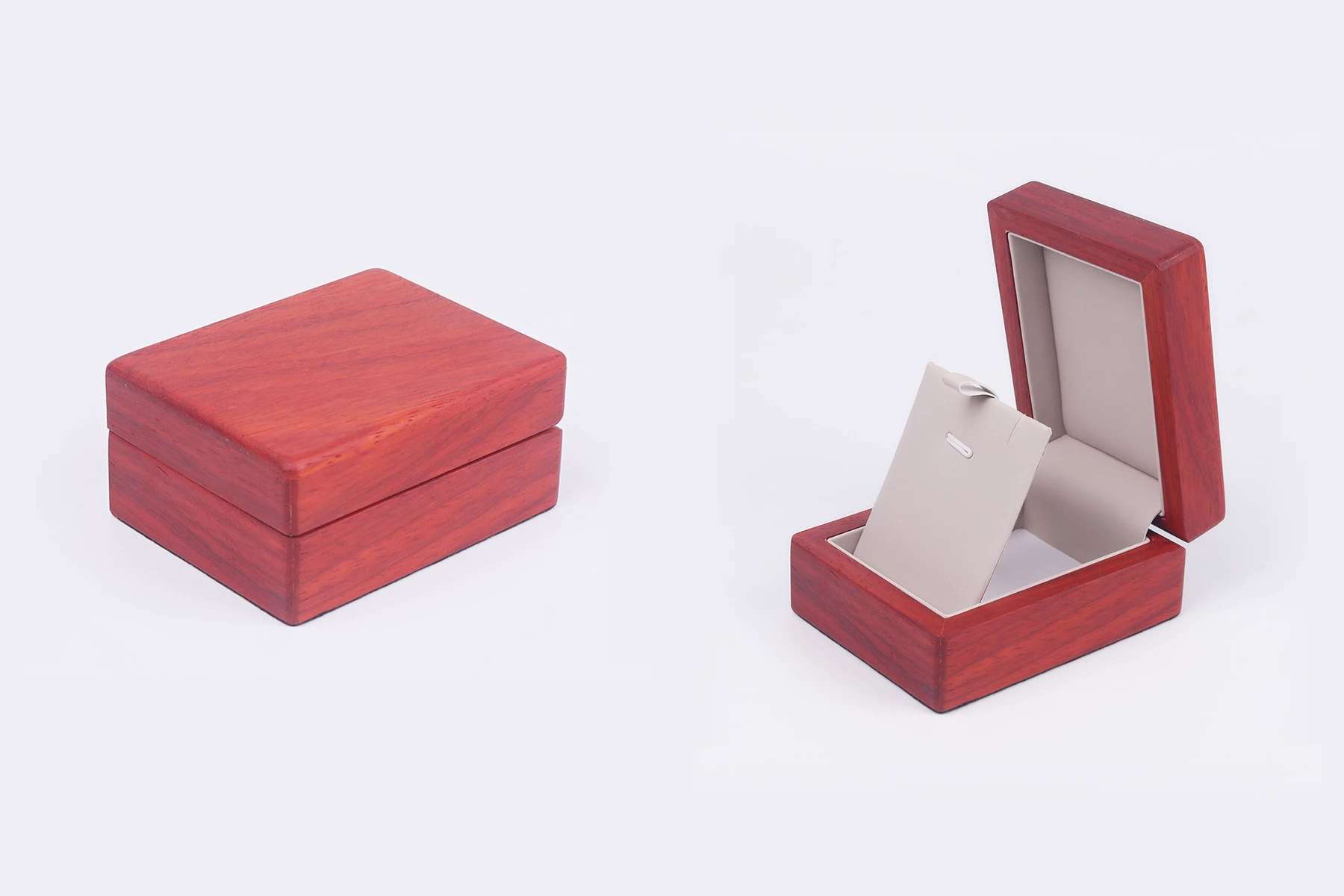
Look again at the open box above. Its interior is where a lot of invisible cost and invisible risk accumulate. The insert has to be cut, wrapped and fitted so the product cannot shift in transit. It also has to present itself the moment the lid comes up. Two boxes can look identical from the outside and behave completely differently on a counter. Buyers who compare samples only from the outside are comparing the wrong surface.
With those five dimensions in hand, the origins are easier to take one at a time.
The United States: close, quick on small changes, and a different cost base
Take a project that is small, still moving and due soon. That is the project proximity was invented for. A domestic supplier can stand next to the prototype with you. They can adjust a lid clearance inside the same week. They can put a short run on a van instead of in a container, which removes an entire category of planning from your calendar. If your specification is genuinely unsettled, that flexibility beats a favourable unit figure. Every revision round you avoid is a round you did not pay for in time.
Where the United States tends to sit is on the labour content of the build. Work assembled or finished by hand carries a higher base cost. Short runs therefore stay short, and heavily specified work stays expensive. That is not a shortcoming of the supply base. It is the arithmetic of a higher-wage market. It also explains why American suppliers drift toward projects where speed, proximity or a domestic-origin story are worth paying for in their own right.
One buying behaviour is worth naming, because it is visible from our side of the table. Buyers who search this category in English very often phrase the search with a local bias, appending a country name, a city or the words near me. The instinct behind that is sound. People want a supplier they can reach.
The instinct is worth examining rather than obeying. Reachability and capability are separate properties. It is entirely possible to be close to a supplier who does not make anything.
Where buyers actually find a US supplier
Four routes do most of the work, and they are worth very different amounts. Referrals from brands in your own category come first by a wide margin, because the buyer who refers you has already paid the tuition you are trying to avoid. Trade shows in the jewelry, gift and packaging verticals come second, mainly because you can handle finishing in person instead of reading about it. Regional manufacturing directories and state-level industry associations are the fastest way to confirm that a company is genuinely local. Domestic contract manufacturers already serving jewelry brands will often quote a box programme as an extension of work they do today.
None of those four routes tells you whether the company manufactures or resells. That is why the verification routine later in this article applies here too.
One compliance point deserves its own paragraph, because it is jurisdiction-specific and easy to discover late. California's Proposition 65, formally the Safe Drinking Water and Toxic Enforcement Act of 1986, obliges businesses to warn Californians about exposure to listed chemicals. Whether a warning is owed in your case is a decision for your own counsel. Whether the material that triggers the question can be substituted is a supplier question. Ask it while the specification is still open, not after the order is placed.
Italy: design language, leather and velvet craft, and an EU compliance regime
Italy's standing in this category rests on hand-work. Think leather, suede, wrapped structures and assemblies finished by people rather than by jigs. Whether that standing is worth its cost depends on what you are selling. Where the box carries the product's craft into the customer's hands, a maker's identity can become part of the proposition. Where it does not, you are paying for atmosphere. Atmosphere is hard to justify to a finance director.
The reputation deserves caution in both directions. A regional reputation is a statement about a supply base on average. It is not a guarantee about the workshop that quoted you. The reverse holds too. A workshop in a less fashionable region can produce work every bit as precise as one with a celebrated postcode. Reputation is a reasonable hypothesis for starting a conversation. It is not evidence about your supplier, and it should not survive contact with a sample.
What is genuinely concrete about Italy is the regulatory environment it shares with the rest of the European Union. Two layers matter most for a packaging project. REACH has been in force since 2007. It requires substances above one tonne per year per company to be registered with the European Chemicals Agency. Article 33 gives consumers a right to know about substances of very high concern in articles, and companies must answer within 45 days. Sitting on top of that is Regulation (EU) 2025/40, in force since 11 February 2025 and applying from 12 August 2026. It generally replaces the 1994 Packaging Directive. The 2030 direction of travel is packaging that is recyclable in an economically viable way. For a jewelry box programme, the practical consequence lands less on the box than on the foam, wraps and inner cartons around it.
Two limits belong here rather than in a footnote. The first is the evidence gap flagged at the top. When we collected the buyer questions that shaped this article, none concerned Italy. We are not going to invent demand signals to balance the page. The second is a property of hand-work itself: it is slower than tooling. If your launch date is fixed and close, that is a real constraint rather than a mark against the maker. Better discovered while planning than during production.
China: scale, a deep materials ecosystem, and export paperwork as a routine
The Chinese supply base in this category is organised around structure engineering and volume. Labour cost explains only part of that. Proximity explains more. The magnets, hinges, ribbons, velvets, papers, boards, foams, lacquers and plating shops all sit within a short drive of one another. Most are available in small minimums. Most are run by people who expect to be asked for a variation. When every input to a box is available locally from someone who will quote a modification, the cost of changing your mind falls sharply.
Buyers notice that consequence early and value it for the rest of the programme. Customisation is ordinary work here rather than an exception. Changing a divider layout, adding a compartment, moving to a different wrap, building a new insert for a different product form: all routine. The tooling shop and the material supply are both close at hand. It is the main practical reason complex private-label programmes end up here, not any single cost advantage.
Export documentation is the other half of the story, and the half buyers habitually underrate. A plant that ships into Europe and North America regularly treats REACH statements, Prop 65 material declarations, FSC chain-of-custody claims and destination packaging registrations as routine paperwork. They are part of the weekly routine. A supplier without that habit will still quote your project cheerfully. The requirement then surfaces after the order is placed, which is the most expensive possible moment to discover it.
Two things are worth keeping in proportion. Transit is the long pole in most China-based programmes. The water does not care how fast the plant is, so a factory with excellent turnaround can still miss a launch date that was planned without reference to shipping. Scale also cuts both ways. A large supply base contains serious manufacturers and brokers with well-built websites. The same density that makes the good suppliers good makes the poor ones easy to find. Scale does not sort them for you.
If you want a starting point rather than a principle, our own breakdown of the country's box makers is here: Top 20 Jewelry Box Manufacturers in China. We are deliberately not repeating that list. The point of this piece is the decision, not the directory. Two structural questions that come up constantly have their own write-ups as well: drawer box and clamshell box, and how a magnetic closure is built and toleranced so it closes with the same feel on the thousandth unit as on the first.
Cost structure: what actually drives the unit price
Buyers ask for a price. What they need is the structure behind it. Structure is the part you can negotiate, and it is also the part you can engineer. A quoted unit figure is simply the output of a handful of decisions taken weeks earlier. Push on those decisions and each one behaves differently.
The largest lever is the shape of the box itself. That decision is taken at the drawing stage, long before anybody quotes. Hand assembly of a multi-part construction eats labour and jigs. A simpler layout never asks for either. Two boxes made from identical materials can therefore differ substantially in cost, purely because one of them was designed to be built. This is also where the best savings hide. A structural change can cut cost without touching the material quality your customer actually perceives.
Material comes next. Here is the awkward part: the spread inside one material family is usually wider than the spread between families. Two velvets can sit at very different points on the cost curve. The gap tends to show up in how the lining wears after a year, not in how it photographs on day one.
Finishing and decoration sit close behind, and they are the most consistently underestimated lines in any quotation. They are priced per operation rather than per box. Hand-wrapping, lacquering, edge sealing, foil stamping, embossing, spot UV: separate processes, separate setup. Each one you add compounds.
Insert complexity is a category of its own. A flat pad is a trivial component. A shaped insert is not. If it has to hold a ring, a pendant and a bracelet without letting them touch, that is a small engineering project. It gets drawn, built and test-fitted against the real product.
Dimensions matter too, though less for material than for freight. A box slightly deeper than it needs to be costs you on every unit, for as long as the programme runs, in the space it wastes. Quantity sits last. Volume spreads setup, tooling and material purchasing across more units. It does not change the structure, and it cannot rescue a design that was never efficient to build.
| Cost driver | United States | Italy | China |
|---|---|---|---|
| Hand assembly and finishing | Largest single driver in the build | Largest single driver, often deliberate | Present, but jigs and fixtures cut the hours |
| Tooling and setup | Absorbed over short runs; recovers slowly | Small-batch tooling keeps setup modest | Amortises fastest as quantity rises |
| Material sourcing | Local speciality materials can carry a premium | Leather and suede supply is close and specialised | Dense local supply keeps material minimums low |
| Decoration operations | Priced per operation, per run | Hand decoration is slow and priced accordingly | Priced per operation, with fast re-setup |
| Freight and packing | Short domestic transit, low exposure | Intra-EU transit, moderate exposure | Long transit; packing efficiency matters most here |
Notice what that table does not contain. The absence is deliberate. We are not going to publish a price or a range for any of it, and you should be sceptical of anyone who offers one before seeing your drawings. Volumetric weight, carton efficiency, decoration count and quantity tier all move the figure. No general number can represent them. Final cost is subject to actual specifications and a formal quotation.
✉ Request a Custom Jewelry Box Quotation
Sampling and development timelines
Development timelines get discussed as though they belonged to a country. In practice they belong to the process the two sides agreed to. Four stages decide almost everything: concept and drawing, tooling and jigs, sample production, and physical sample approval. Ask about each one separately. A single overall figure is usually an average that describes none of them.
Concept is where suppliers differ in ways unrelated to production capacity. If a supplier can show a three-dimensional visualisation before anything is cut, a wrong direction can be killed in a day instead of after a tooling round. Across a programme with several product forms, those savings compound. A supplier who can only answer drawings with samples will look slower even when their factory is fine. You are paying for the discovery in tooling time instead of in pixels.
Tooling is the stage buyers most often fail to budget time for. It is invisible in a quotation that lists per-unit figures. A new divider layout, a new cavity or a new closure can each require a jig. The jig has to exist before a sample can. The lead time for a small change can therefore exceed the lead time for the box around it. Suppliers who own their tooling shop compress this stage considerably. It is a fair question to ask directly rather than infer.
Sample production is quick in most places, because it is one unit and everyone knows the customer is waiting. The real variable is how many rounds you need. The most reliable way to add an unnecessary round is to draw an insert without test-fitting it against the actual product. Buyers who ship a physical sample of the ring, the earring drop or the necklace to the plant before the first sample round routinely save themselves a cycle. It costs almost nothing to do.
| Stage | United States | Italy | China |
|---|---|---|---|
| Concept and drawing | Very fast when the supplier is nearby | Strong design iteration on a workshop rhythm | Fast, and 3D visualisation often precedes a sample |
| Tooling and jigs | Fast locally, capacity dependent | Simple tooling for hand work | Fast where the supplier controls its own tool shop |
| Sample production | Quick on short runs | Slower, because hand work is hand work | Quick, and parallel across sub-processes |
| Change rounds | Cheapest, because distance is short | Moderate, agreed in advance | Moderate, but structural change is familiar work |
| Bulk production | Capacity is the constraint, not speed | Capacity is the constraint | Scales quickly; transit becomes the long pole |
One substitution causes more disappointment than any other, so watch for it throughout pre-production. A supplier may quote a development response time: how quickly a concept, a proposal or a physical sample can be produced. That number is not a production lead time. Never plan against it as one. Ask for both figures in writing and keep them separate on your own project plan.
Compliance documents by origin
Compliance is where a cheap quote turns into an expensive order. It is also the section buyers most often leave until the specification has hardened. The rules attach to the market you sell into, not to the country that made the box. Your supplier's origin still decides how much work lands on your desk. A plant that already ships into your market keeps the documents in a folder. A plant that does not will discover the requirement at the same time you do.
The European Union is the most intricate case. It covers Italy entirely and applies to anything you import into it. REACH governs substances rather than objects. That is why questions about it should be addressed to specific materials, such as a coating, a lining, an adhesive or an ink, rather than to the box as a whole.
The packaging file itself has recently changed character. What used to be a directive is now a regulation, with the 2030 recyclability direction already set. The Commission's own pages record EU packaging waste reaching a record 186.5 kg per person in 2022. That figure is a useful indication of why the rules tightened.
The United States layers a state-level regime on top of federal requirements. Proposition 65 applies to sales into California and creates a warning duty. Whether a warning is owed in a specific case is a question for your legal adviser, not your supplier. What your supplier can do is provide the material declarations your adviser needs. Make the request specific: name the materials, ask for statements, and expect a document rather than an email sentence.
Sourcing claims deserve the same scepticism as chemical claims. FSC operates chain-of-custody certification and three label categories: 100%, Recycled and MIX. The phrase FSC on request is not the same statement as FSC-certified material. Neither one tells you what is inside the carton in front of you until somebody shows you the certificate with its holder, its scope and its dates. The same discipline applies to quality systems, and the current position is easy to check. ISO 9001:2015 now reads as Withdrawn, stage 95.99, dated 16 September 2026, with ISO 9001:2026 named as its replacement. A supplier still quoting the earlier edition may simply have stale paperwork. It is still worth asking who refreshes it, and when.
| Requirement | Where it applies | What to ask for |
|---|---|---|
| REACH | EU market, whatever the manufacturing origin | Substance statements for coatings, adhesives, linings and inks, with the reporting route named |
| Proposition 65 | Sales into California | Material declarations you can hand to your own counsel |
| Packaging regulation (EU) 2025/40 | EU market, from 12 August 2026 | How the protective packing separates, and what changes by 2030 |
| Packaging EPR registration | Individual EU member states | Who registers, who reports volumes, and under whose name |
| FSC chain of custody | Any paper or board claim | The certificate, its holder, its scope, and the label category |
| Quality system | Any origin | The current standard, the certificate holder, and the audit date |
| Transit testing | Goods shipped as parcels or pallets | The test procedure used, and the report for your carton |
Before leaving this section, settle the division of responsibility in writing rather than by assumption. In cross-border work the importer of record normally carries the final duty. Buyers who discover that arrangement after the first shipment rarely enjoy the discovery. Our own notes on packing jewelry boxes for global shipping and on jewelry box manufacturing standards go further into the operational side of both questions.
Match origin to your order profile
This is where the comparison pays for itself. The method is the reverse of how the market usually presents the choice. Rather than ranking countries and hunting for the one that suits you, describe your order as precisely as you can and read the recommendation off that description. The exercise takes ten minutes. It regularly changes the answer.
| Your order profile | Origin that usually fits | Why |
|---|---|---|
| Small quantity, specification still changing, close deadline | United States | Short distance makes change rounds cheap and quick |
| Small quantity, craft is part of the product story | Italy | Hand work and material identity carry the proposition |
| Own brand, own design, tooling you intend to own | China | Structural customisation is routine and tooling is close |
| Several product forms under one design language | China | One structure family can cover a ring box, a pendant box and a bracelet box without redesign |
| Retail or gift programme with fixed launch dates | China, with transit planned early | Production scales faster than transit; the calendar has to respect the water |
| Domestic-origin requirement from a landlord or franchise | United States | The requirement, not the economics, decides the question |
| Premium limited edition, low volume, high finish | Italy or a specialist workshop | Finishing hours are both the constraint and the selling point |
Read that table as a default, not a rule. The profile that matters is yours, and the table has never seen it. The expensive mistake in this category is not choosing the wrong country, because most countries can produce most boxes. It is choosing an origin for a reason unrelated to the order. A competitor's decision, a conversation at a trade show, or a preference carried over from a different product category where it may well have been correct.
How to verify a supplier is really a manufacturer
Underneath the whole comparison sits the question buyers ask more often than any other. Who actually makes jewellery boxes? You cannot determine it from a website, a catalogue or a country. None of those three is evidence about who operates a production line. What you can do is run a short routine. It takes about half an hour, and it works identically in all three origins.
Begin with the entity rather than the product. Two facts settle more than any brochure. The legal name that will appear on your invoice. The full address of the site that will make the goods. Put both beside the website address and look at the three together. A domain name, a brand name and a legal entity are separate things that only sometimes coincide. The space between them is where sourcing surprises live.
Then ask to see the plant, on a live call rather than in a video edited before you were born. Be specific about what you want to see. Name the processes your own product depends on: housing assembly, insert fitting, the finishing lane, the final inspection bench. A narrow walk-through of the right process beats a broad tour of a tidy building. It is also precisely what a trading company cannot produce on request.
Then test the paperwork. A certificate with no holder, no scope and no validity period is decoration rather than evidence. Ask for the file itself and check whose name sits on it. If the holder turns out to be a different company from the one invoicing you, keep asking until you understand the relationship. Finish with the commercial question that separates a maker from a middleman. What changes between your quantity and four times your quantity, and where do the savings flatten out? The shape of the answer is revealing. Setup, material terms, line allocation and packing is a factory describing its own constraints. A single rounder figure with no account of where it came from is a sales desk.
| Verification item | What a manufacturer answers | Warning sign |
|---|---|---|
| Who invoices me? | A named legal entity, plus a production address that matches | A vague entity, or a mailbox address |
| Can I see my production line? | A live walk-through of the relevant process | Pre-recorded clips, or a showroom only |
| Which site makes my order? | One site named, with its ownership or partnership stated | "Our factory", with no city and no relationship |
| Show me the certificate | Holder, scope and dates on the document | A logo image, or another company's name |
| What changes at four times the quantity? | Setup, material terms, line time, packing | A discount with no account of its source |
| Who owns the tooling? | The buyer, in writing, with storage and retrieval terms | Deflected, or left unstated |
| Who builds the insert? | The same plant, or a named partner with a reason | A shrug, or the promise to find someone |
| What happens if a batch fails? | A described inspection gate and a remedy procedure | Confidence offered in place of process |
Carry two further points while you run this routine. Hand-work and volume work fail in different ways, so ask about the failure mode that matches your own order rather than the one the supplier prefers to discuss. That means inconsistent finishing on short runs and tolerance drift on long ones. And if your specification involves a licensed design, a character or a trademark, assume nothing. Put the rights and the scope in writing before tooling starts. Unwinding a licensed product from a production plan costs far more than pausing to sign something.
✉ Put These Questions to BRT Pak
Where BRT Pak sits in this picture
We are the Chinese manufacturer in this comparison. This section is therefore a self-description rather than an assessment, and it should be read that way. What we will claim is narrow enough to check. What we will not do is adopt the tone of a neutral observer visiting our own category from outside.
We hold our own production building in Jinhua, Zhejiang, and buyers are welcome to walk through it on a live video call rather than watching a film we edited ourselves. Our work covers jewelry boxes, watch boxes, watch winders and display pieces. A brand can therefore build a range across product forms without changing supplier or losing one structural language along the way. On relationships rather than projects, we have served Swiss watch brands and European jewellery groups, and three of those relationships have run for more than a decade. We do not name clients publicly, so treat that as our statement rather than as a reference list you can verify.
Two working habits are worth describing because they change how a project runs rather than merely sounding reassuring. We build a three-dimensional visualisation before a physical sample, which lets a wrong direction be rejected cheaply instead of after a tooling round. And when we look at a new box, we treat carton efficiency as an engineering target alongside the unit figure. A few millimetres removed from the right place improves a volumetric weight you pay on every shipment for the life of the programme.
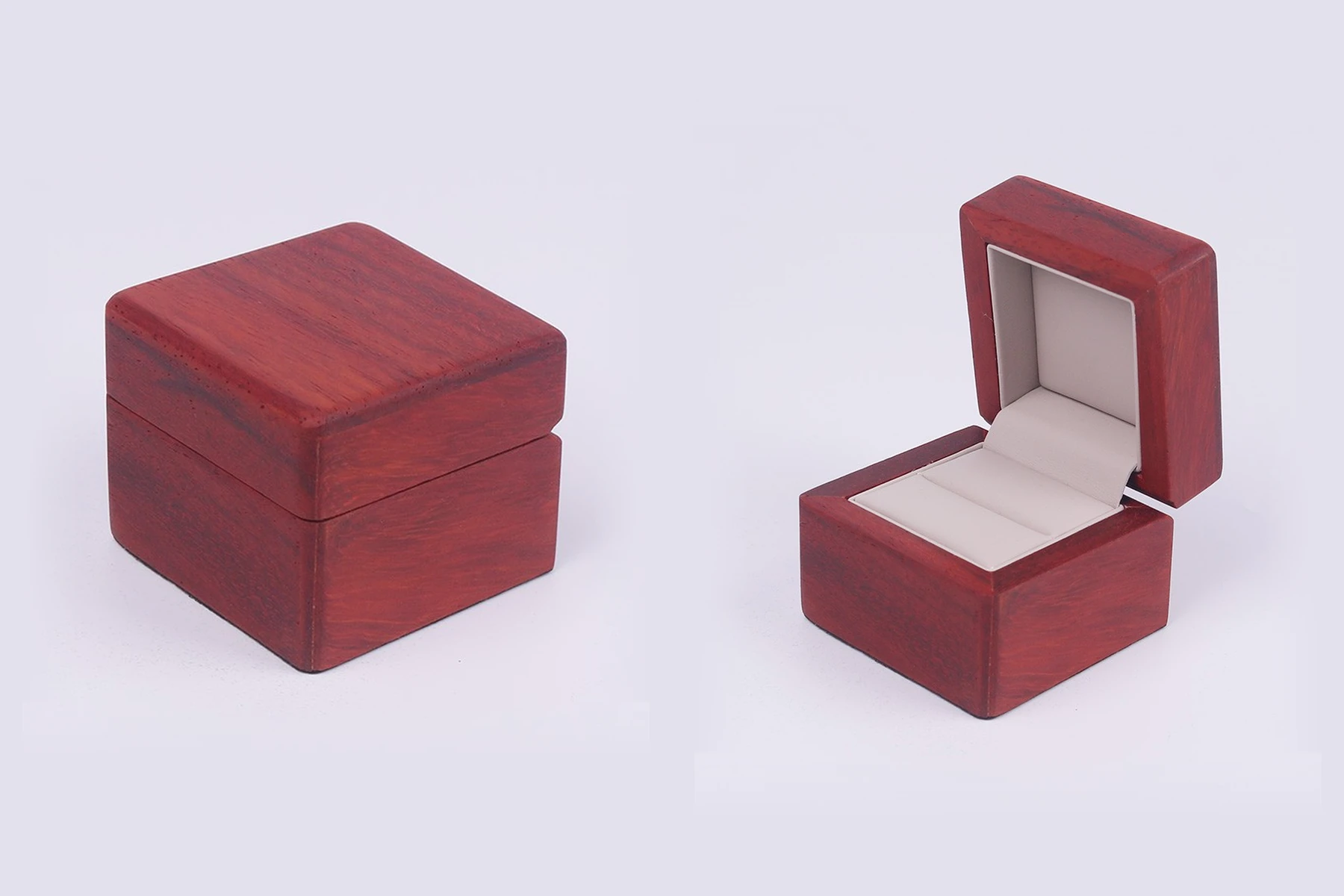
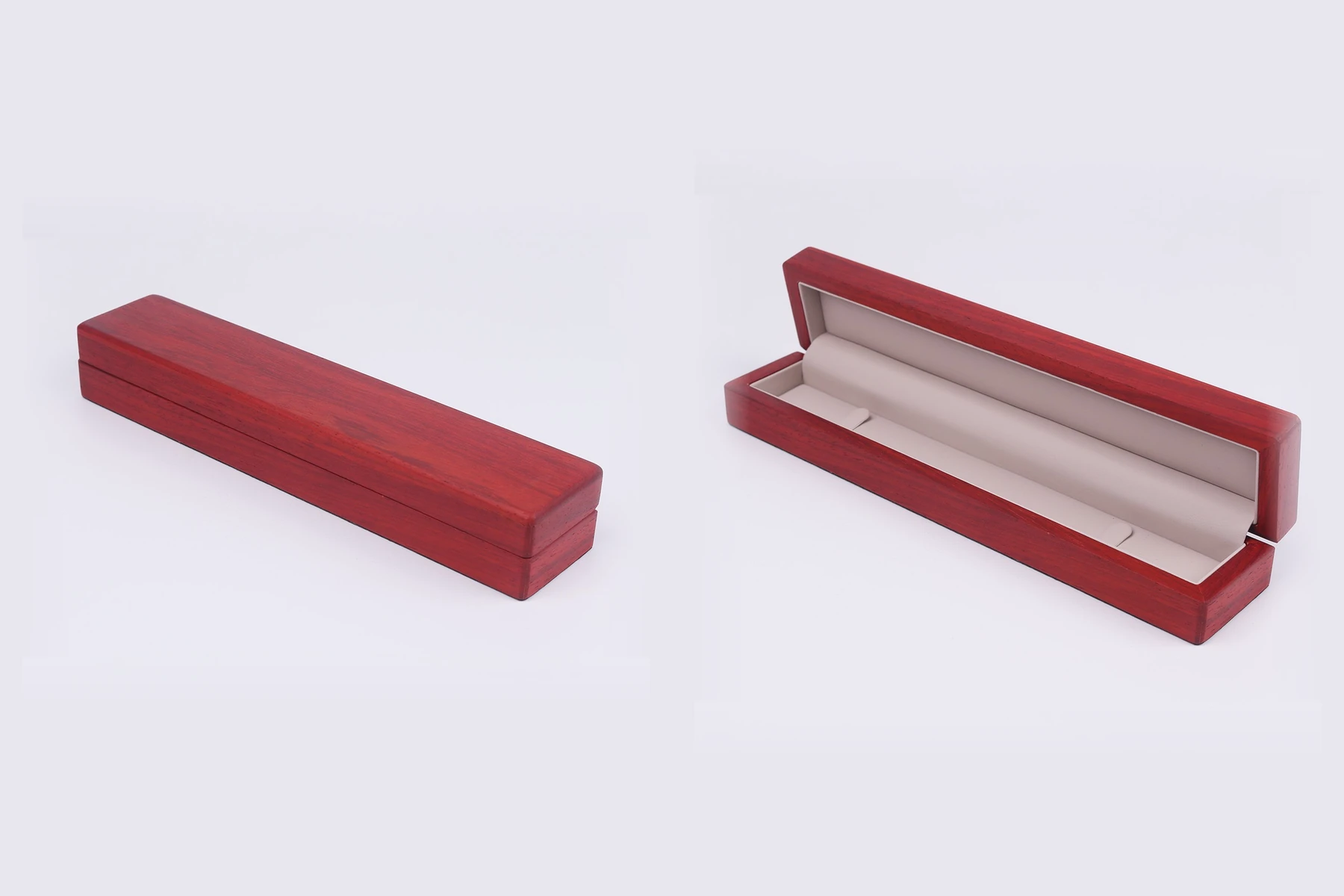
One thing about the current line is easy to miss in a photograph, so we will state it outright. These boxes are rosewood with a wax finish. There is no lacquer on them at all. A wax finish is slower to build and less forgiving than a sprayed coating, and it leaves the grain open, so the wood still reads as wood in the hand. Lacquer gives a harder and more uniform surface and hides far more. Neither approach is wrong, and we are not making a claim about what other manufacturers do. On this new line, wax is the finish we chose.

On documents, we hold social-compliance and quality audits and prepare destination-market compliance files per order: chemical and material statements for the European and North American markets, chain-of-custody paperwork for paper and board, and packaging registrations for the European markets we ship into. A wooden programme has its own detailed write-up at wooden jewelry box manufacturer. Buyers setting up a private-label range usually start with private label jewelry packaging.
None of that establishes that we are the right supplier for the order in front of you. We would rather say so plainly than imply otherwise. Development response times are not production lead times, and any figure we give applies to an actual specification rather than to a category of product.
Questions buyers ask us
Who makes jewellery boxes?
Three kinds of business do. Only two of them make anything. The first is manufacturers that own a plant and build boxes under their own roof, whether under their own brand or to a buyer's drawings. The second is workshops that produce a narrow range by hand and sell it under their own name, typically at smaller volumes and higher finishing hours. The third is brands, importers and dealers that commission production from one of the first two and concentrate on design, packaging and distribution. All three are legitimate ways to run a business. The distinction matters when you need a supplier who can accept your drawings directly rather than relay them.
Who are some jewelry box manufacturers in China?
There is a real answer and it is long. Production in this category clusters in a handful of regions such as Zhejiang, Guangdong and Fujian, where hundreds of plants range from small workshops to full-service manufacturers. Our own breakdown of the country's box makers is the honest form of that answer, because it lists names with each one's positioning. A paragraph cannot summarise an industry. What matters more than the list is the filter you apply to it. Within a single cluster you will find serious manufacturers and traders with professional websites, and nothing on the surface distinguishes them until you ask the questions set out earlier in this article.
Where can I find a jewelry supplier in the USA?
Referrals from brands in your own category are worth more than the other three routes combined. The referring buyer has already paid the tuition you are hoping to avoid. After that come trade shows in the jewelry, gift and packaging verticals, where you can handle finishing in person. Then regional manufacturing directories and state industry associations, which establish quickly that a company is genuinely local. Finally, contract manufacturers already serving jewelry brands, many of whom will quote a box programme as an extension of work they do today. None of those routes tells you whether the company manufactures or resells, so the verification routine applies unchanged.
What does a custom jewelry box cost?
Nobody can answer that honestly without your drawings. A general number is worse than no number, because it anchors you to a figure that does not describe your box. What we can tell you is what moves the figure. The largest lever is structural: hand assembly of a multi-part construction eats labour and jigs that a simple layout never asks for. Material, finishing operations, insert complexity, dimensions and quantity all move it too. Structure is the one you can still change without touching the material quality your customer perceives. Final cost is subject to actual specifications and a formal quotation.
What is the minimum order quantity for a custom jewelry box?
Ask three versions of the question rather than one, because the answers usually differ. The minimum per design. The minimum per material. The minimum per colour or finish. In most programmes the material or the finish binds before the design does. A supplier who replies with a single flat number has probably simplified the answer on your behalf. Add two more questions to the same email: does the minimum apply to the first order or to repeats, and what happens to your tooling if you later need to order below it?
How long does a custom jewelry box project take?
Break the project into four stages and ask about each separately. Concept and drawing, tooling and jigs, sample production, and bulk production with transit attached. Tooling is the stage buyers underestimate, because a new divider, cavity or closure may need a jig before any sample can exist. Transit is the stage buyers mismeasure, because a fast plant does not make a sea route faster. Watch for one substitution in particular. A supplier's development response time is not a production lead time. Ask for both in writing and hold the answer against the schedule you actually need to hit.
How do I check quality before I receive the goods?
Three checkpoints beat any promise. Approve a physical sample and keep it, because that object becomes the reference for the entire order and settles arguments photographs cannot. Agree the inspection gates in writing, specifying what is checked, by whom and against which sample, rather than assuming a final check will catch whatever goes wrong earlier. Ask how the insert is test-fitted with the real product, since a box that holds a sample ring perfectly can still let a production ring rattle. If transit is part of your risk, ask which testing procedure your carton is qualified to rather than accepting the word strong.
How do I keep my box design from being copied?
Start with paper. A confidentiality agreement should be signed before drawings leave your building, and it should be named to the entity that will actually produce the goods rather than only to the sales office that answers your email. Then get four things in writing. Who owns the tooling and jigs. Whether your design may be sold to anyone else. What happens to surplus units once the run is finished. And how competing projects are kept apart on the same floor. That last question is worth asking plainly. The answer tends to reveal more about a supplier's habits than the agreement does.
Is a US, Italian or Chinese maker better for private label?
Better for what, at which quantity, and against which deadline? If your design is fixed, your tooling should be yours, and you want structural changes handled as ordinary work, the Chinese supply base is organised for precisely that. If your volume is small and your specification is still moving, a US supplier's proximity will save you revision cycles that no unit figure can repay. If the maker's craft is part of what your customer is buying, an Italian workshop earns its place in the shortlist. The failure mode is identical in all three directions: choosing the origin first and describing the order afterwards.
✉ Send Your Jewelry Box Brief to BRT Pak
Research basis. Every regulatory reference in this article was re-checked on 3 October 2026 and links to the authority that publishes it. ISO for the quality standard. The European Commission's environment pages for REACH and for packaging and packaging waste. California's OEHHA for Proposition 65. The Forest Stewardship Council for chain-of-custody claims. Where the article describes how a market usually behaves, that reflects our operating experience as a supplier rather than a survey. The three buyer questions quoted above come from a set of English-language search questions collected before writing. The absence of any Italian question in that set is why the Italy section leans on public regulation and reputation rather than on observed demand.