
1. Why a Bracelet Packaging Range Needs More Than One Good Sample
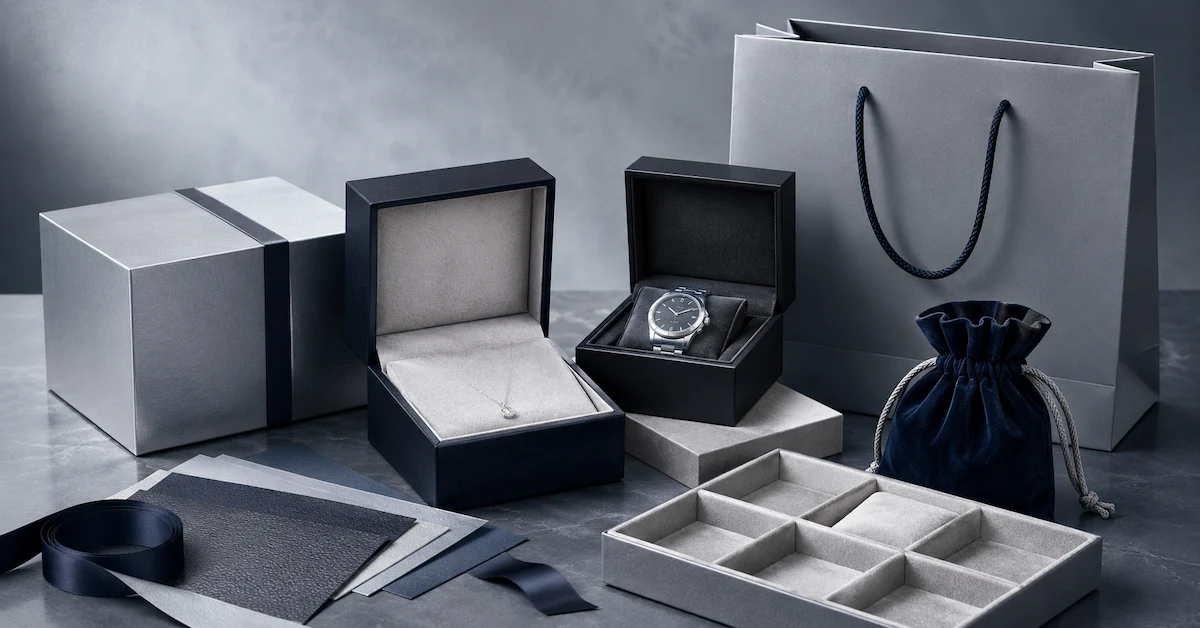
Consider a jewelry brand preparing a hypothetical launch with delicate chains, gemstone tennis bracelets, and wide bangles. All three collections may carry the same logo, yet they may be sold through boutiques, online orders, and gift programs. A different box for every jewelry SKU increases packaging inventory, design approvals, and the chance of packing errors. A single generic box for everything can compromise presentation or protection.
The better purchasing question is not simply, “Can you make this bracelet box?” It is, “Which packaging elements can we standardize, and which must change by product family or sales channel?” Answering this before decoration and tooling can make quotations easier to compare and future collections easier to introduce.
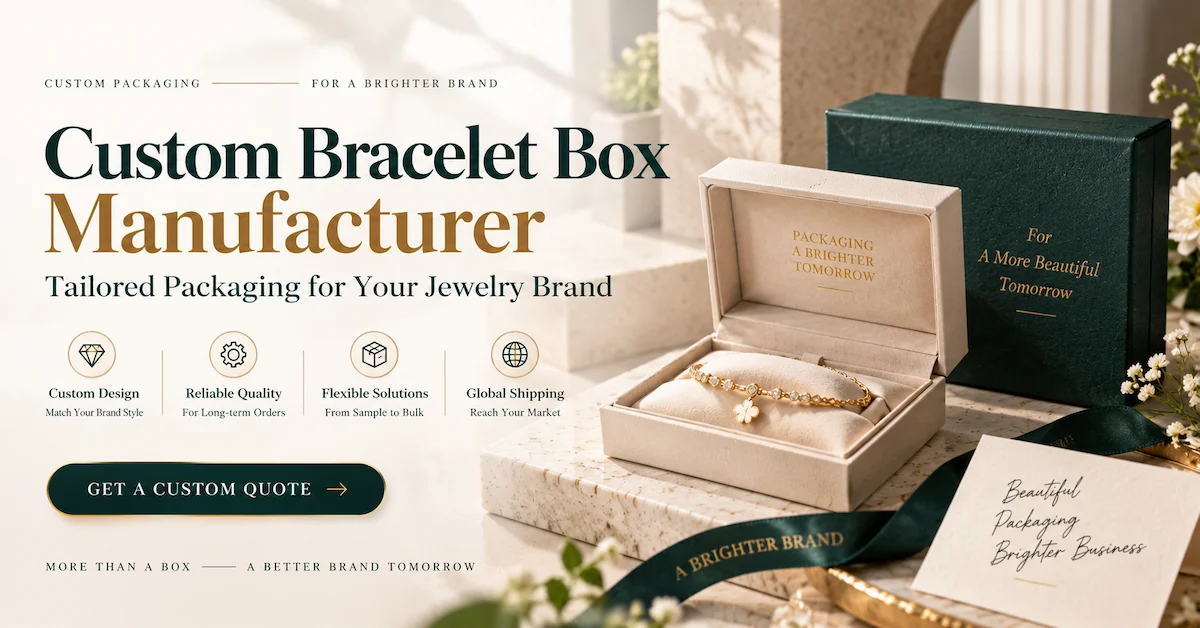
For private-label bracelet brands, the specification should distinguish three levels: the consistent brand language, the shared outer-box platform where feasible, and the jewelry-specific support system. A manufacturer may suggest alternatives, but each deviation needs written approval so a lower quote does not silently change the product.
2. Choose Your Bracelet Box Format by Sales Channel
“Luxury bracelet packaging” describes a market position, not a single construction. Choose a format according to where the customer encounters it, how staff handle it, and whether the presentation box will also travel through parcel delivery.
| Format to evaluate | Suitable purchasing scenario | Trade-off to investigate |
|---|---|---|
| Wrapped rigid paperboard box | Branded retail lines, seasonal launches, and DTC gift packaging | Corner finishing, board stiffness, surface rubbing, and shipping protection |
| Velvet-covered presentation box | Bridal, gifting, and premium jewelry presentation | Pile direction, lint, color uniformity, and cleaning requirements |
| PU/leatherette-covered box | Repeatable brand collections seeking a leather-like finish | Edge wrapping, seams, texture consistency, and abrasion |
| Bamboo or wooden box | Gift-worthy or collectible packaging with a natural visual character | Weight, surface variation, hinge/closure design, and moisture-related dimensional behavior |
| Box plus separate pouch | Online fulfillment, travel-oriented accessories, or branded gifting | Additional packing operation, materials, and total cost per saleable set |
These are industry design options, not a claim that every format, finish, or material is available in every BRT Pak product. Ask the manufacturer to confirm the exact construction of the style you shortlist.
Three Verified BRT Pak Catalog References
Bamboo Presentation Direction
The JBW190 Bamboo Jewelry Box is a useful reference for bamboo appearance and microfiber-lined jewelry packaging. Final bracelet dimensions and fit require a separate sample review.
Velvet and Illuminated Gifting
The JBS1123 Green Velvet LED Jewelry Box illustrates a velvet-covered, illuminated presentation direction. Do not assume its existing insert suits every bracelet type.
Leatherette Finish Reference
The Leatherette Jewelry Box provides another material starting point for branded collections. Request the construction and available customization details for your exact project.
Explore the Wider Category
Compare the existing BRT Pak Jewelry Boxes collection before deciding which products merit a prototype. Catalog references are starting points, not approved specifications.
Develop a Bracelet Packaging Concept
Have bracelet samples, a brand mood board, or an existing box to improve? Share the target channel, quantities, and preferred finish so the BRT Pak team can review a project-specific concept.
3. Create a Brand System That Survives Production and Reorders
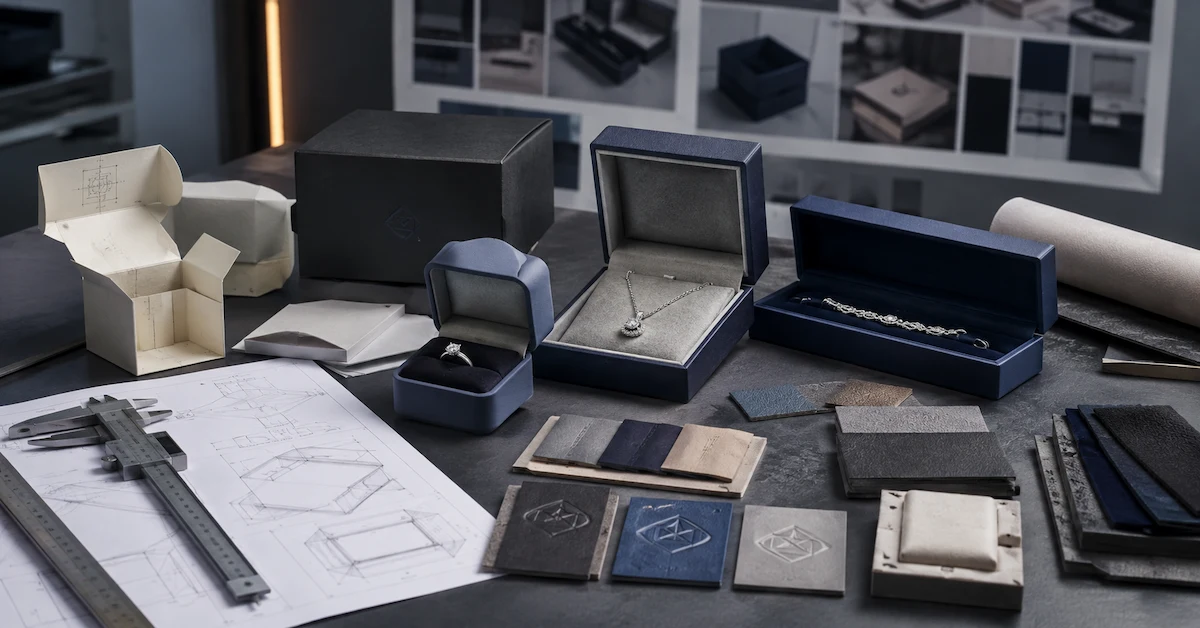
A brand book may define a Pantone color and a logo, but the factory still needs practical instructions on how those details should appear on a wrapped box, velvet surface, or wooden lid. A photograph cannot fully convey texture, foil reflectivity, closure feel, or the acceptable position of a logo after wrapping.
Build a packaging appearance master covering the approved physical color reference, finish texture, logo artwork revision, decoration method, placement measurements, lining color, opening orientation, and any secondary details such as a ribbon or printed care card.
If a gold foil effect is critical, request an actual decorated sample under the lighting conditions used for approval rather than relying only on a digital rendering.
| Brand element | Buyer-controlled reference | Sample question |
|---|---|---|
| Exterior color | Signed physical swatch and material code | Does the delivered finish match the approved reference in agreed lighting? |
| Logo application | Vector artwork, placement drawing, approved process | Are size, position, edges, and visual contrast acceptable? |
| Touch and texture | Actual material sample, not merely a color name | Is pile, grain, coating, or softness consistent with the reference? |
| Interior presentation | Lining swatch, orientation photograph, insert drawing | Does the bracelet face the customer as intended? |
| Gift-set consistency | Family photo with approved box and pouch variants | Do products from different SKUs still read as one brand range? |
Do not approve a color solely from a monitor. Screen settings, fabric pile, gloss, and substrate color can change visual appearance. Any numerical tolerance or color-measurement method should be agreed with the supplier and recorded in the purchase specification; there is no universal tolerance suitable for every packaging surface.
4. Standardize the Exterior Without Compromising Bracelet Fit
A shared outer box may reduce the number of decorated packaging variations, but it does not eliminate the need to verify each bracelet family. Chains, tennis bracelets, charm bracelets, closed bangles, and open cuffs differ in shape, weight distribution, protrusions, and handling.
A common shell with approved insert variants may be more practical than forcing one insert to suit everything.
At minimum, supply the smallest and largest bracelets in the proposed range, the heaviest design, jewelry surface details, required display position, and a drawing of any sensitive contact areas. The manufacturer should state which bracelet SKUs each approved configuration covers.
If your project involves complex retention or delicate cuffs, refer to BRT Pak's bracelet box insert engineering guide for a deeper fit and transit-protection method.
Buyer decision: Keep the common elements common—brand marks, exterior color, and where feasible the outer dimensions. Customize the interior only where actual bracelet geometry or presentation requires it. Test the complete box and jewelry combination before confirming the range.
5. Compare Wholesale Quotes on Total Cost, Not Unit Price Alone
Two custom bracelet box manufacturer quotes may look comparable while including different inserts, decorations, unit protection, tooling charges, or delivery terms. Ask bidders to quote the same revision of one specification and identify every exclusion or alternative.
Otherwise, the apparent low price may simply represent fewer deliverables.
For sourcing decisions, compare the total cost per saleable, correctly packed unit. Factor in expected handling, inspection, damaged-packaging disposition, and variant control. Do not use a damage percentage as fact unless it comes from your own shipment records or a documented trial.
| Cost driver | What changes it | What to request |
|---|---|---|
| Box construction | Core material, wrap coverage, hinge or lid style | Material and structure breakdown |
| Artwork and finishing | Print coverage, foil, embossing, plates, finishing passes | Included processes and separate setup charges |
| Interior variants | Insert materials, forming, hand assembly | Price by insert SKU and shared-shell quantity |
| Volume and replenishment | Color splits, production batches, reorder size | Quote tiers per SKU and for the total program |
| Export packing | Individual sleeves, dividers, master-carton utilization | Carton dimensions, units/carton, gross weights |
| Trade terms | Shipping mode, delivery point, responsibilities | Named Incoterms rule, place, and exclusions |
Ask for Two Commercial Scenarios
Scenario A can use a shared box body and limited insert variations. Scenario B can use distinctive boxes for a premium collection. Compare both against the actual launch forecast and expected reorder mix.
A unique presentation may justify a higher cost for a flagship product, while a simpler standardized option may suit frequently replenished items. Neither option is automatically better; the right choice depends on channel, jewelry value, budget, and inventory risk.
Ask for MOQ by material, color, size, artwork, and insert variant, plus any ability to combine quantities. BRT Pak's published company pages do not establish one fixed MOQ for every custom bracelet-box project, so it should be confirmed in the quotation.
6. Approve Samples Using Gates That Purchasing and Design Both Understand
BRT Pak describes a design-to-delivery process involving requirement confirmation, design sketches, product prototypes, material selection, sample confirmation, and logistics.
For a wholesale bracelet packaging order, buyers should overlay a documented approval process on those published service stages rather than assuming a concept rendering is production approval. See the company's About Us and process description.
| Buyer approval gate | Evidence to review | Release condition |
|---|---|---|
| 1. Design brief | Bracelet families, channel, box concept, artwork, quantity forecast | Requirements and ownership agreed |
| 2. Structure mock-up | White sample, usable space, opening and closing, jewelry placement | Functional changes resolved before decoration |
| 3. Material approval | Physical swatches, insert components, decoration references | Materials and alternates documented |
| 4. Decorated sample | Finished box, logo, exterior/lining colors, installed bracelet | Signed golden sample with a revision ID |
| 5. Pre-production agreement | Drawings, BOM, acceptance criteria, unit packing, labels | No uncontrolled changes to approved specification |
| 6. Shipment release | Inspection results, carton records, approved exceptions | Buyer-defined acceptance and shipment authorization |
This table is a recommended buyer-control framework, not a representation of BRT Pak's undocumented internal inspection protocol.
Assign an owner to each approval: product development for function, the brand team for appearance, quality for acceptance criteria, and procurement for commercial terms. The final decision should be recorded in one shared version-controlled file.
7. Specify Quality by Defect Type, Not by “Premium Finish”
A buyer should translate subjective requests into checks that can be performed on real units. Ask the supplier how finished dimensions will be measured, how visual limits will be judged, and which sample will be the comparison reference.
Defects such as visible glue, misaligned logos, loose inserts, uneven wraps, stained fabric, or lids that interfere with the bracelet should not be left to interpretation at delivery.
Appearance
Check color against swatches, visible edge finish, seams, printing, foil, adhesive marks, and clean interior surfaces.
Function
Open and close the actual decorated box. Confirm the jewelry seats correctly, remains accessible, and does not contact the lid unexpectedly.
Pack-out
Review unit sleeves, separators, SKU labels, quantities, carton construction, and protection against surface rubbing.
Traceability
Retain approved sample IDs, artwork revisions, material references, and any authorized substitutions for repeat orders.
Define critical, major, and minor defects with examples that fit your product and sales channel.
For lot-by-lot acceptance sampling, ISO 2859-1:2026 describes AQL-indexed sampling schemes; the buyer must still agree on defect definitions, sampling details, and acceptance rules. For individual parcels, ISTA Procedure 3A provides a general transit-simulation method when its scope matches the packaged-product and distribution route.
Agree on the relevant procedure and pass criteria before testing. Neither standard proves that any specific BRT Pak product has been inspected, tested, or certified to it.
Similarly, claims involving responsible sourcing, recycled content, or market-specific compliance require evidence for the actual material and shipment. Do not infer product-level certification from a general company statement or website badge.
8. Build a Reorder File Before the First Shipment
Most packaging problems become expensive at the second order, when a new purchasing contact asks for “the same box” but nobody has retained the original material specification.
A controlled reorder file should make “same” measurable rather than a matter of memory.
- Master SKU map: Bracelet SKU → approved box SKU → insert SKU → channel or gift-set configuration.
- Frozen artwork: Vector logo, version, dimensions, decoration method, and approved placement.
- Approved materials: Supplier codes where available, physical swatches, lining and adhesive specifications.
- Golden sample: Retained finished reference signed and dated by the authorized approver.
- Packing specification: Labels, unit protection, cartons, and pack-out configuration.
- Change control: Documented approval before changing an insert, coating, material, or supplier source.
This gives the importer, brand team, and manufacturer a common basis for future quotations and production reviews. For a growing bracelet collection, that discipline can matter as much as the initial box appearance.
Request a Quote-Ready Packaging Review
BRT Pak's published service offering includes packaging design, development, prototypes, manufacturing, and logistics coordination. Send your collection brief and ask which box concepts, samples, customization options, and commercial terms can be confirmed for your project.
9. Bracelet Box Manufacturer RFQ: Information to Send
The fastest route to a usable quotation is a brief with fewer unknowns. Send the following information together rather than requesting a unit price from a single reference photograph:
- Buyer and market: Company, target country, retail/DTC/wholesale channel.
- Product family: Chain, tennis, charm, bangle, cuff, or a mixed bracelet collection.
- Artwork: Vector logo, brand colors, decoration location, and reference images.
- Box style: Preferred opening, exterior finish, and any sample or catalog reference.
- Jewelry data: Drawings or physical samples, smallest/largest/heaviest pieces, surface sensitivities.
- Variant plan: Shared shell or separate packaging families, insert variants and SKU list.
- Order forecast: Launch quantity, split by variant, and likely replenishment quantities.
- Quality requirements: Visual references, sample approval, tests or documents actually needed.
- Delivery: Destination, desired arrival date, packing expectations and trade terms to quote.
- Commercial reply: Request itemized pricing, MOQ, tooling, sample charges, lead-time milestones, and exclusions.
Require the supplier to identify assumptions explicitly. A well-prepared bracelet box supplier proposal should be easy to compare with another quotation without guessing what is included.
10. Common Questions From Wholesale Bracelet Box Buyers
What does a bracelet box custom manufacturer typically customize?
Depending on the agreed project, customization may cover box shape, exterior materials, surface finish, colors, interior layout, logo application, and retail packing. Exact capabilities should be confirmed for the selected construction and production quantity.
Can one branded box serve multiple bracelet collections?
Potentially. A consistent outer shell can use more than one approved interior configuration, provided each bracelet SKU has verified clearance, support, and presentation. Standardization should be based on tested coverage, not appearance alone.
Which bracelet box material is best for a luxury brand?
There is no universal winner. Velvet emphasizes soft presentation; leatherette provides a different tactile and visual identity; bamboo or wood can support a gift-oriented appearance. Decide using actual swatches, samples, budget, handling needs, and brand positioning.
What is the MOQ for custom bracelet boxes?
MOQ is project dependent. Material, dimensions, colors, artwork process, structure, and insert variants may affect order requirements. Ask BRT Pak for a written MOQ and price breakdown by packaging SKU rather than assuming a universal figure.
How long does custom bracelet packaging development take?
Timing depends on design readiness, material sourcing, sample changes, quantity, production scheduling, and destination. Request separate milestones for drawing approval, mock-up, decorated sample, production, and shipment instead of relying on an unverified standard lead time.
What should be retained for future repeat orders?
Keep the golden sample, approved drawing and material list, artwork revision, color references, insert-to-jewelry SKU map, and packing specification. Require written approval for any proposed change before reordering.
Conclusion
Choosing a bracelet box custom manufacturer is a packaging-system decision, not merely a box-price comparison. Start with your bracelet collections and sales channels, standardize the visual elements that should remain consistent, and validate the structures that must differ. Document materials, artwork, samples, acceptance criteria, and reorder rules before committing to bulk quantities.
Explore BRT Pak's jewelry box references and contact BRT Pak with your product specifications, branding files, volume forecast, and target market to discuss a project-specific solution.