
What Should a Watch Storage Box OEM Manufacturer Deliver?
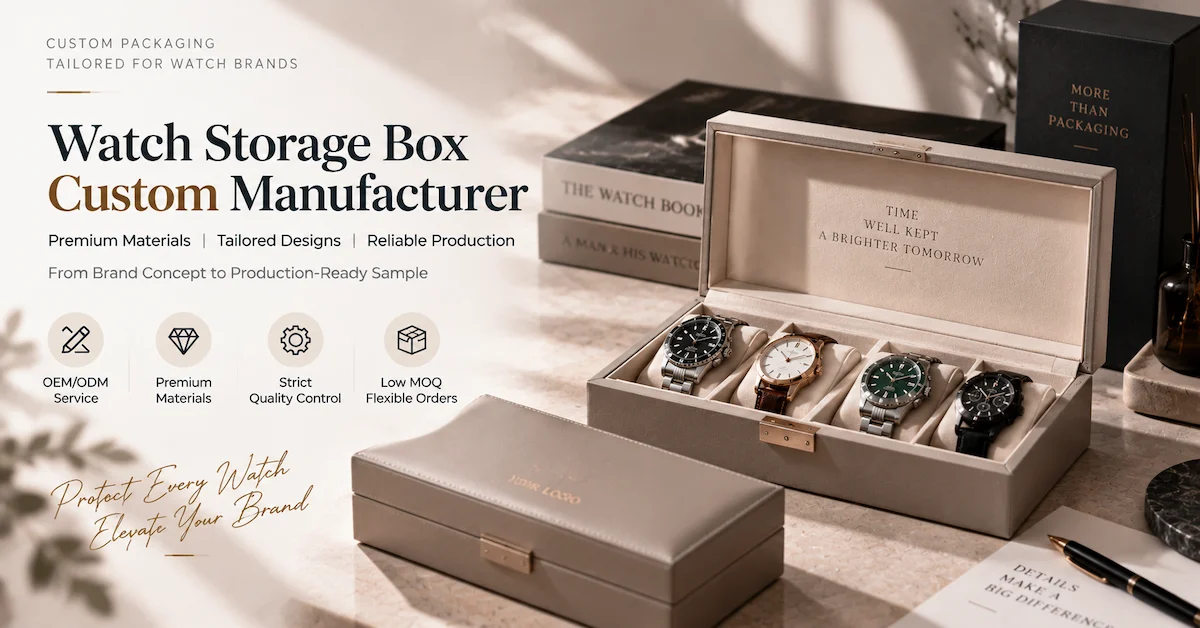
A watch storage box OEM manufacturer should help turn a brand’s requirements into a product that can be specified, sampled, inspected and reordered. Use four deliverables as your sourcing baseline: a defined construction, a sample tested with representative watches, documented appearance requirements, and a production plan tied to the approved version. A logo mockup alone does not answer whether the cushion fits, the lid closes correctly or the next batch will match. BRT Pak, operated by Jinhua Better Industrial Co., Ltd., provides packaging design, development, production and logistics services, with OEM and ODM support described in its company and manufacturing overview. This guide focuses on the decisions buyers should resolve before releasing a custom watch storage project for production.
Match the Storage Format to the Buyer and Use Environment
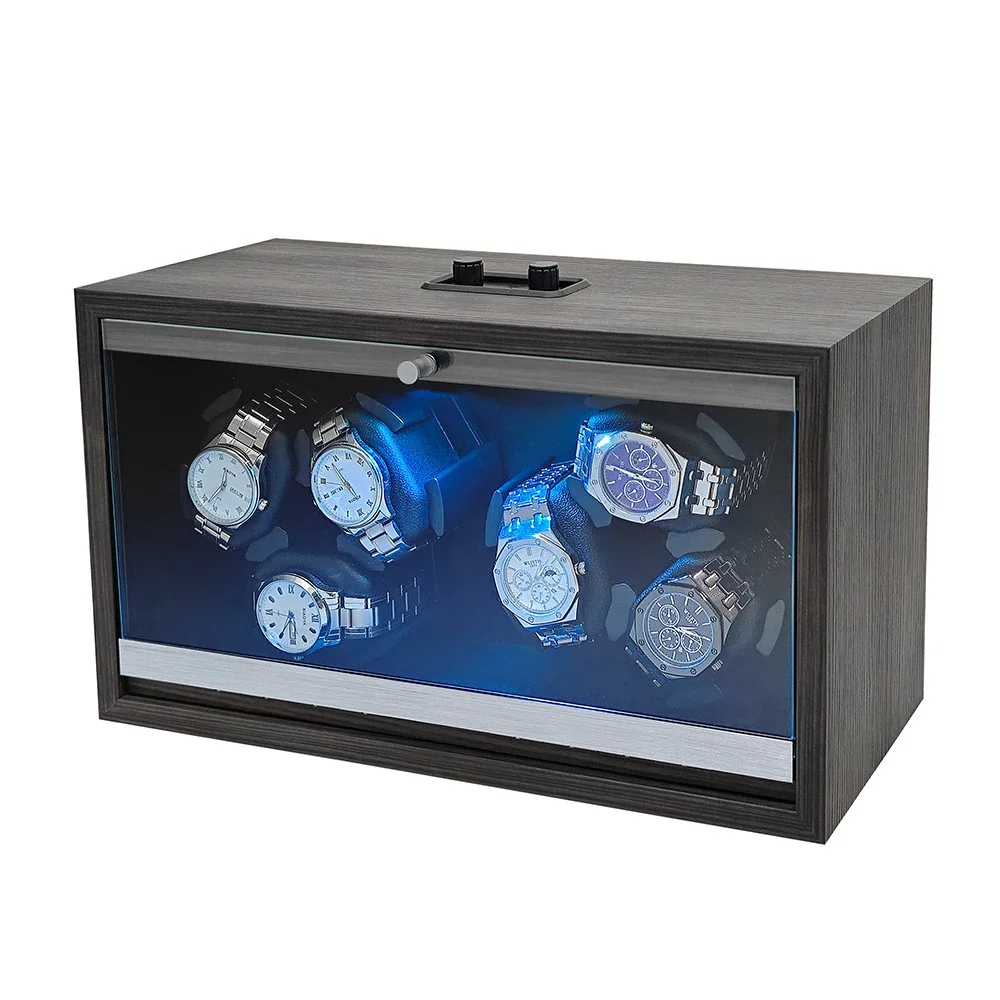
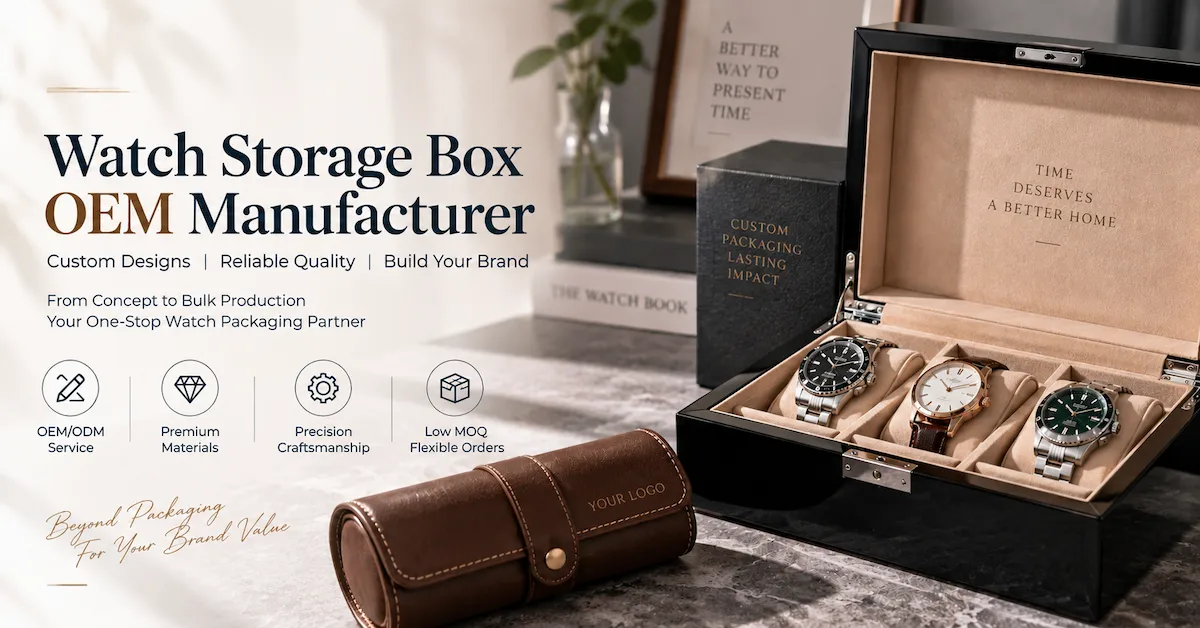
Start by identifying whether the box accompanies a watch, is sold separately as a storage accessory, or supports a retail presentation. For a watch-brand launch, prioritize product fit, brand presentation and any space required for cards or documents. For an accessory collection, compare capacity, opening convenience and the intended storage environment. For travel-oriented products, make portability, separation and closure behavior explicit sample-review criteria. For corporate gifts, establish artwork approval and delivery requirements early. These are different purchasing briefs, even when the exterior styling looks similar. Browse BRT Pak’s eyewear and watch box collection to establish the product direction, then narrow the specification. Keep powered winding functions, electronic controls and specialized security requirements outside a standard non-powered storage-box brief unless they are expressly included in the project.
Define Watch Fit Before Approving Exterior Dimensions
External dimensions are useful for planning shelf space and packaging, but they do not establish usable compartment space or cushion compatibility. BRT Pak’s existing purchasing guide highlights compartment width, cushion dimensions, lid clearance and watch spacing as separate checks. For your OEM project, go further by identifying the actual watches used for approval: include the largest relevant case, the thickest model and the smallest intended closed strap or bracelet configuration. Test the fully loaded arrangement rather than one conveniently sized watch in an otherwise empty box. Treat the following table as a buyer-side specification checklist; project values and acceptance tolerances must be agreed rather than assumed.
| Specification item | Information to define | Suggested approval check |
|---|---|---|
| Watch capacity | Number of watches and compartment arrangement | Load every intended position |
| Watch dimensions | Case width, thickness and projections such as the crown | Check the actual watch envelope within each compartment |
| Strap or bracelet fit | Intended closed sizes and representative configurations | Fit each approved watch around the cushion |
| Cushion construction | Dimensions, filling, covering and attachment method | Check support, removal and positioning |
| Lid clearance | Required space above the loaded watches | Close the lid without unwanted contact or pressure |
| Compartment separation | Divider layout and clearance between watches | Review the complete loaded arrangement |
| Materials | Separate specifications for the body, covering and lining | Match the sample to the approved material references |
| Branding | Artwork version, dimensions, position and process | Compare the physical mark with the approved reference |
| Delivery packaging | Individual protection, carton arrangement and labeling | Review the packed product, not only the bare box |
Separate the Structural Material, Surface Covering and Lining
Avoid approving a watch box with a description such as “premium leather finish” or “luxury wood.” Ask for the structural material, exterior treatment and contact lining to be identified separately. BRT Pak’s watch-box purchasing guidance distinguishes PU from genuine leather and advises buyers to confirm the construction behind a wooden-style appearance. Apply that distinction to the bill of materials—the agreed list of components and materials used for production. Record the selected sample reference, color and texture alongside the material description. Evaluate the lining on the finished sample, including seams, folds and exposed edges, rather than approving it only from a loose swatch.
Compare BRT Pak Models as Starting Points for OEM Development
BRT Pak lists lacquered watch boxes and leatherette watch rolls that provide different starting points for an OEM discussion. The comparison below separates published product descriptions from suggested purchasing applications and approval priorities. It is not a universal compatibility rating: confirm the current dimensions, available modifications and final construction for the selected version before ordering.
| Model and product link | Published format or finish | Suggested purchasing application | Priority before approval |
|---|---|---|---|
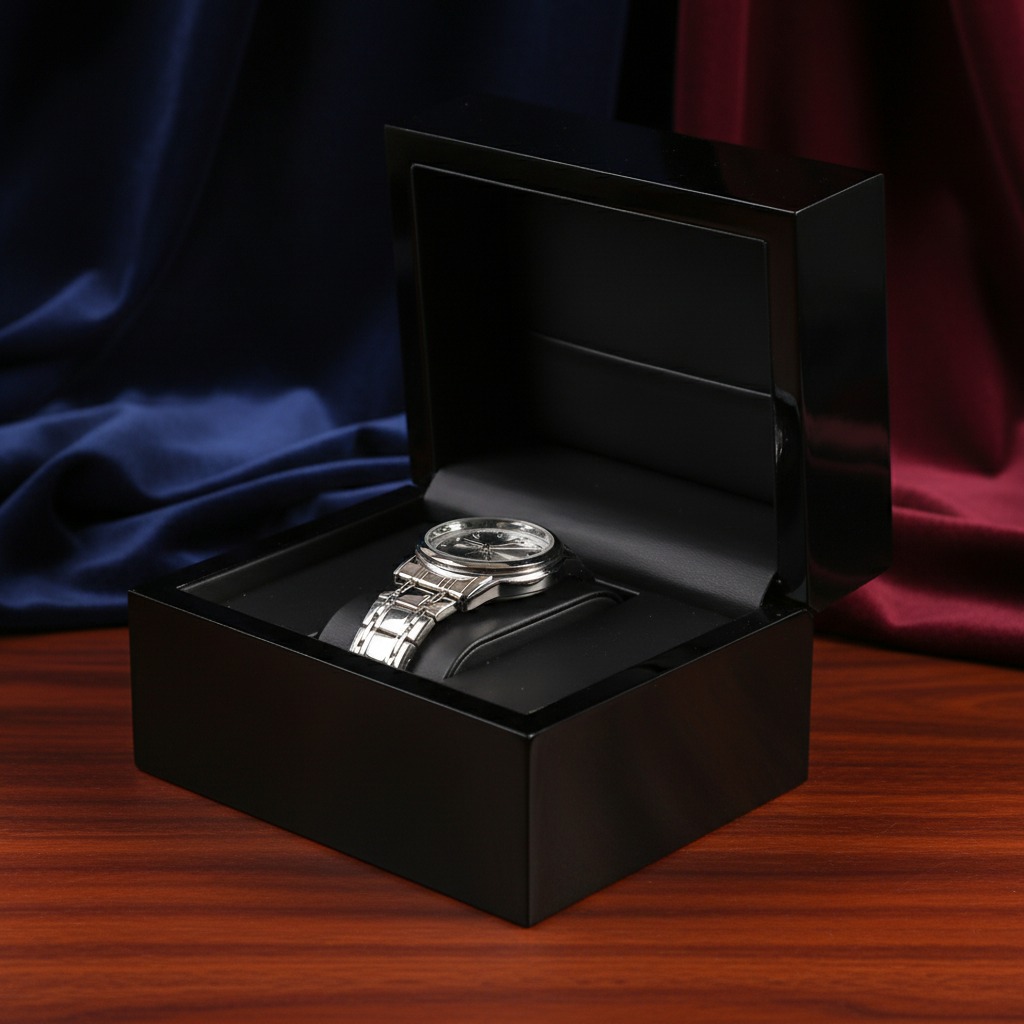
| WB048 black lacquer watch box | Black lacquer, piano-style watch box. | A starting point for branded presentation or gift packaging | Review the finish, lid alignment, interior layout and logo execution |
| JBW817W red lacquer watch box | Red-lacquer wooden watch box. | A starting point for a contrasting presentation style within a collection | Confirm the construction, color reference and watch-to-cushion fit |
| JBW1013W-2 two-slot watch roll | Two-slot leatherette watch roll. | A two-watch accessory or travel-storage project | Test both positions with the intended watch sizes |
| JBW1013W-3 three-slot watch roll | Three-slot PU/leatherette watch roll with individual compartments and a snap-button closure. | A multi-watch storage accessory collection | Review full-load separation, cushion positioning and closure behavior |
Turn Logo and Finish Choices into Inspectable Requirements
“Custom logo” is not a complete instruction. Specify the artwork revision, physical dimensions, location and chosen process, then approve the result on the actual production material. BRT Pak’s logo finishing guide discusses embossing, debossing, hot stamping, printing and related finishing options, including the need to test material response. For a watch storage box OEM manufacturer, the useful question is not simply whether a logo can be added, but how its appearance will be checked consistently. Request a physical reference for acceptable edge clarity, position and color. For lacquered products, agree on the viewing conditions used to assess surface appearance; for stitched products, record expectations for thread color, seam alignment and visible finishing. Avoid approving these details solely from a compressed photograph.
Use Separate Approvals for Design, Fit and Production Readiness
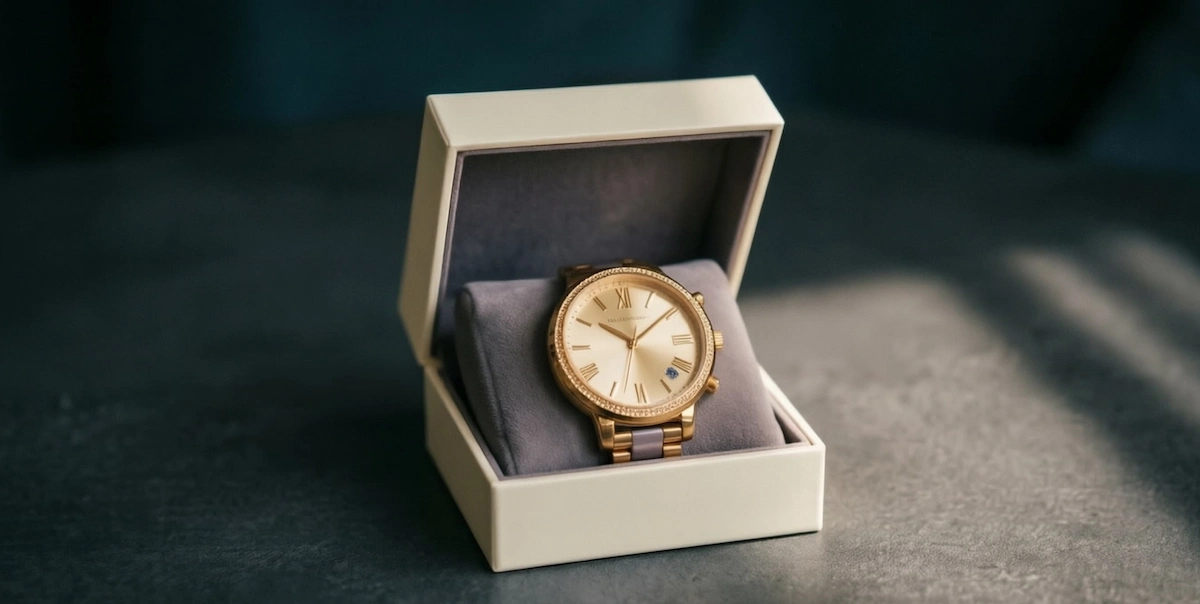
BRT Pak’s published development workflow includes requirement confirmation, design sketches, prototypes, material selection, sample confirmation and logistics packaging. For your project, divide approval into three decisions: whether the design direction is correct, whether the physical construction fits the watches, and whether the final sample represents the version to be manufactured. A visual reference such as the DW001 watch box design can help communicate a concept, but the approval record should identify which details still require physical review. BRT Pak’s prototype guidance also distinguishes digital presentation from checking actual materials, fit and opening experience. Use a dated revision record so that “approved” cannot refer to an earlier cushion, a different lining or an unfinished logo treatment.
Agree on Quality Checks Before Bulk Production
Inspect Function and Appearance Against the Same Reference
BRT Pak’s manufacturing guide describes checks at the material, production and final-product stages, including dimensions, assembly, finishing, opening behavior and interior fit. Translate those categories into an order-specific inspection sheet rather than relying on “premium quality” as the acceptance standard. Ask the watch storage box OEM manufacturer to identify how the approved sample, written dimensions and appearance references will be used together. Add photographs of unacceptable conditions where practical, such as a misaligned logo, exposed adhesive or a cushion that does not sit correctly. Agree on the inspection scope and the process for reviewing problems before shipment. These are proposed purchasing controls, not a claim that every catalog item has undergone the same test program.
Request Evidence Relevant to the Actual Product
Prepare a document request based on the destination market, retailer requirements and claims planned for the finished product. Ask for the issuing organization, named company, covered material or product, relevant model and current status of each document supplied. Keep general factory information separate from evidence about a particular watch box. Where a claim such as water resistance, transport protection or a specified service life matters to the project, request the applicable method, conditions and results before approving that claim for marketing. Where supporting information is unavailable, leave the claim unconfirmed rather than treating a photograph or catalog adjective as proof.
Confirm MOQ, Capacity and Lead Time for the Actual Order
BRT Pak’s manufacturing guidance states that minimum order quantity and production time depend on the project’s materials, structure, customization and approval requirements. Obtain written terms for your selected version rather than applying one catalog condition to every OEM order. Ask for quantities to be separated by model, color and branding configuration, and distinguish design time, sample preparation, revisions, material readiness, production, inspection and dispatch. When assessing capacity, ask how your order fits the proposed schedule and how repeat orders would be handled. A useful response from a watch storage box OEM manufacturer is a dated plan with clear dependencies—not simply a factory-size figure or an undifferentiated lead-time estimate.
Compare the Complete Quote, Not Only the Unit Price
Build a comparison using the same approved specification and delivery scope. Request separate entries for development, samples, tooling where applicable, production, branding, individual protection, cartons and any agreed inspection or transport services. Mark each item as included, excluded or awaiting confirmation. Consider a simple purchasing example: one quotation covers a finished box and retail carton, while another covers only the box. Neither figure is directly comparable until the missing scope is identified. Also request a revised quotation when changing the material, number of compartments or finish instead of assuming the previous price remains valid. For a proposed cost reduction, ask what changes, which approval checks must be repeated and whether the revised version still meets the project’s requirements.
Clarify OEM and ODM Responsibilities Before Development
BRT Pak describes OEM and ODM support within its packaging services. In your brief, state the practical scope rather than relying on the label alone: production from supplied drawings, modification of an existing model, or development of a new concept. Identify who supplies the drawings, who reviews manufacturing changes and which elements must remain unchanged. A request for logo application is different from a request to redesign the cushion, divider arrangement and lid. Ask the watch storage box OEM manufacturer to confirm the included design work, sample revisions and deliverables before development starts. Also request written agreement on the handling of brand assets, drawings and any project-specific tooling; do not assume exclusivity or ownership terms are included automatically.
Control Repeat Orders with a Product Revision Record
For private-label watch boxes, treat the first approved order as the beginning of a maintained specification. Retain the model reference, drawing revision, material references, artwork file, approved sample photographs and packaging configuration in one project record. For each reorder, ask whether any material, component or process is proposed to change. Record approved substitutions rather than allowing a new version to inherit the old approval silently. For example, when requesting a different lining color, ask whether the supplied material will otherwise remain the same and whether a new sample is needed. This is a recommended buyer-side workflow: its purpose is to make “same as last order” precise enough to review.
Prepare a Quote-Ready Project Brief
Before approaching a watch storage box OEM manufacturer, prepare the intended application, watch dimensions, capacity, preferred model or design reference, material direction, logo file and quantity breakdown. Add the target delivery destination, required arrival date and any retailer-specific packaging or documentation requirements. Separate fixed requirements from preferences open to discussion. An existing model reference can be paired with a clear change request, such as keeping the exterior direction while reviewing the cushion fit and branding position. For a new design, explain the problem it must solve before specifying every decorative detail. A brief that distinguishes confirmed information from open questions gives the supplier a clearer basis for proposing a feasible next step.
Frequently Asked Questions
1. How Should I Evaluate a Watch Storage Box OEM Manufacturer?
Evaluate the proposed deliverables: a clear specification, relevant product references, a physical approval process, an inspection plan and written commercial terms. Use the same brief when comparing suppliers so that their answers address the same construction and purchasing scope.
2. Can an Existing Watch Box Be Used for a Private-Label Project?
Use an existing model as a starting point and request confirmation of the available modifications. Identify whether the project needs only branding changes or also requires a different cushion, lining, size or internal arrangement. Confirm the resulting sample and quotation.
3. How Can I Check Fit for Smaller Wrists or Larger Watches?
Provide representative watches or agreed dimensional references covering the intended range. Ask for a review of the closed strap or bracelet around the cushion, the loaded case position and the clearance beneath the lid. Do not approve compatibility from exterior box dimensions alone.
4. Should I Choose a Lacquered Box or a Watch Roll?
Choose according to the intended use, then compare samples. A branded presentation project and a portable accessory project should not be judged by identical criteria. Review opening behavior, space, watch separation, handling and packaging against your own application.
5. Can I Approve an OEM Watch Box from a 3D Rendering?
Use a rendering to approve the visual direction while recording the items still requiring physical verification. Review fit, material feel, closure behavior and final logo appearance on the appropriate sample before treating the design as production-ready.
6. What Is the MOQ for Custom Watch Storage Boxes?
Request the current MOQ for the exact model and customization level. Ask whether quantities are calculated per size, color, logo version or packaging configuration. Do not assume that one published quantity covers an entirely new construction.
7. How Should I Plan the Production Schedule?
Request separate dates for design approval, sampling, revisions, material readiness, manufacturing, inspection and dispatch. Clarify when each stage begins and which buyer approvals are required. Plan against the required arrival date, with transport discussed separately from production.
8. What Should Be Approved Before Bulk Production?
Approve the agreed construction, fit references, materials, color, finish, artwork, closure and delivery packaging. Record the sample version and any unresolved items. Specify whether production may proceed with an open item or must wait for final confirmation.
9. What Should I Ask About My Logo, Drawings and Tooling?
Ask how project files will be stored, who can access them and whether they may be reused. Request written clarification of any tooling charges, ownership arrangements and exclusivity terms relevant to the project before sharing or commissioning sensitive design work.
10. How Can I Make Repeat Orders More Consistent?
Reference the same product revision and approved sample in every reorder. Ask the supplier to disclose proposed changes to materials, components, artwork or packaging, and agree on which changes require a new sample or written approval.
Conclusion
Choosing a watch storage box OEM manufacturer should lead to an agreed product specification, not just an attractive sample. Define the storage application, verify watch fit, approve materials and finishing, and connect those decisions to inspection and reorder records. That approach gives watch brands, importers and private-label sellers a practical basis for reviewing both the first shipment and future batches. To discuss a project with BRT Pak, send your watch dimensions, preferred storage format, quantity and branding requirements, including any reference model and details that still need development. The next step is to establish what can be retained, what needs modification and what must be verified before production.