
What Should a Watch Storage Box Custom Manufacturer Actually Customize?
For a professional buyer, customization should mean more than placing a logo on an existing box. A watch storage box custom manufacturer should be able to translate the intended watch type, capacity, brand positioning, storage environment and presentation requirements into a defined combination of structure, interior layout, cushion, exterior material, lining, hardware, color and branding treatment. The most important difference between a catalog purchase and a custom project is that these variables are agreed before production rather than left open to interpretation. BRT Pak presents watch packaging alongside jewelry boxes, gift boxes, displays and related packaging products in its product portfolio, while its manufacturing workflow covers requirement confirmation, design development, prototyping, material selection and sample confirmation. For buyers, that means the first objective is not to ask “What is your best watch box?” but to define what the finished storage box must do for the watch, the brand and the customer.
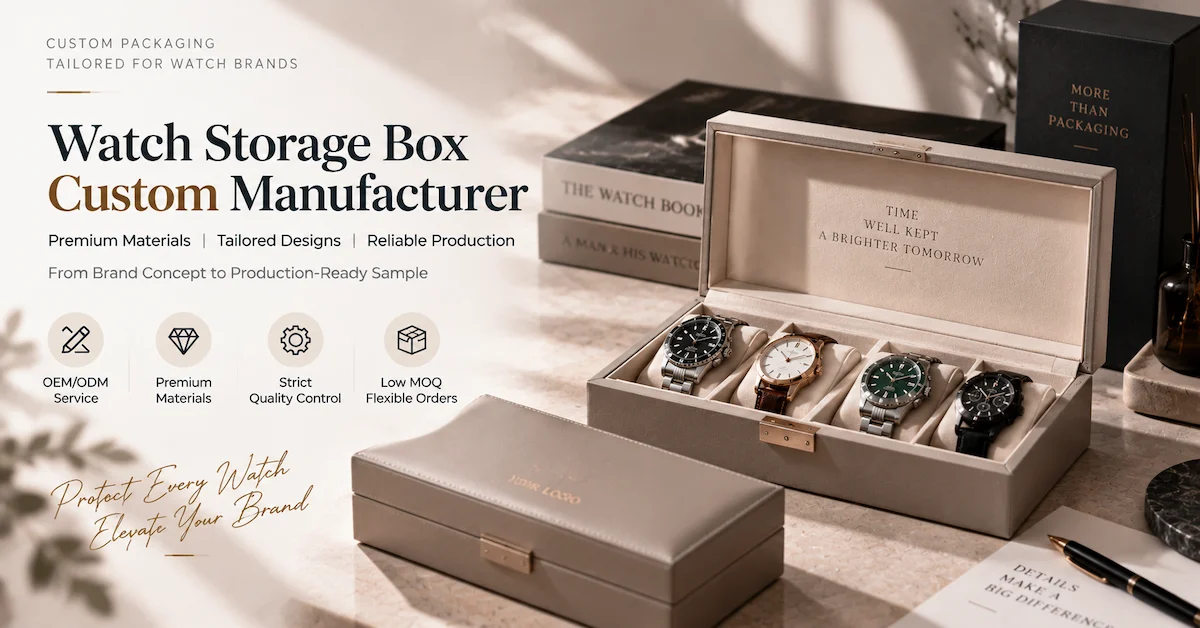
Who Needs a Custom Watch Storage Box—and Who May Not?
Custom development is most relevant to watch brands launching a collection, private-label accessory companies building their own watch-storage line, importers that need repeatable specifications across multiple orders, gift companies developing branded programs, and retailers looking for packaging that fits a particular watch or visual identity. These buyers normally need more control over dimensions, surface appearance, cushion fit, compartment layout and logo execution than a standard stock item provides. A fully customized program may be unnecessary when the buyer only needs a small quantity of generic storage boxes with no material, dimensional or structural changes. In that situation, an existing model may be a more practical starting point. The purchasing question should therefore be whether the project requires a different brand identity, product fit or functional layout—not whether “custom” simply sounds more premium.
Start With the Application Before Choosing the Box Style
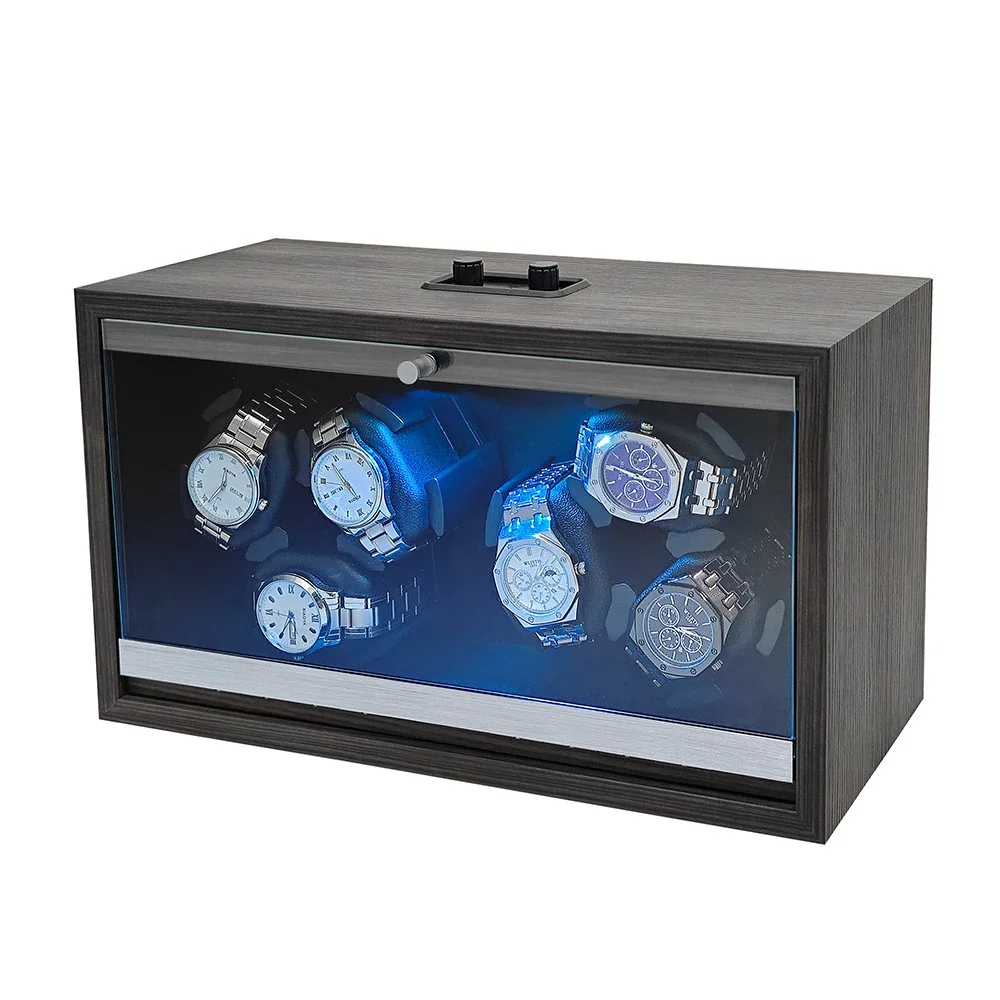
A watch box supplied with a new watch, a multi-watch organizer sold as an accessory, and a storage case used for gifting do not have the same design priorities. Brand packaging may place greater emphasis on presentation, logo position and the relationship between the watch and its interior cushion. A retail storage accessory may need several compartments, easy access and an interior that works across a defined range of watches. A gift project may add outer packaging, messaging or a coordinated color system. This is why a watch storage box custom manufacturer should receive the application before being asked to recommend materials. BRT Pak’s existing watch storage box buying guide similarly emphasizes that professional buyers need to consider capacity, cushion dimensions, compartment spacing, material, workmanship and customization rather than judging the box only by exterior appearance.
Define Watch Fit Before Exterior Appearance
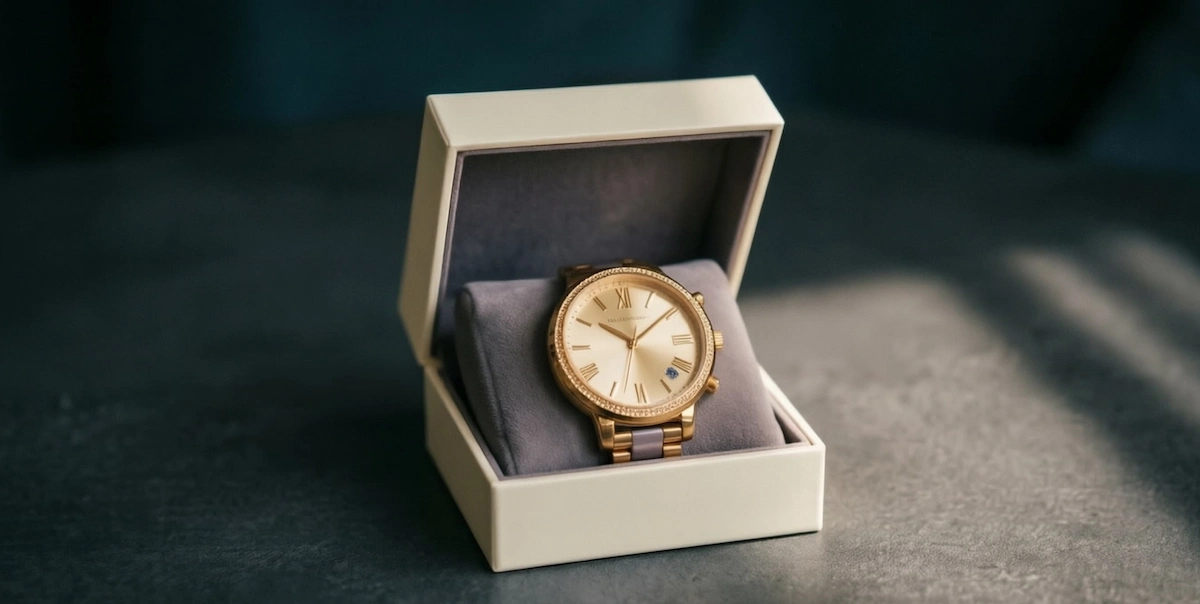
The most attractive exterior cannot compensate for a watch that sits incorrectly inside the box. Buyers should define the actual product envelope by considering watch case diameter, case thickness, crown projection, bracelet or strap configuration and the wrist-size range the cushion needs to accommodate. The cushion should support the watch without requiring excessive force, and the loaded watch should have sufficient clearance from adjacent compartments and the inside of the lid. For multi-watch storage, evaluate the box fully loaded because spacing that appears adequate with one watch may change when every position is occupied. The following framework is suitable for discussing a project with a watch storage box custom manufacturer, but final dimensions and tolerances should always be confirmed against the actual product and approved sample.
| Specification Area | Buyer Should Define | Sample Approval Focus |
|---|---|---|
| Capacity | Number of watches and compartment arrangement | Load all positions simultaneously |
| Watch size | Case diameter, thickness and projections | Check side and lid clearance |
| Strap/bracelet | Intended closed circumference range | Verify cushion compression and removal |
| Cushion | Shape, size, covering and firmness | Check support without excessive pressure |
| Compartment | Width, depth and divider layout | Confirm watches do not contact each other |
| Lid clearance | Space above the loaded watch | Check closure without unwanted contact |
| Exterior | Material, color and finish reference | Compare with approved physical reference |
| Interior | Lining material and color | Inspect contact surface and finishing |
| Branding | Logo size, position and technique | Compare with approved artwork/sample |
| Packing | Individual protection and carton format | Review finished packed product |
Specify the Body, Exterior, Lining and Cushion Separately
Material descriptions often become too vague during custom packaging discussions. “Leather watch box,” “wooden box” or “velvet interior” may describe an appearance without fully explaining the actual construction. A more controlled specification separates the structural body from the surface covering, lining, cushion and hardware. This matters because two boxes can look similar in photographs while using different constructions that affect appearance, weight, finishing and quotation. BRT Pak’s published watch-storage content also distinguishes PU from genuine leather and encourages buyers to confirm what sits beneath a wooden-style surface instead of assuming material composition from appearance alone. For each approved material, record the material description, sample reference, color reference and relevant surface texture. If sustainability or material-origin claims are important to the destination market, request documentation that applies to the specific material being ordered rather than relying on a general company-level statement.
How Should Buyers Evaluate Lacquer, PU and Other Surface Finishes?
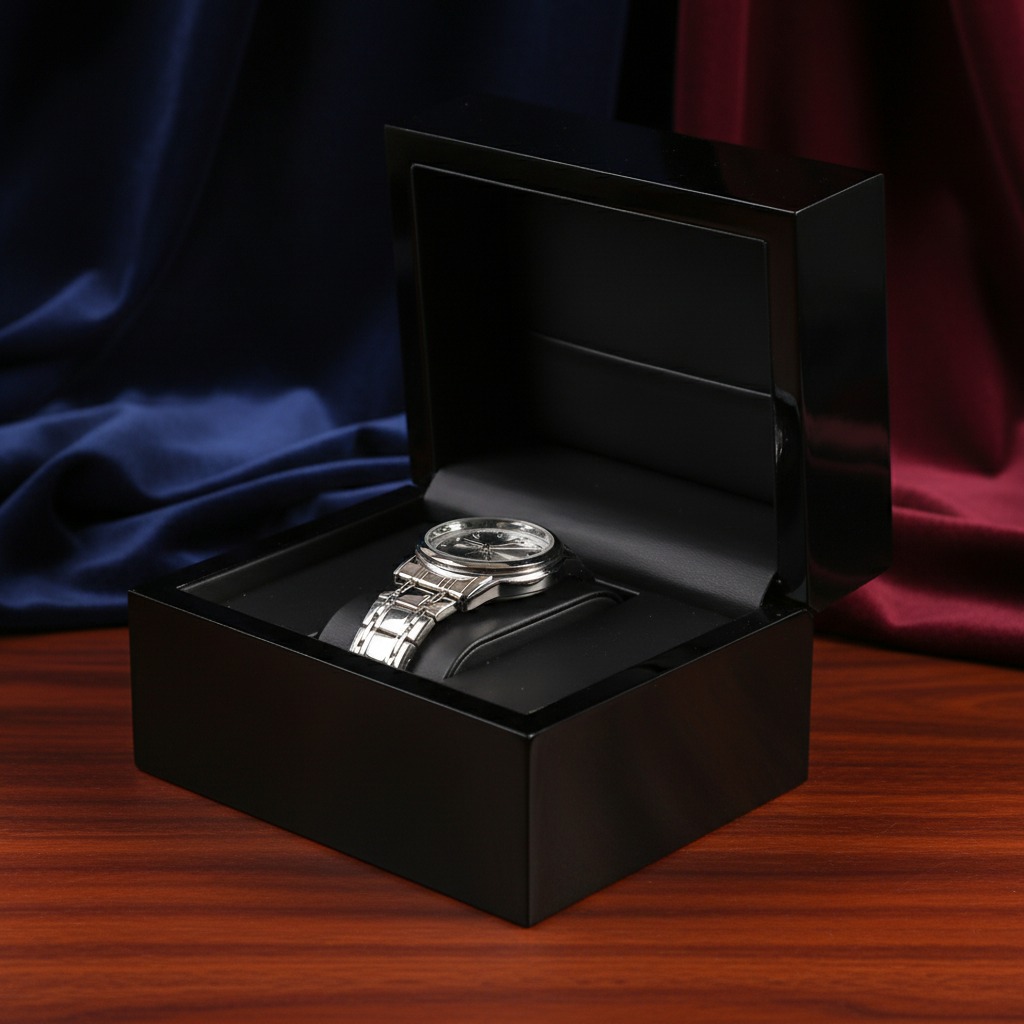
Surface selection should follow the intended product position and use environment. A glossy lacquered watch box can create a highly polished presentation, but buyers should pay close attention to surface consistency, visible marks, edge finishing and alignment under realistic viewing conditions. PU-covered products can offer different textures and colors, but stitching, wrapped corners, seams and logo response become important inspection points. Fabric or microfiber-type surfaces introduce another set of considerations, including direction, pile consistency, edge wrapping and contact appearance. BRT Pak currently lists several different watch-storage directions, including the WB048 black lacquer watch box and the JBW817W red lacquer watch box. These are useful as visual and structural starting points, but buyers should still confirm the current material specification and available customization for their project.
Make Logo Customization an Inspectable Specification
A request such as “add our logo in gold” is not sufficient for repeatable manufacturing. Buyers should define the artwork version, physical dimensions, location, orientation and finishing method, then approve the result on the actual selected material. Embossing, debossing, hot stamping, printing and applied logo components can create different results depending on surface texture, softness and construction. BRT Pak’s logo customization guide discusses several of these finishing approaches and the need to consider how a material responds to a branding process. A practical approval record should also specify how positioning, sharpness, foil appearance or impression depth will be judged. The aim is to replace subjective instructions such as “make it look premium” with a reference that purchasing, production and inspection teams can all understand.
Use Existing Models to Reduce Unnecessary Development
Custom manufacturing does not always require designing every component from zero. An existing product can provide a starting structure while selected elements are modified to suit the brand. This can make the development conversation more concrete because buyers can identify exactly what should remain and what needs to change. The models below illustrate different starting directions available on the BRT Pak website; they should not be treated as a promise that every element can be changed without engineering or commercial review.
| BRT Pak Model | Published Product Direction | Suitable Customization Discussion |
|---|---|---|
| WB023 Black Lacquer Wooden Watch Box | Compact black lacquer wooden watch box | Logo, interior presentation, surface direction and packaging |
| WB048 Lacquer Black Piano Watch Box | Glossy black lacquer presentation box | Branding, lining direction, cushion fit and overall presentation |
| JBW817W Red Lacquer Watch Box | Red lacquer wooden box with PU-related interior description | Color concept, surface treatment, interior and private-label presentation |
The correct comparison is not simply which model “looks more expensive.” A buyer should ask which structure is closest to the required product, what needs modification, and whether those changes require a new physical sample.
Treat the Sample as a Production Reference, Not a Sales Sample
One of the most important responsibilities of a watch storage box custom manufacturer is converting an approved concept into a version that can be repeated. BRT Pak’s company development process includes requirement confirmation, design sketches, physical prototype development, material selection and final sample confirmation. For buyers, each stage should answer a different question: Is the design direction correct? Does the physical box fit the intended watch? Are the materials and finishing acceptable? Is this exact revision ready to become the production reference? The approval record should identify the model or drawing version, material references, logo artwork, interior configuration and packaging requirement. If a cushion, lining, logo technique or structure changes after approval, the buyer and manufacturer should determine whether a revised sample is required rather than allowing the new version to inherit approval automatically.
What Workmanship Details Matter in Bulk Production?
Custom watch boxes contain many details that may look minor individually but strongly affect the overall presentation when repeated across a batch. On lacquered boxes, examine surface consistency, corners, edges, lid alignment and visible marks. On covered boxes, inspect wrapped corners, seam transitions, stitching, adhesive residue and material direction. On the inside, look at lining application, cushion finishing, divider alignment and how easily the watch can be placed and removed. For logo execution, compare position, size, color and clarity against the approved reference. BRT Pak’s published watch-storage purchasing content specifically calls attention to stitch spacing, straightness, loose ends, corner finishing, adhesive residue and logo consistency, making these useful discussion points for a buyer-side inspection specification.
Quality Control Should Follow the Approved Specification
“Good quality” is not an inspection criterion because two teams can interpret it differently. A better approach is to convert the approved sample and written specification into measurable or visually referenceable checkpoints. Define which dimensions are critical, what the correct watch fit looks like, which surface conditions are unacceptable, how the logo should appear, and how the finished box should open, close and present the product. For custom orders, buyers should also agree on how inspection findings are recorded and how nonconforming items are handled before shipment. BRT Pak’s watch storage box factory guide discusses material selection, structural design, customization and quality consistency as important sourcing criteria. If a project requires specific certificates or test documentation, verify the named company, product or material covered, applicable version and current status rather than assuming that a factory-level document automatically applies to every watch box.
Do Not Apply One MOQ or Lead Time to Every Custom Project
Customization level affects commercial terms. A logo added to an existing product is different from a new size, new cushion construction or entirely new box structure, and those changes may affect material preparation, sampling, tooling, production setup and inspection requirements. For this reason, buyers should request the current MOQ and schedule against the exact selected configuration rather than copying a number from a different watch box. BRT Pak’s existing guidance likewise notes that MOQ and production time depend on materials, structure, customization and the specific order. A useful production schedule separates design confirmation, sample preparation, sample approval, material readiness, production, inspection and dispatch so that both sides know which stage depends on buyer approval. When capacity is important, ask whether the proposed delivery date is realistic for the actual order and current production loading rather than relying only on a general factory-capacity statement.
Compare Custom Watch Box Quotes on Equal Scope
Unit price has limited value when two quotations describe different products. A buyer comparing custom manufacturers should confirm whether each quote covers the same structural material, exterior finish, lining, cushion, hardware, logo treatment, individual packaging and carton configuration. Development costs, samples, tooling where applicable and any special inspection requirements should also be identified separately. If one supplier quotes a complete private-label package while another quotes only the bare storage box, the lower number does not represent a like-for-like saving. The risk becomes greater when buyers change a material after sample approval to reduce cost because color, stiffness, logo response or wrapping performance may also change. A strong purchasing process therefore links every price revision to a clear specification revision.
Custom Manufacturing Is Different From Simple Logo Personalization
Private-label projects often begin with a logo request, but custom manufacturing can extend much further. Simple personalization may preserve the existing dimensions, internal structure and materials while changing branding or color. Structural customization may alter the compartment, cushion, size, opening format or interior arrangement. A newly developed product may start with a brand concept and require drawings, material choices and several rounds of physical review before the product is ready for production. BRT Pak describes OEM and ODM support as part of its broader packaging service model, allowing buyers to discuss both existing-product adaptation and more extensive development through its About Us page. Buyers should define which level they need at the beginning because it affects development scope, responsibilities, sampling and quotation.
How Can Buyers Reduce Repeat-Order Risk?
Repeatability becomes especially important when a watch brand uses the same packaging over multiple seasons or markets. Keep a controlled project record containing the approved model, latest drawing or specification, material references, color reference, artwork version, approved sample and delivery-packaging configuration. Before each reorder, ask whether the manufacturer proposes any material, hardware, finish or process changes. If a substitution is necessary, identify whether it affects appearance, fit or production performance and whether reapproval is required. This kind of revision control gives the phrase “same as last order” a precise meaning. It also helps a watch storage box custom manufacturer understand which characteristics are fixed brand requirements and which can be adjusted in future orders.
What Information Should You Send Before Requesting a Custom Quote?
A quote-ready inquiry should give the manufacturer enough information to understand the product and identify what remains unresolved. Include the intended use, watch dimensions, required capacity, target quantity, preferred box style, material direction, logo artwork, target colors, interior requirements, destination market and required delivery timing. Reference an existing BRT Pak model when appropriate and state exactly what you want to change. If the product is still at concept stage, identify the functions and presentation requirements first instead of trying to define technical details you have not yet validated. Buyers can review BRT Pak’s watch and packaging product range before preparing the brief, then submit the project through the contact page.
FAQ About Working With a Watch Storage Box Custom Manufacturer
1. What Can Usually Be Customized on a Watch Storage Box?
Customization can involve the exterior appearance, color, logo, lining, cushion, compartment arrangement, packaging and, where the project supports it, structural dimensions. The available scope should be confirmed against the chosen model and production method rather than assumed to be unlimited.
2. Should I Send the Actual Watch for Sample Development?
Where practical, an actual watch or an accurately defined dimensional reference makes fit verification more reliable. The manufacturer needs to understand case dimensions, thickness, strap or bracelet configuration and the intended cushion fit.
3. Is a 3D Design Enough to Approve a Custom Watch Box?
A digital design can help confirm appearance, proportion and structural direction, but a physical sample is more suitable for evaluating material feel, cushion fit, opening behavior, surface finishing and final logo execution.
4. How Do I Choose Between a Wooden and PU-Covered Watch Box?
Base the choice on brand positioning, intended use, construction requirements, finishing preferences and budget. Compare actual material samples and completed boxes instead of relying only on digital images or category names.
5. Can I Use an Existing Watch Box and Only Change the Logo?
Yes, where the selected product supports that customization. This can be simpler than developing a completely new structure, but the logo method, size, location and appearance should still be approved on the actual material.
6. What Should I Inspect on the Final Sample?
Check watch fit, cushion, compartment spacing, lid clearance, exterior and interior materials, surface finish, stitching or wrapping, hardware, logo execution and individual packaging. Record the approved version before production.
7. What Determines the MOQ for a Custom Watch Box?
MOQ can depend on the model, materials, custom colors, logo method, structure and production requirements. Confirm it specifically for the proposed configuration instead of applying another product’s published quantity.
8. How Should I Compare Two Watch Box Manufacturers?
Give both manufacturers the same project brief and compare their proposed construction, materials, sample process, quality controls, quotation scope and production schedule. A unit-price comparison without an equal specification can be misleading.
9. How Do I Maintain Consistency on Repeat Orders?
Use the approved sample and written specification as the reference, keep artwork and material versions controlled, and review any proposed substitutions before the next production run.
10. Does BRT Pak Support Custom Watch Packaging Projects?
BRT Pak describes design development, material selection, prototyping, OEM/ODM manufacturing and packaging-related services as part of its business. Buyers should submit the actual project requirements so the applicable customization scope, MOQ and schedule can be confirmed.
Conclusion
Choosing a watch storage box custom manufacturer is ultimately a specification-management decision rather than an appearance-only decision. Watch brands, importers and private-label sellers should define the application first, verify watch and cushion fit, separate each material layer in the specification, approve branding on the actual surface, and treat the final physical sample as a controlled production reference. Commercial terms such as MOQ, development scope and lead time should then be confirmed for that exact configuration instead of copied from another model. BRT Pak offers multiple watch-packaging directions and a development process covering requirement analysis, design, material selection, prototyping and sample confirmation. To move from an idea to a quote-ready project, contact BRT Pak with your watch dimensions, target quantity, preferred style, material direction, logo file and delivery requirements so the items requiring customization and verification can be defined before production.