
What Should an Earring Box Supplier Help a Jewelry Brand Solve?
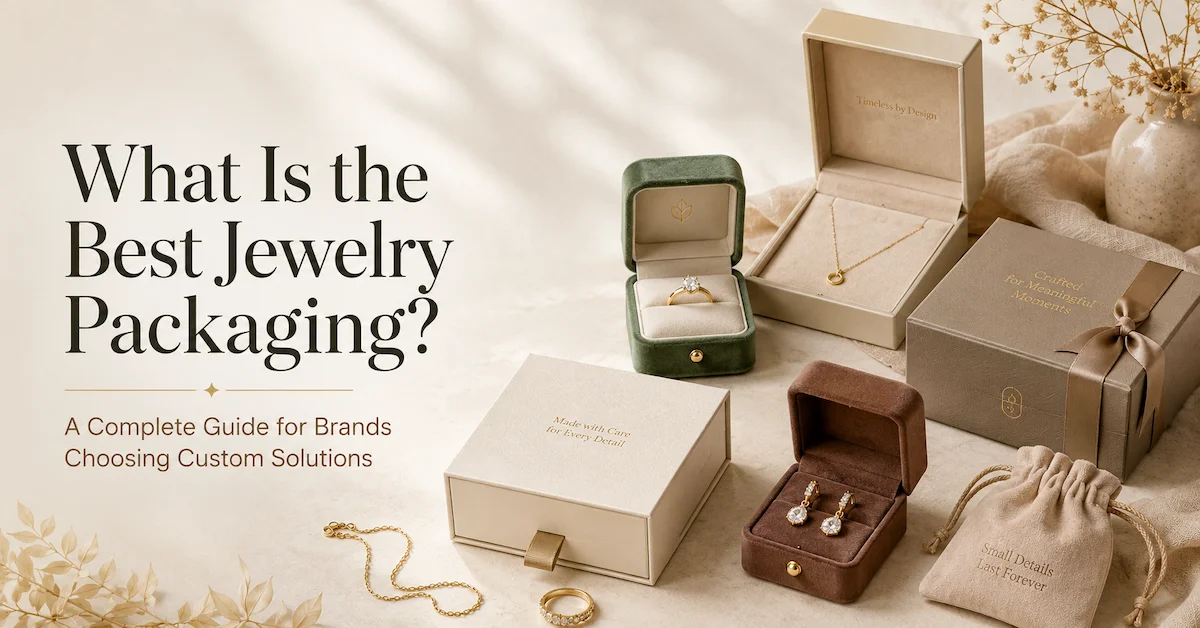
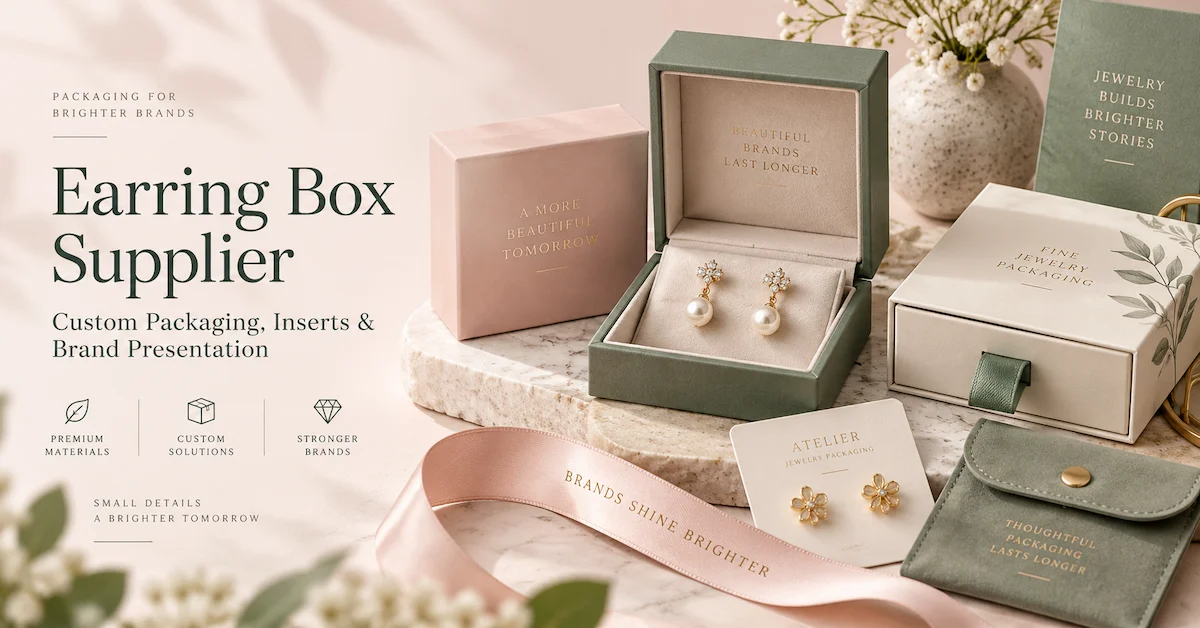
A professional earring box supplier should help a buyer solve three problems at the same time: keeping the earrings positioned correctly, presenting them in a way that matches the brand, and turning the approved design into a specification that can be reproduced in bulk production. Earrings create a different packaging challenge from rings, necklaces or bracelets because the product may use posts, hooks, hoops or hanging components, and each format interacts differently with an insert. BRT Pak’s existing jewelry-packaging guidance identifies accurate positioning, protective inserts, product visibility and compact storage as important considerations for earring packaging, while its broader OEM process covers structure development, material selection, branding, sampling and production. Buyers can begin by reviewing the Jewelry Boxes collection and then define what the earring package must accomplish rather than selecting a box by exterior appearance alone.
Why Earring Packaging Needs Its Own Specification
An earring package should not simply inherit the insert used for another jewelry category. Stud earrings need controlled positioning so the pair remains aligned and visible; hoop earrings require enough internal space for the diameter and fastening mechanism; drop earrings need vertical clearance and an insert arrangement that prevents the hanging section from folding awkwardly; larger statement pieces may require more spacing to avoid contact between components. These are buyer-side design considerations rather than fixed specifications for every BRT Pak model, but they explain why the supplier should receive the real product dimensions before recommending an internal structure. BRT Pak’s OEM jewelry-box content specifically states that earring boxes require accurate positioning and that product-specific structures should be developed around the jewelry rather than relying on one general insert.
| Earring Format | Main Packaging Question | Sample Check |
|---|---|---|
| Stud earrings | Can both pieces remain aligned without excessive movement? | Check post position, backing clearance and pair symmetry |
| Huggies / small hoops | Does the insert accommodate the closed hoop diameter? | Check placement, removal and lid clearance |
| Medium / large hoops | Is there enough space between the pair and surrounding walls? | Check full diameter and fastening mechanism |
| Drop earrings | Can hanging components remain separated and visible? | Check vertical clearance and movement |
| Statement earrings | Does the insert support irregular size or weight distribution? | Test with the actual finished pair |
| Mixed collection | Can one box format support several SKUs without poor fit? | Test every intended SKU rather than one representative sample |
Start With the Actual Earrings Before Choosing Box Dimensions
For B2B purchasing, the most useful starting point is the jewelry itself. Send the supplier the overall width, height and depth of the pair, together with information about the post, hook, clasp or hoop structure. If a collection contains several earring sizes, identify the smallest and largest products intended for the same packaging. A box may have sufficient external dimensions but still fail because the insert holes are too close together, the backing touches the box wall, the earrings tilt after handling, or the lid interferes with raised stones or decorative elements. This is why an earring box supplier should be asked to confirm both the internal usable space and the insert geometry. BRT Pak’s custom jewelry packaging guide similarly emphasizes matching packaging structure to the specific jewelry category and checking the insert fit during sample confirmation.
Build an Earring Box Specification Around the Insert
The insert is often the most important functional component in an earring box because it determines product position, visibility and ease of removal. Instead of specifying only “velvet insert” or “earring card,” buyers should define what the insert must do. The approval checklist can include the spacing between the pair, the position of openings or slots, whether the backs are accessible, whether components remain separated, the amount of movement allowed, and whether the jewelry can be removed without pulling excessively on delicate parts. For a private-label collection, also consider whether the insert should work across several SKUs or whether different earring styles need different versions. BRT Pak’s current OEM jewelry-box process includes structure design for earrings, followed by sample confirmation of the inner insert, material texture, color and overall presentation.
| Insert Item | Information to Confirm | Why It Matters |
|---|---|---|
| Pair spacing | Distance and visual alignment | Keeps the pair balanced in presentation |
| Attachment method | Holes, slots, hooks or another approved structure | Must match the earring construction |
| Backing clearance | Space behind or below the insert | Prevents unnecessary pressure |
| Insert firmness | Agreed support and flexibility | Affects positioning and removal |
| Covering material | Material type, color and texture | Influences contact surface and appearance |
| Edge finishing | Wrapped, exposed or otherwise finished | Affects visual consistency |
| Removal method | How store staff or customers take earrings out | Important for practical retail use |
| SKU compatibility | Which earring models use the same insert | Reduces ambiguity on repeat orders |
Choose the Box Structure According to the Sales Channel
An earring box used in a jewelry boutique may prioritize presentation and opening experience, while a DTC e-commerce package also needs efficient secondary packing and a structure suitable for parcel delivery. A gift collection may favor a more decorative opening format, while a high-volume fashion jewelry program may place more emphasis on compact dimensions, repeatable branding and efficient packing. Common structural directions can include lid-and-base boxes, hinged formats, drawer-style boxes and other rigid or lightweight solutions, but the correct option depends on the earring, target price level and distribution channel. BRT Pak’s current jewelry packaging selection guide describes lid-and-base, drawer, folding, magnetic and display-oriented structures as different packaging directions and notes that earring packaging benefits from compact storage and accurate positioning.
Do Not Specify the Material With One Vague Description
Material terminology is another common source of purchasing errors. A phrase such as “luxury velvet earring box” does not explain what forms the structural body, what covers the exterior, what material touches the jewelry, or how the insert is constructed. Buyers should separate the specification into structural material, exterior covering, interior lining, insert, decorative components and logo finish. BRT Pak lists material directions such as velvet, PU leather, microfiber, suede, rigid paperboard, MDF and wood across its jewelry packaging content, but the applicable construction needs to be confirmed for the selected project rather than assuming every material can be combined in every box style.
| Material Decision | Buyer Should Record |
|---|---|
| Structural body | Approved construction and material reference |
| Exterior surface | Material, color, texture and finish |
| Interior lining | Contact material and color |
| Insert | Base material, covering and layout |
| Hardware / closure | Applicable component and finish |
| Logo area | Surface material receiving the branding process |
| Outer protection | Sleeve, bag, carton or other agreed packaging |
Match Material Choice to Brand Positioning and Order Logic
There is no single “best” material for every jewelry brand. A premium fine-jewelry collection may prioritize tactile presentation and a more substantial structure, while a fashion jewelry line may need lighter packaging that can scale efficiently across many SKUs. An online brand may value compact dimensions because the earring box later enters a mailer or shipping carton. A sustainability-led collection may want to reduce unnecessary material combinations and will need to verify the actual composition and documentation behind environmental claims. BRT Pak’s best jewelry packaging guide positions wood, paper-based materials, leatherette, velvet, microfiber and bamboo as different packaging directions with different appearance, weight, cost and brand-positioning considerations. The useful sourcing decision is therefore not “Which material is most luxurious?” but “Which construction supports this product, sales channel and brand requirement with an acceptable production and logistics profile?”
Treat Logo Finishing as a Production Specification
For branded earring packaging, the logo needs the same level of definition as the box structure. Provide the approved artwork file, physical dimensions, position, orientation, color reference and intended finishing method. BRT Pak’s OEM jewelry packaging information lists options including hot stamping, embossing, debossing, metal logo plates and screen printing, while its existing content also emphasizes checking logo accuracy during production. The important point for a buyer is that the chosen process must be reviewed on the actual production material: the same logo can appear different on velvet, paper, PU-like surfaces or other substrates. If your project needs a more detailed discussion of logo processes, BRT Pak’s logo embossed box guide can be used as a related internal resource before approving the physical sample.
Use the Prototype to Find Problems Before Bulk Production
A digital rendering can communicate color direction, proportion and branding placement, but it cannot completely demonstrate physical earring fit, surface texture, opening feel or the real result of the logo process. This is why sample approval deserves its own stage. BRT Pak’s prototype jewelry box guide identifies incorrect dimensions, poor product fitting, unsuitable materials, structural weaknesses and unsatisfactory logo effects as issues that can be discovered through physical prototype development before bulk manufacturing. For an earring project, the sample should be loaded with the intended products and reviewed as a complete package. A visually attractive empty box is not enough evidence that the product will present correctly in daily use.
What Should You Approve on an Earring Box Sample?
Sample approval should create a clear production reference rather than a simple email saying “looks good.” Record the box size, internal usable dimensions, insert layout, approved material references, exterior and interior colors, logo version, closure, product fit and individual packing method. Photograph the approved sample from consistent angles and keep the final artwork or drawing revision with the order documentation. BRT Pak’s OEM and prototype content already identifies size, material texture, color, logo effect, inner insert, opening experience and overall appearance as key sample-review items. For earrings, add one more essential check: load the exact pair or representative SKUs and verify that the product remains aligned after normal handling of the box.
Bulk Quality Control Should Refer Back to the Approved Sample
An earring box supplier should not define bulk quality only with general terms such as “high quality” or “luxury grade.” The approved sample and written specification should become the reference for checking materials, color, surface finish, insert position, logo placement, cleanliness, structure and packing. BRT Pak’s current jewelry-packaging guidance discusses material inspection, production consistency, final inspection, insert fitting and export packing as important quality-control areas. Buyers can improve this process by identifying which characteristics are critical to their brand—for example, the earring pair must appear level, the logo must remain within the approved position, or the insert must not expose unfinished edges. These buyer-side acceptance requirements should be agreed before production rather than introduced after goods are completed.
Check the Entire Packaging System, Not Only the Earring Box
Many jewelry brands need more than a single retail box. An earring box may be combined with a soft pouch, shopping bag, display tray, sleeve or gift packaging, and visual inconsistency between these items can weaken the overall brand presentation. BRT Pak’s OEM jewelry packaging information states that jewelry boxes can be coordinated with bags, gift boxes and display products, while its catalog includes dedicated Bags and Displays & Trays ranges. For buyers building a packaging family, define common elements such as logo treatment, core color, material direction and visual hierarchy, but avoid assuming every item must use the exact same material. Consistency can come from a controlled design system rather than literal duplication.
How Should Retailers and DTC Brands Evaluate Earring Packaging Differently?
Retail and e-commerce projects share the same need for product protection and consistent branding, but the usage conditions differ. In a boutique, the box may be opened repeatedly by staff and customers, so product visibility, removal and replacement matter. In DTC e-commerce, the retail box also travels inside secondary packaging, making external dimensions and packing efficiency more important. Gift-oriented earring collections may require additional presentation elements, while wholesale programs may prioritize standardization across multiple SKUs. BRT Pak’s jewelry packaging content identifies jewelry brands, private-label sellers, online stores, luxury collections and gift projects as different OEM applications. A capable earring box supplier should therefore ask where and how the package will be used instead of recommending one structure for every buyer.
MOQ and Lead Time Must Be Confirmed for the Actual Configuration
A custom earring box project can change significantly when the buyer modifies the material, box dimensions, insert, logo technique or color. For that reason, MOQ and production time should be confirmed against the exact approved configuration rather than copied from another jewelry-box model. BRT Pak’s current OEM guidance states that buyers should confirm minimum order quantity, sampling time, production schedule and shipping arrangements before production, while its material and structure content also shows why different jewelry-box formats can involve different manufacturing requirements. When requesting a quote, separate quantities by box size, color and branding version so the supplier can identify where minimum quantities may apply.
Compare Supplier Quotations on the Same Specification
A lower unit price may represent a different construction rather than a better commercial offer. When comparing quotations, make sure suppliers are pricing the same box dimensions, structural material, exterior surface, interior lining, insert, logo method, individual packaging and order quantity. Sampling, tooling where applicable, special color matching and export packing should also be identified rather than left ambiguous. A professional purchasing comparison can use a simple “included / excluded / to be confirmed” structure. This approach reflects the commercial logic encouraged throughout BRT Pak’s OEM jewelry box manufacturer guide, which advises brands to compare design capability, materials, sample approval, production consistency and complete packaging support rather than selecting a supplier only by price.
Earring Box Supplier vs. General Jewelry Packaging Supplier
An earring box supplier does not necessarily need to manufacture only earring boxes, but it should demonstrate that it understands the product-specific insert and positioning requirements. A general jewelry packaging supplier may have broad material and box-making capability, yet buyers should still confirm whether the supplier can adapt the interior structure to the actual earring style. BRT Pak positions its jewelry packaging service across rings, earrings, necklaces, bracelets and jewelry sets, with category-specific structure development rather than one universal insert. This broader capability can be useful for brands building one visual identity across multiple jewelry categories, provided each product format receives its own fit review and sample approval.
| Evaluation Area | Basic Box Sourcing | Product-Specific Earring Packaging |
|---|---|---|
| Structure | Existing standard box | Selected around earring application |
| Insert | General-purpose insert | Fit reviewed for intended earring styles |
| Branding | Basic logo application | Logo process approved on selected surface |
| Sample review | Appearance-focused | Appearance plus actual earring fit |
| Bulk QC | General visual check | Checked against specification and sample |
| Product expansion | Separate unrelated boxes | Potential coordinated jewelry packaging family |
What Should an Earring Brand Send Before Requesting a Quote?
A detailed RFQ makes it easier for an earring box supplier to distinguish between fixed requirements and items that still need development. Buyers should provide the earring type, product dimensions, required box quantity, preferred packaging structure, material direction, brand colors, logo file, target sales channel, destination market and required timing. Include reference images if they show a useful visual direction, but clearly identify whether you want to copy only the overall style or need a different structure. BRT Pak’s current jewelry-packaging guidance similarly recommends providing jewelry type, product dimensions, quantity, material preference, logo artwork, color requirements, structure preference and delivery information when requesting custom packaging. Buyers who have already prepared these details can use the Contact Us page to submit the project.
FAQ About Choosing an Earring Box Supplier
1. What Information Does an Earring Box Supplier Need for a Quote?
The supplier should receive the earring type and dimensions, required quantity, preferred box style, material direction, logo artwork, colors, target market and delivery requirement. For custom inserts, provide enough information to understand how the earrings fasten and how they should appear when the box is opened.
2. Can One Earring Box Work for Studs, Hoops and Drop Earrings?
Sometimes one external box format can support multiple products, but the internal insert may need to change. Test every intended earring category because stud posts, hoop diameters and drop lengths create different spatial requirements. Do not approve universal compatibility from the box dimensions alone.
3. What Materials Can Be Used for Custom Earring Boxes?
BRT Pak’s jewelry packaging content discusses velvet, PU leather, microfiber, suede, rigid paperboard, MDF, wood and paper-based options. The actual materials available for a project should be confirmed according to the chosen structure, finish and production requirements.
4. Should I Request a Physical Sample Before Bulk Production?
For a customized project, a physical sample provides a practical way to review the insert fit, actual materials, color, logo result, opening experience and finished construction. BRT Pak’s prototype guidance specifically recommends physical prototype evaluation before mass production.
5. Can Earring Boxes Carry a Custom Logo?
Yes, depending on the selected structure and surface. BRT Pak’s OEM packaging content lists processes including hot stamping, embossing, debossing, metal logo plates and screen printing. The logo effect should be approved on the actual material before bulk production.
6. How Do I Check Whether the Insert Fits Correctly?
Load the intended earrings into the sample and check pair alignment, attachment points, backing clearance, movement, removal and lid clearance. If several SKUs share one box, repeat the fit check with each intended style rather than testing only the easiest product.
7. How Should I Compare Prices From Different Earring Box Suppliers?
Make sure each quotation uses the same dimensions, materials, insert, branding, packing and quantity. Identify sample, tooling, special finishing and export-packing items separately. Only then is the unit-price comparison meaningful.
8. Can My Earring Boxes Match Pouches and Retail Displays?
A coordinated packaging system is possible when the supplier offers related product categories. BRT Pak provides jewelry boxes together with bags and display/tray products, allowing brands to discuss a shared color and branding direction across different packaging items.
9. What Should I Check Before Approving Bulk Production?
Confirm the box structure, dimensions, insert layout, earring fit, material references, color, logo effect, opening behavior and individual packing. Keep the approved sample and the corresponding artwork or specification revision as the production reference.
10. Does BRT Pak Support Custom Earring Packaging Projects?
BRT Pak’s current OEM jewelry packaging information includes earring boxes within its jewelry structure-development scope and describes support for design communication, material selection, logo customization, sample production, quality control and bulk production. Buyers can review the Jewelry Boxes category or submit project details through the contact page.
Conclusion
Selecting an earring box supplier should begin with the earrings, not with a generic packaging catalog. Jewelry brands should define the earring format and dimensions, develop an insert that keeps the pair positioned correctly, specify each material layer, approve the logo on the real surface and use a physical sample as the reference for bulk production. The same discipline should continue into quotation comparison, quality control and repeat orders so that appearance, fit and branding do not change without approval. BRT Pak supports custom jewelry packaging development across boxes, inserts, branding, samples and coordinated packaging categories, giving jewelry brands a starting point for both individual earring collections and broader packaging systems. To discuss a project, review the BRT Pak product range and contact BRT Pak with your earring dimensions, target quantity, preferred box style, material direction, logo file and delivery requirements.