

The Moment You Stop Wearing It
There is a quiet frustration familiar to watch collectors.
You rotate your watches. Monday belongs to a diver. Wednesday, a dress watch. Friday, something with a moonphase complication. The rest sit inside a drawer, motionless.
Two days later, the time is off. The date is wrong. Resetting begins again.
The ritual feels small, but repetition accumulates. According to horology references from the British Horological Institute (BHI), consistent movement helps maintain lubricant distribution within automatic calibers. Mechanical watches are designed for motion — stillness is not their natural state.
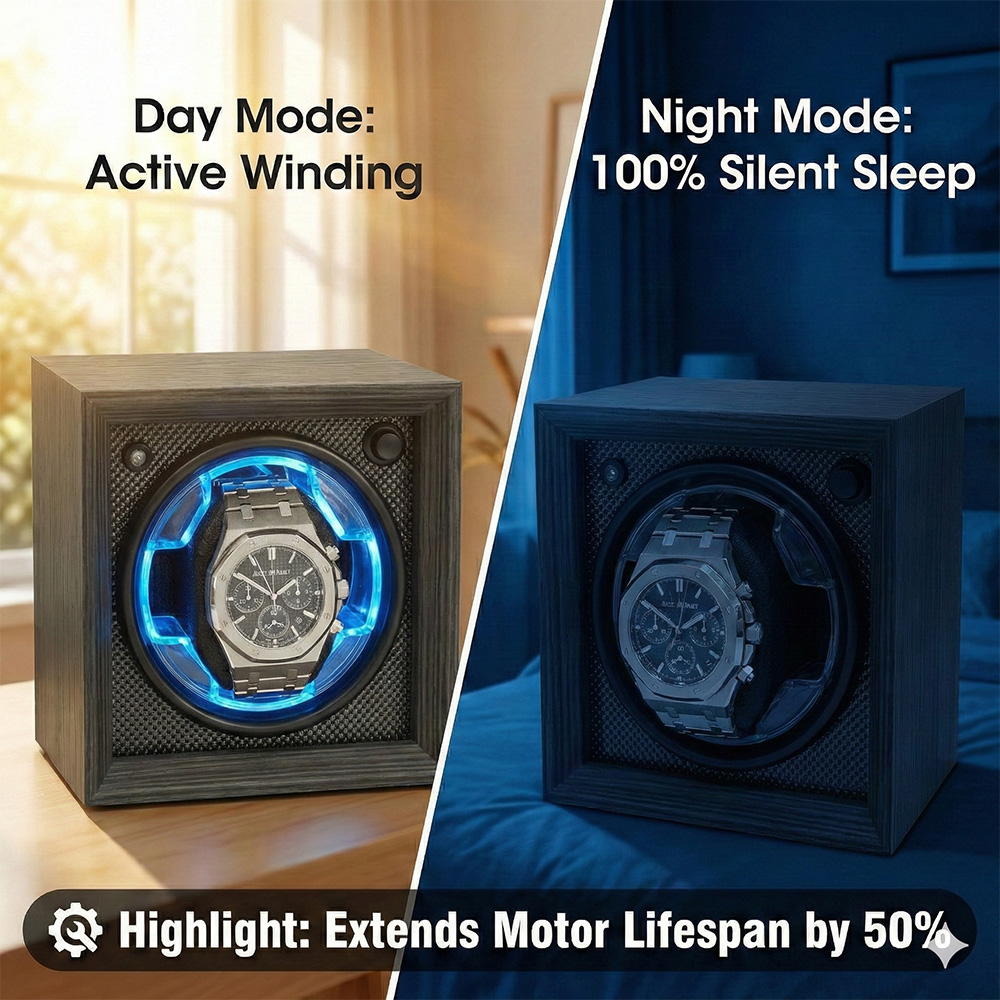
A properly calibrated watch winder box automatic restores that missing movement. It keeps mechanical energy flowing even when the wrist rests.
Not All Rotation Is Equal
At first glance, rotating a watch seems simple. Turn it. Keep it moving.
But automatic movements are not identical. Some require 650 Turns Per Day (TPD). Others approach 900 or more. Rotation direction varies — clockwise, counterclockwise, alternating.
A poorly calibrated device overwinds. Or underwinds. Both compromise performance.
Inside a professional-grade watch winder box automatic, motor programming allows TPD adjustment within calibrated ranges — typically 650–1000 rotations daily. The speed is not aggressive; it mimics natural wrist movement.
This is not about constant spinning. It is about measured motion.
What Happens Inside the Cabinet
Open the lid. The surface looks elegant — lacquered wood, leatherette, soft interior lining.
Close it. The engineering begins.
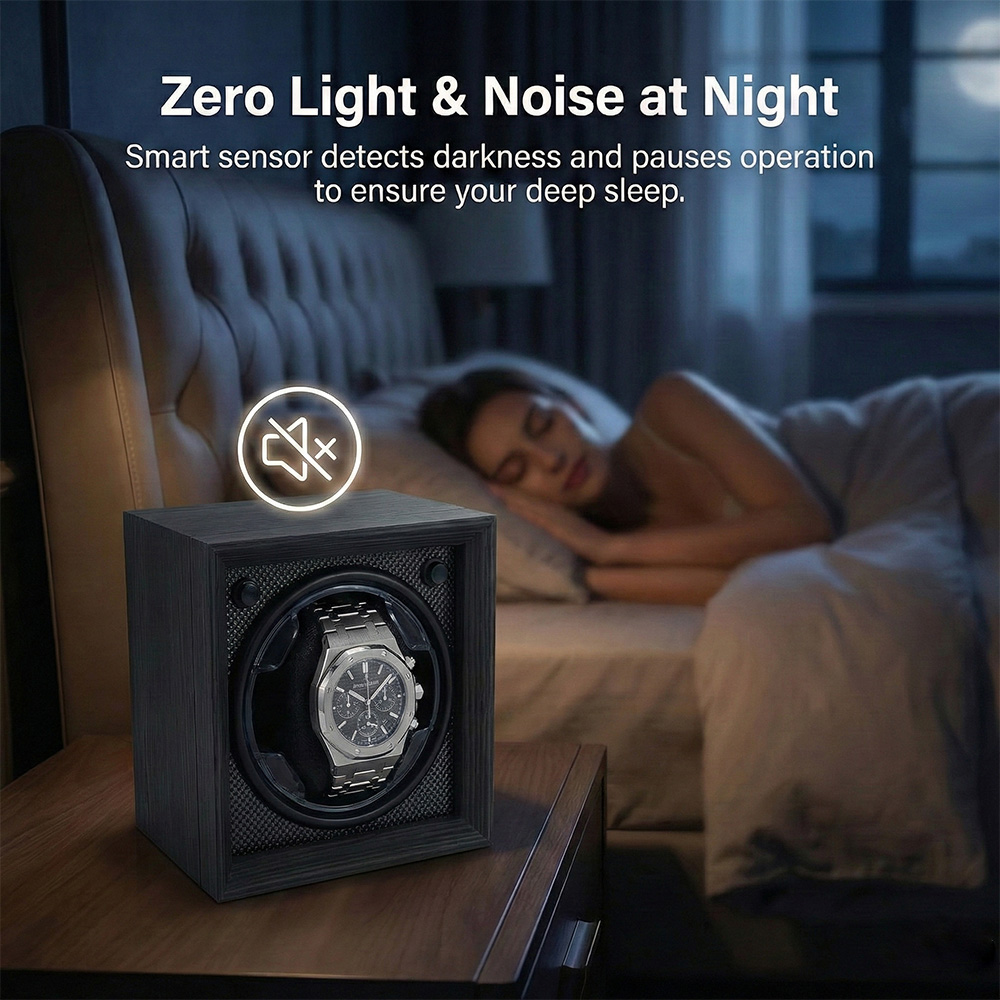
At BETTER INDUSTRIAL, motor modules are mounted with vibration isolation pads. Noise output is maintained below approximately 15 dB — quieter than a typical room at night.
Panel thickness varies between 8–12 mm MDF depending on cabinet size. Reinforcement prevents structural flex during continuous operation. Over time, even subtle vibration can weaken inferior housings. Stability matters.
Each watch winder box automatic undergoes motor balance testing to ensure synchronized rotation speed across slots. A difference of even a few rotations per hour can compound over weeks.
Precision is subtle. It hides beneath polished surfaces.
A Collector’s Evening Routine
Imagine this.
A collector returns home after travel. The watch worn on the trip is placed carefully into its slot. The cabinet closes with a soft magnetic alignment. Within minutes, controlled rotation resumes.
No rush. No reset. No disruption.
Luxury lifestyle reports from Deloitte’s Global Powers of Luxury Goods indicate that experiential ownership increasingly defines consumer satisfaction. Ownership today is not only about the object. It is about how seamlessly it integrates into daily life.
A watch winder box automatic becomes part of that routine — quietly preserving readiness without demanding attention.
Structural Comparison: Basic vs Calibrated Systems
| Feature | Entry-Level Winder | Calibrated Watch Winder Box Automatic |
|---|---|---|
| Motor Control | Fixed speed | Adjustable TPD programming |
| Noise Level | 20–30 dB | <15 dB |
| Cabinet Stability | Thin board | Reinforced MDF frame |
| Slot Independence | Shared motor | Independent rotation modules |
| Lifespan | 2–3 years | 5+ years typical |
Mechanical consistency does not come from decoration. It comes from motor calibration and structural discipline.
Safety, Energy & Transport Stability
Electronic devices inside wooden cabinets must meet safety standards.
Motors are powered by low-voltage DC systems to reduce heat output. Internal wiring is routed to prevent friction wear over long-term use.
Energy consumption remains minimal — often below 3W per slot configuration.
Export shipments are evaluated using ISTA drop simulations to confirm cabinet stability during freight handling. Reinforced corner joints reduce separation risk.
At BETTER INDUSTRIAL, production batches are inspected to confirm motor alignment and structural integrity before international shipment.
Frequently Asked Questions
Q1: Can different watches use different TPD settings in one unit?
Yes, independent motor programming allows customized settings per slot.
Q2: Is continuous operation safe for automatic watches?
When TPD is calibrated properly, rotation mimics natural wrist movement without overwinding.
Q3: What is typical MOQ?
Generally 200–300 units depending on configuration and finish.
Q4: Can exterior finishes be customized?
Yes, including lacquer wood, PU leather, carbon fiber texture, and logo engraving.
Movement Without Attention
Mechanical watches measure time. Winders preserve continuity.
A well-engineered watch winder box automatic operates quietly in the background, maintaining balance and readiness without interruption. It is not loud. It is not dramatic. It is steady.
Through calibrated motor systems and reinforced cabinet construction, BETTER INDUSTRIAL manufactures automatic watch winder boxes designed for collectors who value precision in small details.
Explore our full watch storage collection on our homepage or contact our team directly through our contact page to discuss custom watch winder box automatic production.