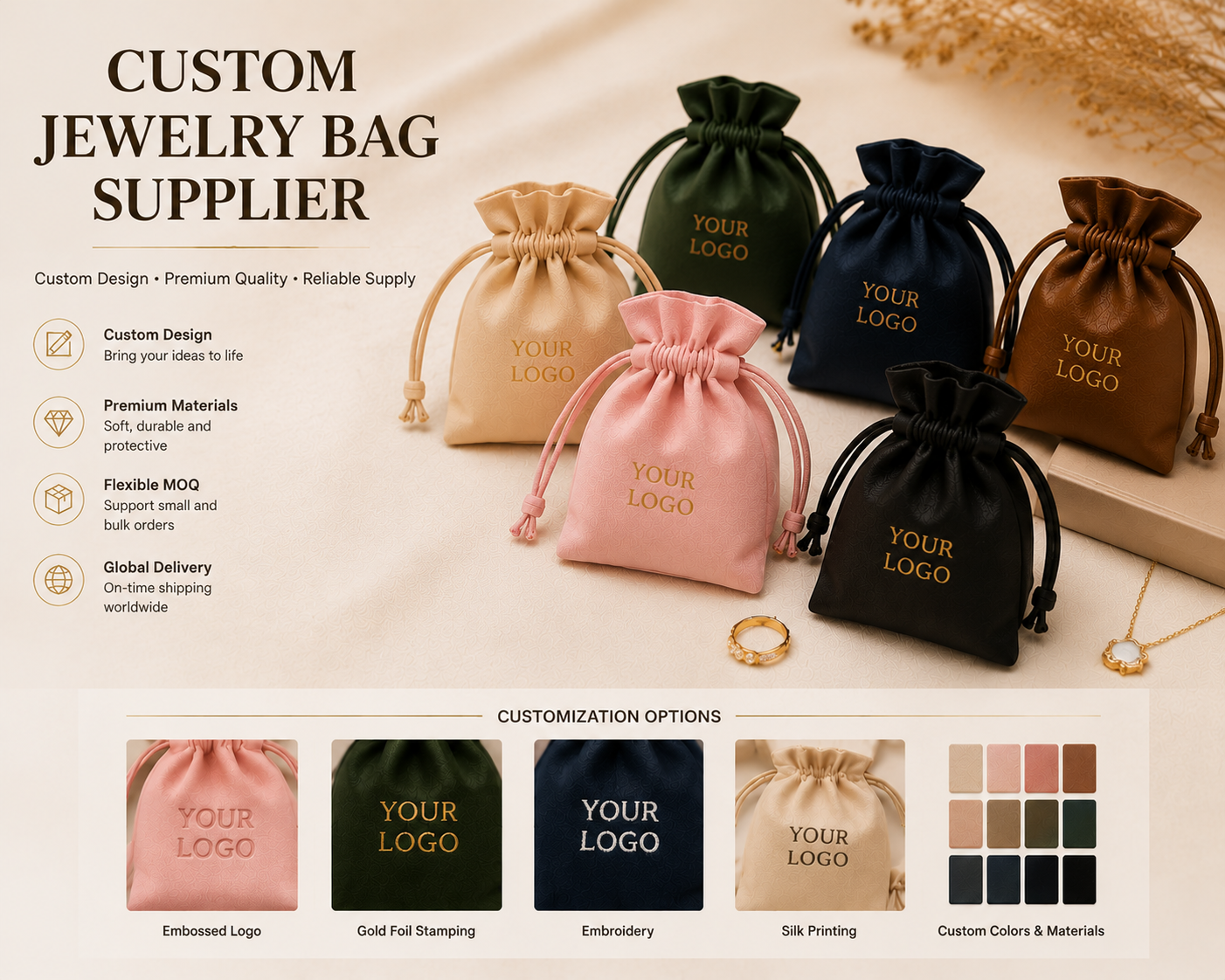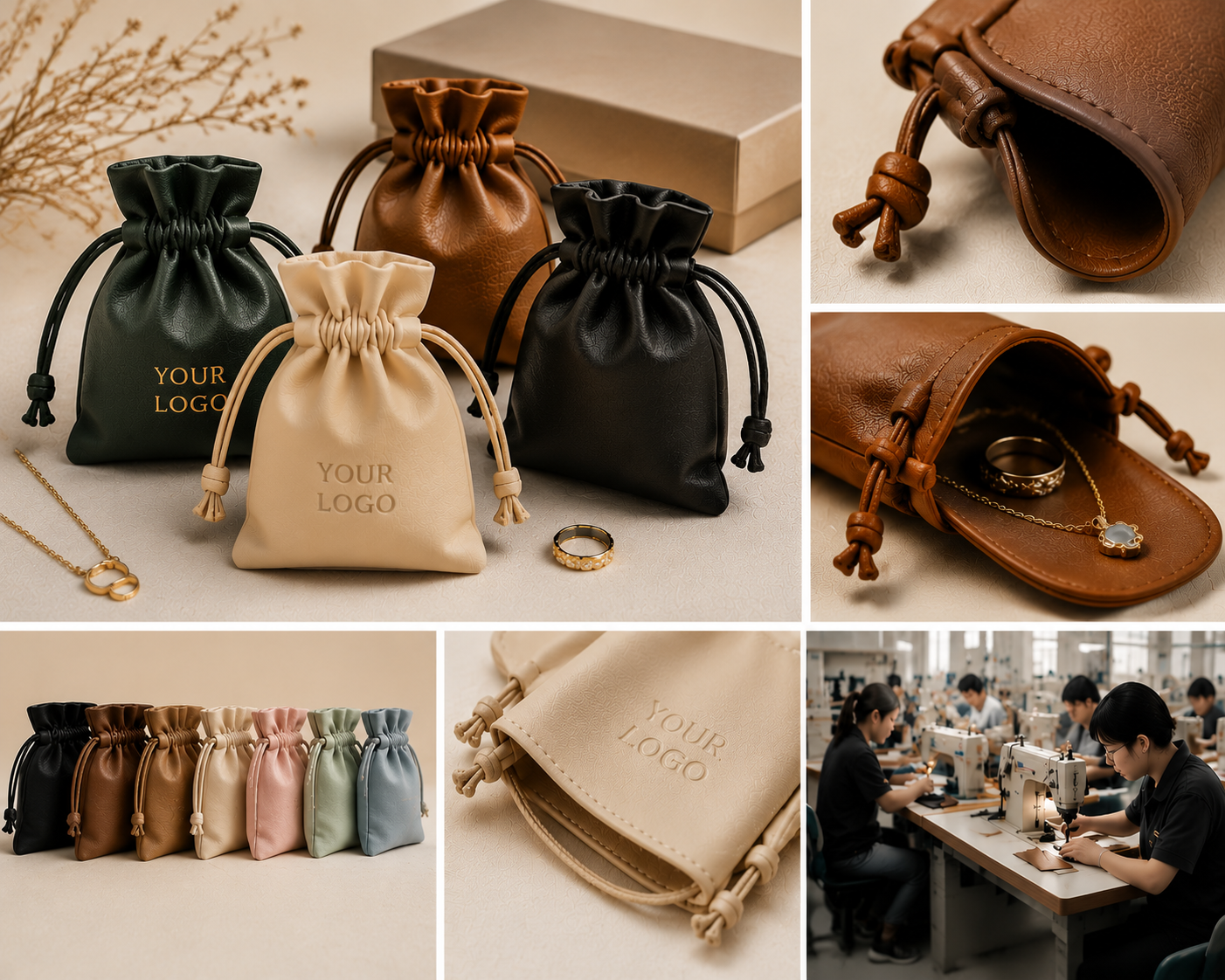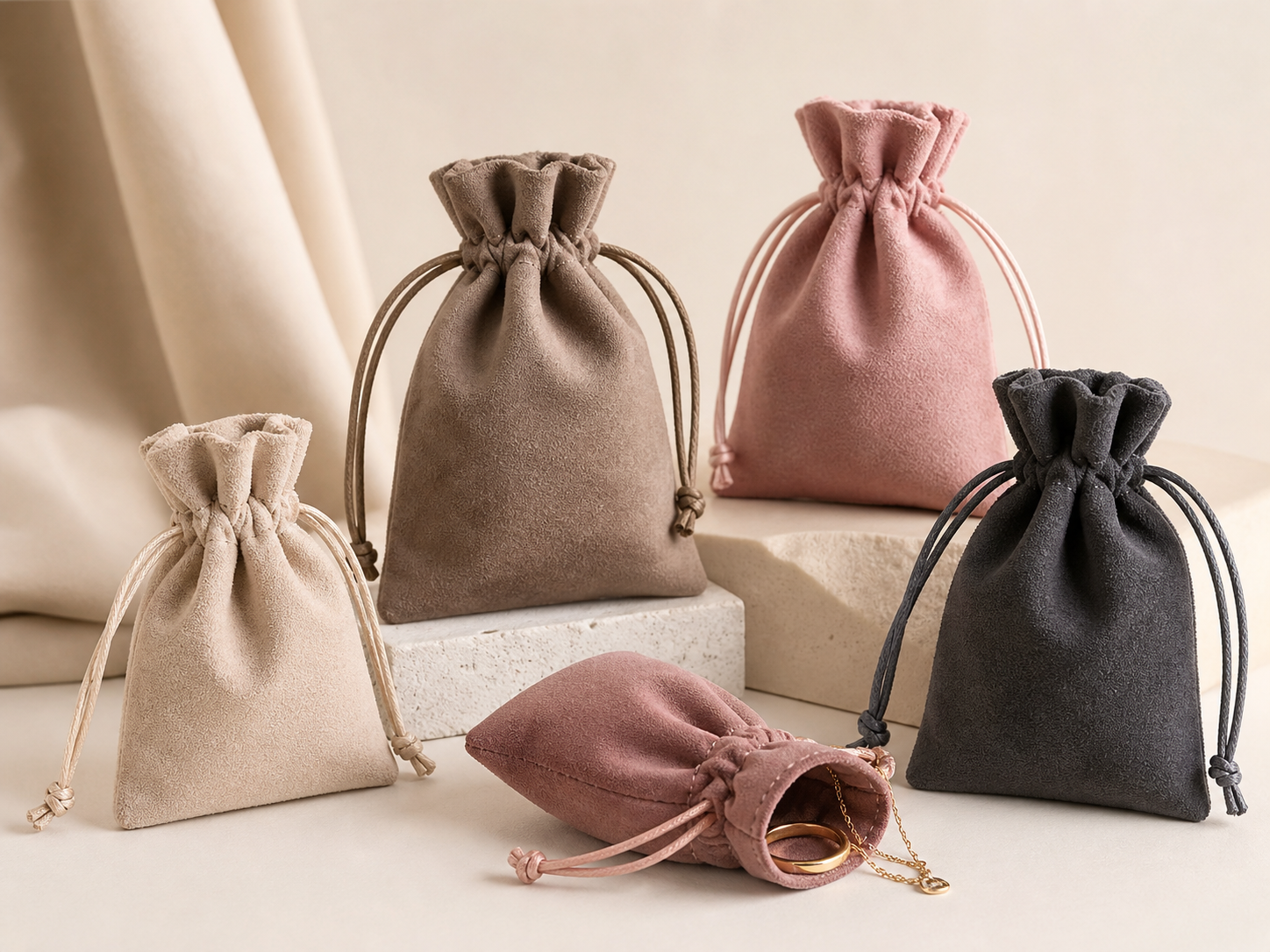

Consumers increasingly question where packaging materials originate and how they impact the environment.
Traditional velvet or synthetic pouches may rely on petroleum-based fibers, inconsistent dye processes, and non-recyclable components. Brands investing in ethical sourcing often overlook packaging, creating a mismatch between product values and presentation.
An experienced eco jewelry bag factory addresses this gap by integrating sustainable material selection and responsible production standards into soft packaging manufacturing.
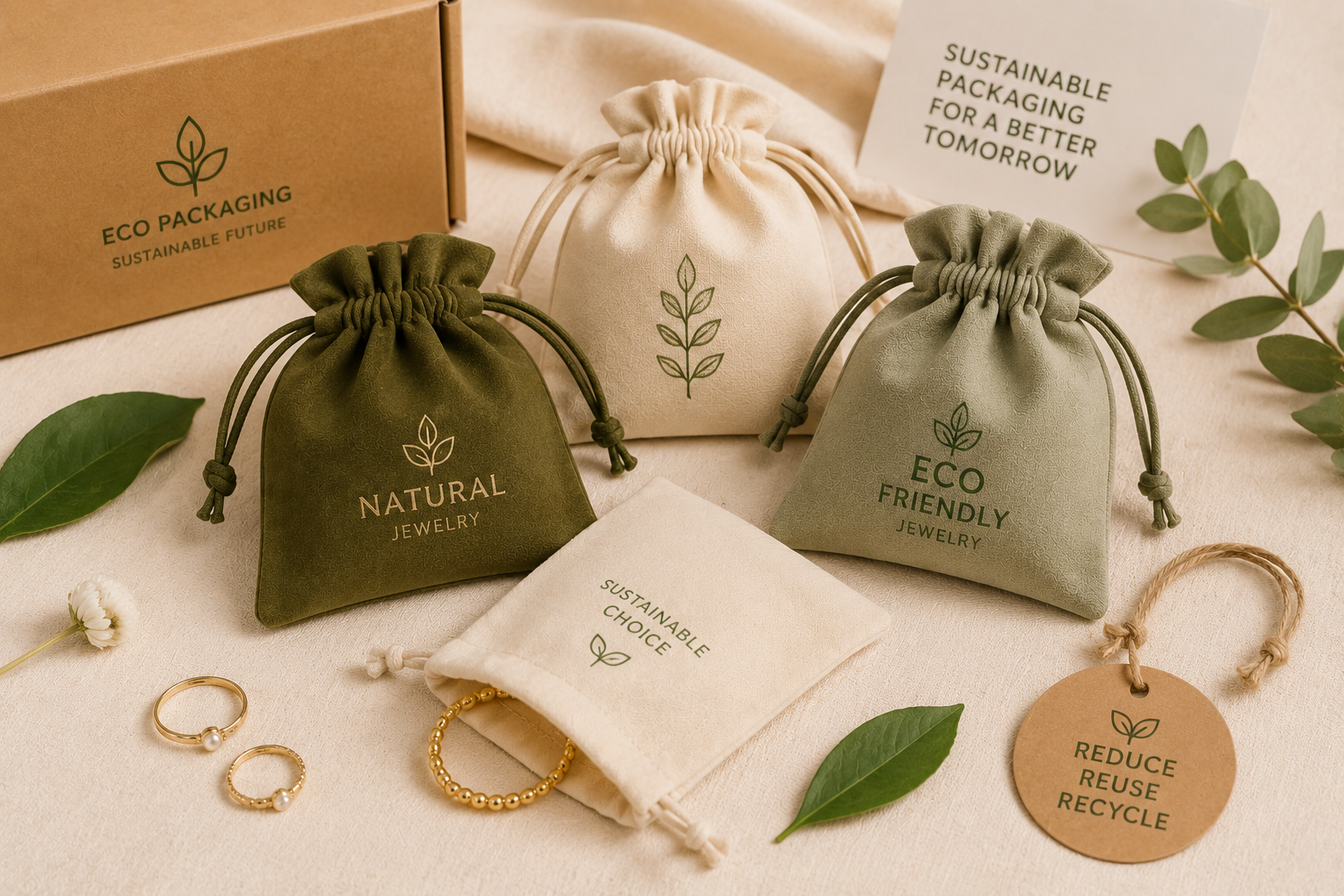
Material Science Behind Eco Jewelry Bags
Sustainability in soft packaging begins at fiber level.
Common eco-focused materials include:
- Recycled polyester (rPET)
- Organic cotton
- FSC-certified paper-based textiles
- Bamboo fiber blends
- Water-based dye fabrics
An eco jewelry bag factory evaluates fiber origin, dye safety, and post-consumer recyclability before scaling production.
Material comparison:
| Material | Environmental Impact | Durability | Brand Perception |
|---|---|---|---|
| rPET | Low (recycled source) | High | Modern Sustainable |
| Organic Cotton | Biodegradable | Medium | Natural |
| Bamboo Fiber | Renewable | Medium | Premium Eco |
| Standard Synthetic | Higher | High | Conventional |
Eco vs Conventional Jewelry Pouches
| Feature | Conventional Pouch | Eco Jewelry Bag |
|---|---|---|
| Fiber Source | Petroleum-based | Recycled / Natural |
| Dye Process | Standard chemical | Water-based / low impact |
| Recyclability | Limited | Improved |
| Brand Alignment | Neutral | Sustainable |
Working with a qualified eco jewelry bag factory ensures that sustainability claims are supported by traceable sourcing and production transparency.
Production Standards and Responsible Manufacturing
Beyond materials, factory-level control matters.
A professional eco jewelry bag factory integrates:
- Waste reduction systems
- Water-based printing technology
- Controlled dye discharge standards
- Energy-efficient stitching lines
- Low-emission packaging processes
BETTER INDUSTRIAL operates under structured quality systems to ensure material consistency and batch traceability.
Learn more about our manufacturing capability here:
https://www.brtpak.com/about-us
Customization Without Compromising Sustainability
Eco packaging still supports branding.
Options include:
- Soy-based ink printing
- Embossed logos
- Minimalist heat transfer
- Organic cotton drawstrings
A capable eco jewelry bag factory balances visual impact with environmental responsibility.
Explore sustainable packaging formats here:
https://www.brtpak.com/products
Application Scenarios
Eco jewelry bags are widely used for:
- Sustainable jewelry brands
- Ethical gemstone collections
- Boutique artisan retailers
- Corporate ESG-focused gifting
- Online DTC brands emphasizing green identity
How to Select the Right Eco Jewelry Bag Factory
When evaluating suppliers, consider:
- Are material certifications available?
- Can fiber origin be traced?
- Is water-based printing supported?
- Does the factory provide small trial runs?
- Are recyclable shipping materials used?
Choosing the right eco jewelry bag factory reduces compliance risk and strengthens brand credibility.
FAQ
Q1: What is the minimum order quantity?
MOQ typically begins at 1000 units depending on material and customization.
Q2: Are recycled fabrics as durable as standard materials?
Yes. Modern rPET fibers meet similar tensile standards.
Q3: Can eco bags include custom logos?
Yes, eco-friendly printing and embossing methods are available.
Q4: Are certifications available for export markets?
Yes. Documentation can be provided based on market requirements.
Conclusion
Sustainable packaging is now a strategic decision, not just a marketing statement.
Partnering with a reliable eco jewelry bag factory ensures environmental responsibility, production scalability, and brand alignment.
Discover more packaging innovations on our homepage:
https://www.brtpak.com/
For project consultation and quotation:
https://www.brtpak.com/contact-us/