
Short answer first. The point of a useful custom jewelry packaging RFQ is simple: every factory prices the same job. What goes on the page? Jewelry, final size, box style, every material layer, insert, decoration, quantity, quality checks, packing, destination, approval. Leave one out. The number can still be very exact. The product behind it will not be.
Cheapest quote, cheapest box? Not necessarily. Sometimes it is only the quote carrying the most silent assumptions.
This guide is for a jewelry buyer who has to defend a number to finance, obtain a sample that design can judge, and release production without reopening old decisions. There is a copy-ready template later on. The form itself is ordinary. Decisions give it value. One form, several jobs. Paper ring box? Fine. Full launch with necklace boxes, pouches, bags, trays, and cartons? Also fine.
My first rule is small: never make a blank do the talking. An open question is fine. Write supplier to propose, add the result you need, and ask the maker to show its assumption. A blank looks remarkably like permission.
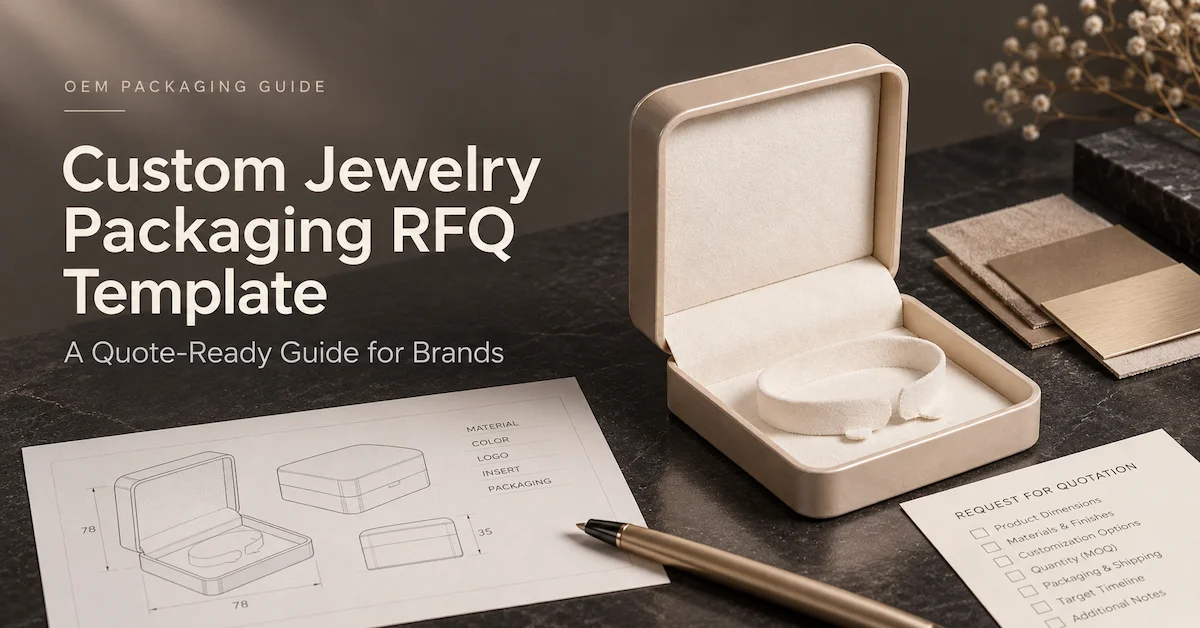
What makes a custom jewelry packaging RFQ quote-ready?
Not length. A forty-page file can still dodge the decisive question.
Try a simpler test. Now hand it to a qualified supplier who never sat in a design call. Can the newcomer explain the item and price it? Sample it? Pack it? Or must someone call to define "premium"? Mostly comparable is another way of saying not yet comparable. That is not enough for a sourcing decision.
I would also place the RFQ beside the sample-approval sheet. Are both documents talking about the same things? If the RFQ asks for a "luxury velvet box" while the approval sheet checks board thickness, wrap grain, foil position, hinge resistance, insert fit, color, and carton protection, the buying brief has described a mood. The approval sheet has described a product.
Most jewelry-box projects need twelve groups of information:
- Who owns it? Add collection, market, sales channel, and clock.
- What must fit? List every SKU, its real size and weight, odd shapes, delicate finishes, and preferred view.
- Outside size. Inside space. Which numbers are genuinely critical?
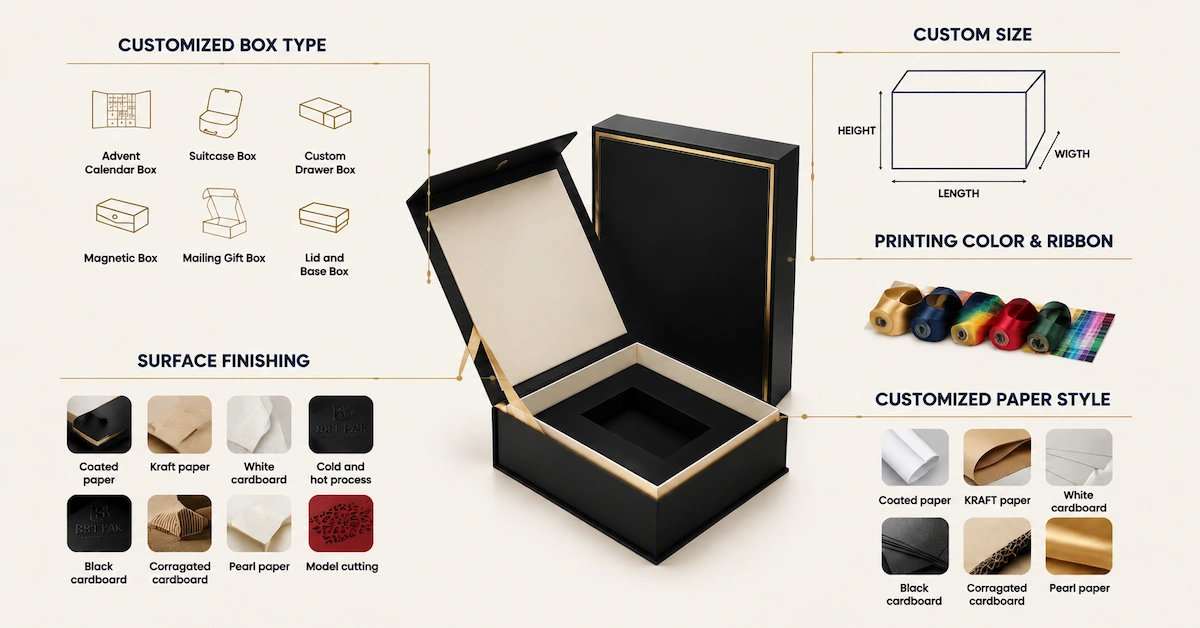
- How does it open: loose lid, drawer, hinge, magnetic flap, folding rigid body, something else?
- What is it made from? Core, wrap, lining, insert, contact fabric, hardware, adhesives.
- What holds the piece? Where may it move? What may it never touch?
- Artwork revision, logo process, color reference, size, position, and appearance standard.
- How many of each? First order, reorder, forecast, plus any allowed overrun or shortfall.
- Which sample answers which question? White, decorated, pre-production. Then name the release point.
- What fails inspection? Add method, approved reference, and the response to a failed lot.
- How is it protected and moved? Individual wrap, labels, inners, cartons, pallets, transit work.
- Where does the price stop? Destination, named Incoterm, currency, arrival date, included costs.
A list helps. Its wording decides whether it works. "Velvet insert" feels specific. Could be flocked foam. Or cloth laminated to paperboard. Or fabric around a molded part. Perhaps it is a loose pouch. Same name; four builds. Labor changes. Tooling too. So do hand feel, protection, and the eventual disposal route.
Construction still open? Good. Do not fake a decision before sampling. Write the job instead. Then require the quotation to identify the proposed layers. Open choices are healthy. Hidden choices are not.
Begin with one page, not twenty
Give the long specification an hour. First, force the job onto one page. Why? Conflicting priorities cannot hide behind extra pages.
Design wants a tall reveal. Logistics has a parcel-height ceiling. Marketing wants four seasonal colors. Sourcing has a modest launch volume. Someone has promised an arrival date, although the artwork is not final. None of that is rare. Discovering it after the first sample is what gets expensive.
On that page: one main aim; two secondary aims at most; then the fixed rules. My sample hierarchy:
- Main job: stop a plated pendant moving or tangling during parcel delivery.
- Also important: give three necklace sizes the same opening sequence.
- Also important: stay inside the agreed packed parcel height.
- Not negotiable: no PVC, no magnet, and no exposed loose foam.
Now a value-engineering suggestion has context. Removing the rear chain pocket would conflict with the main job. Changing a hidden insert layer might be acceptable if fit, contact safety, and the material rule remain intact. Both changes may cut cost; they are plainly not the same decision.
| Line | Write this | Watch for |
|---|---|---|
| Project | Collection, owner, market, channel, requested arrival | No named approver |
| Product | SKU list plus real dimensions and weights | One imaginary "typical" item |
| Structure | Required format or a performance-led proposal | A reference photograph treated as a drawing |
| Materials | Every layer, the contact surface, restricted substances | Generic words such as velvet, leather, or eco paper |
| Branding | File, revision, method, size, position, color standard | "Gold logo" without a foil or ink reference |
| Quantity | Units by size, color, and artwork | A total that hides several short runs |
| Quality | Defect language, approval sample, inspection rule | "High quality" left to interpretation |
| Packing | Individual wrap, carton count, limits, labels | A display box expected to survive shipping alone |
| Commercial | Named Incoterm, place, currency, fees, validity | Factory-gate and delivered prices compared as equals |
This page is not a production release. It is a fast way to expose missing decisions before they contaminate the price comparison.
Put the jewelry ahead of the insert
An insert is not designed around a render. It is designed around a load, and that load happens to be visible, valuable, and sometimes easy to mark.
Real jewelry available? Send it. Not yet? Use dimensioned drawings and photographs with a scale. A provisional number needs a label and a date for replacement. CAD looks tidy. A loose chain does not behave tidily; neither does a stiff clasp.
And write down the awkward bits. L x W x H is only the start.
- Ring? Band width, setting height, stone projection, weight. Which face has to show?
- Earrings? Post length, closure, hoop diameter, left-right arrangement, room behind the card.
- During? Its size and mass, then chain, clasp, extender, loose length, tangle risk.
- Bracelet? Inner diameter, opening, stiffness, moving charms, every support contact.
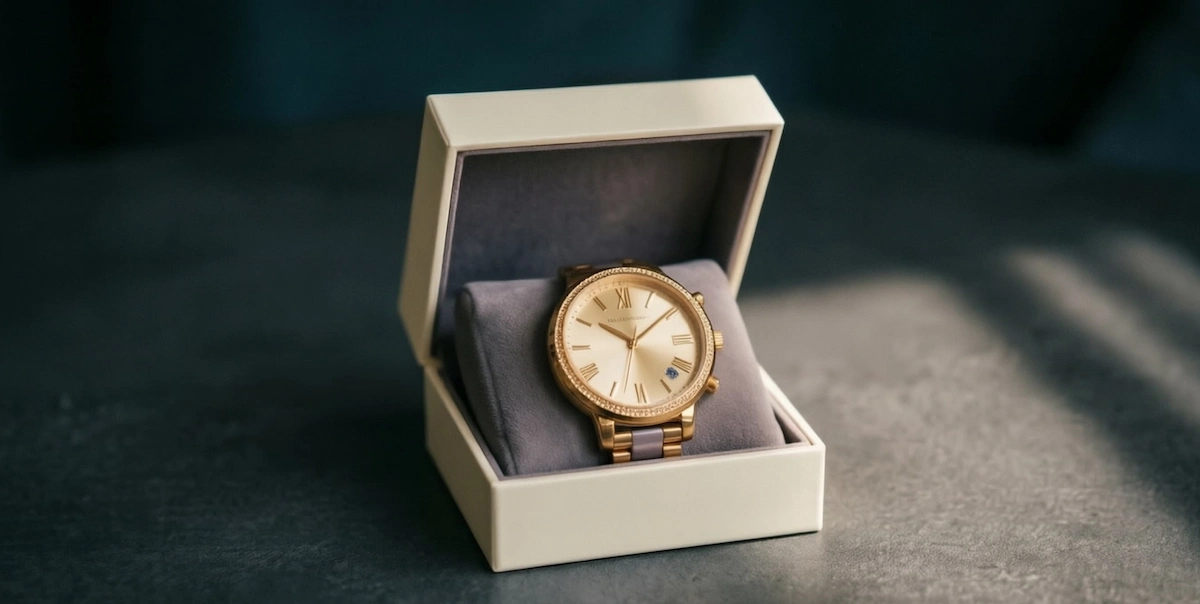
- Watch? Case diameter, full depth, crown, strap length, bracelet stiffness, cushion range.
Six SKUs do not average themselves into a seventh. Show the smallest and the largest. Then describe acceptable fit for both. A slot can hold the broadest ring while making a slim band look stranded. The reverse is worse: a neat fit on the smallest piece may put pressure on a high setting.
"No movement" needs care. Read literally, it can push a designer toward too much compression. I prefer an ordinary test: close the box, turn it through all six faces by hand, and open it again. Is the pendant still inside its intended presentation area? Has the chain left the rear pocket? Did metal meet the lid? Can a customer remove the piece without tugging a fragile bail?
Questions like those lack glamour. They can, however, be demonstrated at sample approval and checked later during inspection.
Pick a structure for the route, not just the photograph
A box structure controls more than the reveal. Change it and the downstream job moves. Board count. Assembly. Empty volume. Opening feel. Alignment. Freight. Even the inspection list.
| Format | Useful when | Question worth asking |
|---|---|---|
| Lift-off lid | A familiar rigid presentation suits the range | How much overlap, and what lid-to-base friction is acceptable? |
| Hinged box | The open angle and reveal matter at retail | Must the lid stay open, and how will hinge alignment be judged? |
| Drawer box | A controlled reveal fits the brand | How much sliding resistance, and may the tray pull out fully? |
| Magnetic book style | A broad lid and firm close are wanted | Are magnets allowed, and what closing feel is the target? |
| Folding rigid | Empty freight expensive? | Where do the seams land? Set it up twice: still square? |
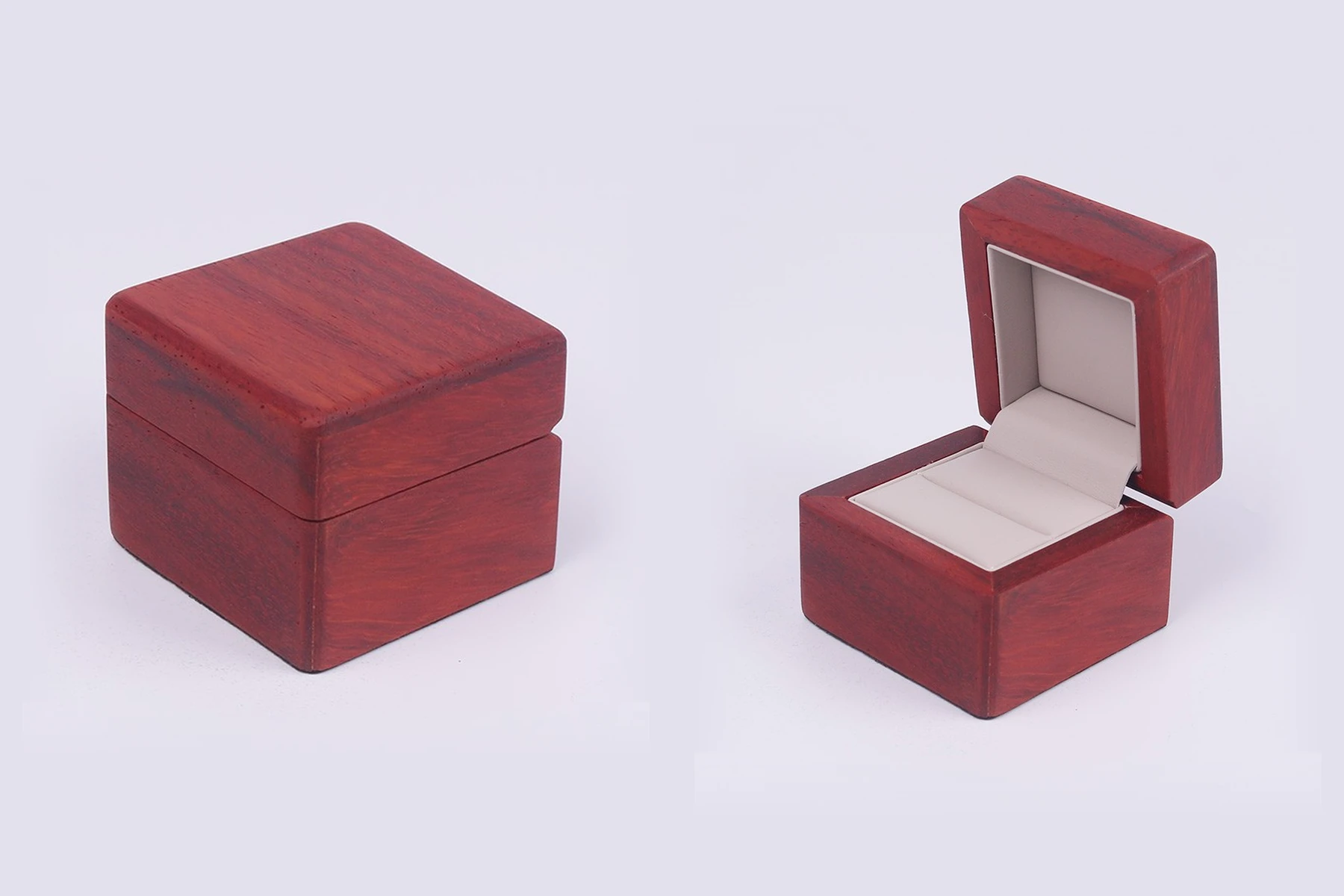
| Wooden box | Want furniture-like weight and hardware? | Substrate? Veneer or lacquer? Hardware? Moisture? Surface? |
Need one assembled sample. A flat proof cannot answer the hand-feel question. Board gauge meets hinge, insert compression meets closure force, and every part starts influencing another. Dimensions can pass while the opening feel fails.
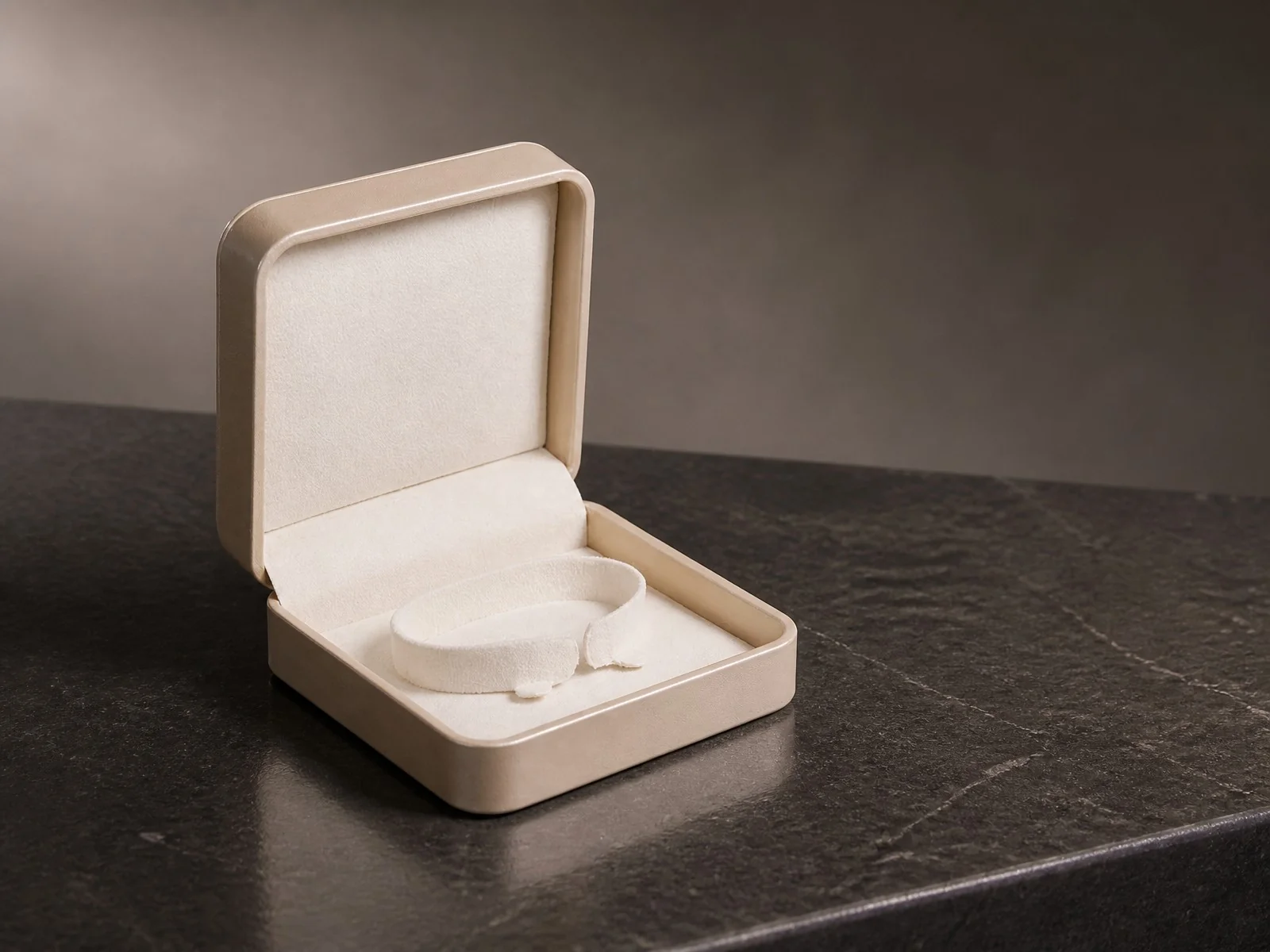
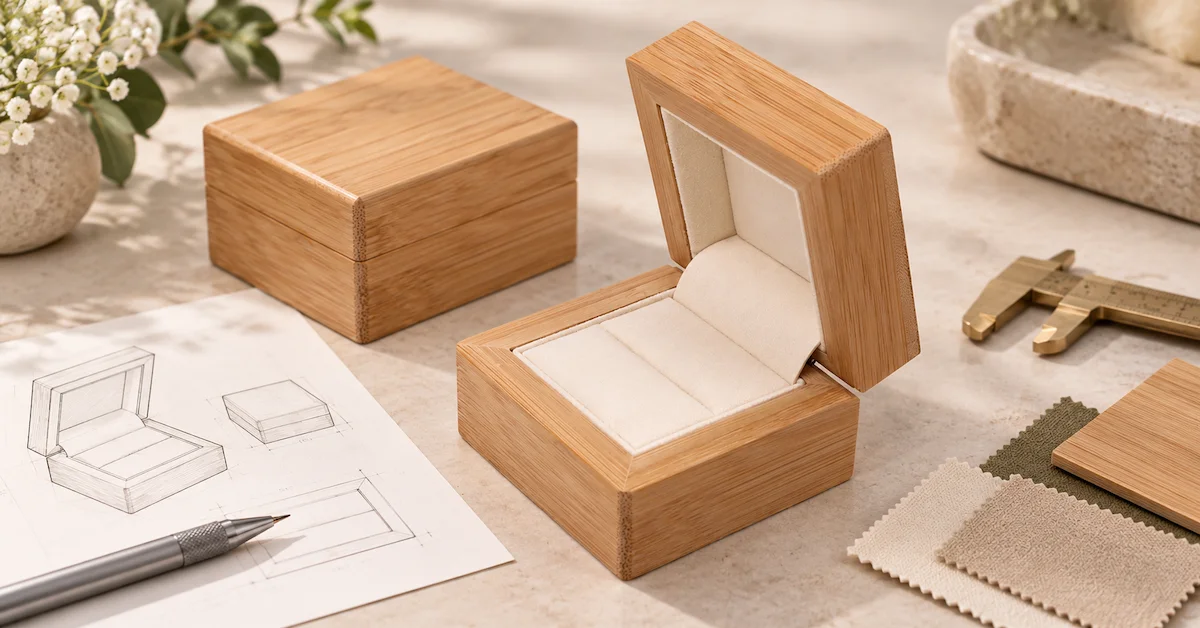
For visual starting points, compare BRT Pak's jewelry box collection. Paper? This paper jewelry box shows the wrapped-paper family. Leatherette? Start with this leatherette jewelry box when grain and touch drive the look. Wood? Use this wooden jewelry box only to show the harder, heavier direction. Then mark every intended change. The link starts a conversation; it does not finish the specification.
Write the material build layer by layer
Cardboard with velvet? A description, not a material schedule. Think in layers. Core first; then outside surface, lining, insert core, contact face, decoration, hardware, adhesive. If one layer changes, record that layer. Do not wave the whole substitution through as "equivalent."
A wrapped rigid box might be written this way:
- Core: greyboard; maker recommends grade and gauge for the agreed size. Finished result? Flat and square.
- Outer wrap? Dyed-through uncoated paper, approved color. Add the exact reference, basis weight, coating if present, and normal lot variation.
- Inside: matching paper or microfiber, fully bonded. Bubble, wrinkle, glue mark, exposed board? Reject against the agreed appearance rule.
- Insert core: paperboard option and foam option priced separately. Either version must pass the fit requirement.
- Contact face: non-abrasive surface approved against the real jewelry finish.
- Adhesive? Declare the type when requested. Visible bleed: none. Residual odor: judge it after the stated conditioning time.
Familiar material name? Open it up. PU leather has a back and a face. Which backing, grain, coating, gauge, gloss? How does it fold? For velvet I want the construction word, not just the color: woven? Knitted? Flocked? Laminated? Recycled paper raises four small questions: claimed share, measurement basis, expected shade, supporting evidence. The comfortable word is often the point where detail disappears.
Printing a forest claim? Put its exact wording in the brief. FSC's description of chain of custody certification is about traceability along the supply chain. The company certificate is not a magic stamp on every sheet in its warehouse. Product scope, suppliers, transaction records, and label authorization still matter. Check the evidence before the artwork carries a claim.
The insert has four jobs, not one color
The insert locates the jewelry, prevents damaging contact, controls the first view, and allows removal. Color comes after those jobs.
Write four separate notes:
- Retention. Load-carrying feature; possible escape point; permitted movement.
- Clearance. No-go contacts: lid, wall, tab, staple, hardware, neighboring piece.
- Presentation. Visible face; intended angle; maximum part covered.
- Removal. Customer lift and replacement, without hard pulling or damage.
A pendant may use two chain slots and a rear pocket. A ring needs a slot that handles its band range without swallowing the setting. Earring posts require space behind the display face. Watch cushion? Case, strap, bracelet stiffness, crown. Four constraints; write the compromise. One outer brand system, several inner engineering jobs.
Request an insert drawing with the dimensions that matter to fit. The approval record should name the actual piece placed in it. A light display dummy may confirm the look and prove almost nothing about retention.
Control the logo as a process, not an adjective
A buyer writes "gold logo." The maker still has questions. Foil shade, mirror level, carrier, release, chosen surface: every one changes the result. An ink reference will not settle a foil choice. Fine deboss line across a heavy grain? Expect a different edge from print on smooth paper.
Put these items in the custom jewelry packaging RFQ:
- Vector artwork, agreed file type, fonts outlined, version name, and date.
- Finished logo width and height in millimeters.
- Position from finished edges or center lines; state the finished orientation.
- Process? Foil, deboss, emboss, screen, digital, plaque, or a named alternative.
- Color or foil reference appropriate to that method.
- Physical master when shade or touch is critical.
- Allowed variation in position, rotation, coverage, edge definition, and color.
Require a proof that names the panel. Flat art invites an upside-down approval unless lid, spine, base, and reading direction are marked. More than one SKU. Put each on one matrix: size, color, logo file, barcode, language, regulatory copy. One row per version. Short and dull; also very effective.
Color needs a decision trail. Which physical or process reference wins? Under what lighting will it be judged? Who signs off a range? Screen values prepare files. They cannot show this part: paper, fabric, leatherette, lacquer, ink, and foil all shift differently with the light. Final reference? Pick one: signed swatch, lab dip, press proof, foil sample, or pre-production box.
Quantity is a pattern
Five thousand boxes. One run? Or five sizes, two colors, four artworks, with no version reaching a comfortable material or decoration minimum? Same total. Very different production plan.
Show the exact launch split. Add an honest annual forecast and the likely reorder batch. Forecast status: commitment, planning input, or scenario only? Future volume should not be dangled as a promise just to force down the first price.
| Scenario | Ask for | What it reveals |
|---|---|---|
| Launch | 2,000 units with the actual four-size split | Separate minimums caused by sizes or artworks |
| Volume | 5,000 units with no specification change | Yield and run-length savings |
| Reorder | 1,000 units using retained tools and materials | Which setup costs return |
| Mixed release | One body, two colors, three logo versions | Whether undecorated parts can be pooled |
When the minimum order is too high, ask what creates it. Custom paper? A bought-in hinge? Mold economics? A decoration changeover? Factory policy? Those are not interchangeable explanations. A stock wrap, common box size, shared insert platform, or fewer decorated versions may lower one floor. Demanding "lower MOQ" does not make the material supplier's minimum vanish.
On my quote sheet, unit price is one row. Tools another. Then setup, samples, options, individual packing, cartons, freight, tax, inspection. Validity and any raw-material or currency assumption sit beside them. That is a quotation a buyer can actually compare.
Samples answer different questions
An unprinted white sample can settle size, opening, and fit. A decorated prototype can settle appearance. The pre-production piece carries the heavier burden: agreed material, build, art, color, pack, ready to guide bulk and inspection. Three objects, one nickname: "the sample." Bad idea.
My release order:
- First move: maker reads the brief and returns one question list.
- Buyer answers, then approves the construction proposal and price assumptions.
- Supplier issues dimensioned drawings and artwork placements.
- Named buyer approves those files in writing.
- A fit or white sample is made where geometry is still uncertain.
- The real jewelry range is tested; findings are written down.
- A decorated pre-production sample is made in the agreed materials.
- Buyer signs, dates, and identifies the accepted sample plus any listed exception.
- Supplier keeps a matching reference for production and inspection.
- Bulk starts only after the named person gives written release.
What happens after a failed sample? Decide that too. Number of rounds included. Courier treatment. Buyer changes versus supplier nonconformity. Timing for a corrected piece. A surprisingly cheap sample can become four unplanned rounds and a lost launch week.
"Looks good"? Fine as a comment, useless as a release record. Approved reference, measured dimensions, logo position, opening feel, insert fit, visible workmanship, packing: write them down. Use consistent light for photographs. Keep the physical master when shade, texture, or touch matters. A photograph records one view. It cannot become a fabric swatch.
Quality: write what the inspector can see
Top quality. Export quality. Zero defects. Attractive phrases, weak inspection instructions.
Use defect classes with project-specific examples:
- Critical: unacceptable safety, legal, contamination, or product-damage risk. Qualified reviewers agree the actual project examples.
- Major: likely customer rejection or loss of function. Wrong artwork, detached insert, severe distortion, adhesive on a jewelry-contact face, closure failure.
- Minor: workmanship outside the agreed appearance limit without material loss of function, perhaps a small wrap mark on a secondary face.
Sampling a finished lot? I open the official ISO 2859-1:2026 page first. Its job: AQL-indexed plans for inspection by attributes. Its job is not choosing defect limits for your ring box. The missing choices remain with buyer and maker: lot and inspection level; plan; defect classes; values; switching rules. AQL alone? Half an instruction.
Different question: factory system. For that, I look at ISO 9001:2026, not a product drawing. Think requirements, controlled records, operations, evaluation, improvement. No system certificate proves this particular box matches its drawing. ISO does not act as the certifier. Certificate required? Collect the document, scope, issuing body, and validity; verify them independently.
Use drawings and the approved sample together. The sample is strong on hand feel, surface, shade, and overall impression. The drawing is stronger on dimensions and position. For every visible feature, decide the viewing condition, important surfaces, measure or comparison method, accepted range, and defect class. No invented tolerance merely because a decimal looks serious. Before writing that decimal, ask what production can actually hold. Try it in sampling. Then protect the experience without specifying an impossible part.
Inspection stage matters. Material receipt. First-off approval. In-process record. Final random check. Pack-out review. Each stage catches something else. A final inspector cannot efficiently repair a shade mismatch approved weeks earlier or an insert problem built into a tool.
The gift box and the shipping pack are one project
Perfect display box, ugly arrival: scuffed, damp, crushed, dusty. Look outside it. The fault may be the distribution pack.
Write down:
- Choose one individual layer (or none): dust bag / tissue / sleeve / paper / film / polybag.
- Then mark what it may touch: foil / lacquer / coating / soft-touch face.
- Orientation and count in inner and master cartons.
- Dividers, pads, corner pieces, and void control.
- Maximum carton dimensions and gross weight.
- Carton performance or board requirement.
- Which SKU label, barcode, shipping mark, origin line? Where does each go?
- Pallet material, pattern, wrap, edge boards, and height limit when used.
- Water risk? Add barrier and conditioning, or write none.
- Drop? Vibration? Compression? Abrasion? Name the work actually required.
Test the route you have, not a generic journey. Need a framework? ISTA is a source of packaged-product procedures and guidance. A packaging professional then chooses procedure, assurance level, sample count, conditioning, pass line. Passing one sequence does not guarantee a damage-free trip through every network. It tells you how the tested configuration behaved under named conditions.
Make sustainability claims earn their place
Four words get a red circle in my notes. Eco-friendly. Recyclable. Biodegradable. Sustainable. Each is unfinished on its own. My follow-up has four parts. Which attribute? What boundary? What evidence? What exact wording will the customer see?
Useful questions are less exciting and more revealing:
- Recycled content: component name.
- Claimed share; basis used for the math.
- Forest material: parts involved; exact custody claim.
- Hand-separation test: board / fabric / magnet / insert.
- Local collection or recycling route behind the statement.
- Route blockers to check: coating / foil / laminate / adhesive / mixed material.
- Proof behind the words: report / declaration / transaction record / certificate.
Choosing paper does not give permission to print "recyclable everywhere." Nor does a lower-plastic build. A material preference belongs in engineering; the customer claim belongs on pack. Approve them on different lines. The maker tells you the build and supplies evidence. The printed claim remains the brand's call in each market.
Build the calendar backward
"Thirty days lead time" conceals a row of clocks. When does the clock begin? After deposit? Approved artwork? A signed sample? Raw-material confirmation? Those clocks rarely start together.
Begin at warehouse arrival. Step backward: receiving; customs; freight; packing; inspection; production; material purchase; pre-production approval; samples; artwork; engineering; first questions. Buyer work gets dates too. A factory cannot finish artwork approval while the brand is still choosing a logo size.
| Stage | Supplier states | Buyer controls |
|---|---|---|
| RFQ review | Date for questions and assumptions | One consolidated reply |
| Drawings | Issue time after complete inputs | Correct files and a named approver |
| Samples | Time per type and courier date | Review window and change deadline |
| Materials | Stock, purchase minimum, procurement time | Standards and substitution decision |
| Production | Start trigger, working days, capacity rules | Deposit, release, forecast accuracy |
| Inspection | Booking, report, and pack completion dates | Response to findings |
| Freight | Handover and transit assumption | Mode, forwarder, customs data, buffer |
Add visible decision buffers. Two days for internal artwork review. Five for physical-sample circulation. A defined allowance for one correction round. "Ship urgently" is not a buffer; it is a feeling.
Draw the price boundary
A unit price without a commercial boundary is unfinished. Commercial header: Incoterm plus named place; currency; payment; pack basis; validity; tax and duty treatment. Quoting two terms? Keep product and packing cost above the logistics rows. Hide those rows and nobody can reconcile the options.
Unit-price checklist: complete box and insert; decoration; normal setup; individual protection; labels; cartons; supplier inspection; export pack; documents. One-off checklist on separate rows: structure die; insert tool; foil die; plate or screen; art conversion; color match; samples; courier; special test; outside inspection.
Tools get their own note. Tool owner: buyer or maker? Storage place? Identification? Retention period? Normal maintenance? Paid replacement trigger? A tool fee on an invoice does not answer those questions.
Compare compliance before price
Every RFQ line gets one tag: compliant / alternative / exception / unanswered. No answer goes in the exception column, not the compliance column.
| Area | Record | Difference often missed |
|---|---|---|
| Structure | Size, core, construction, closure | One bidder quietly uses thinner board |
| Materials | References, gauge or basis, color, claim | The same generic name covers several grades |
| Insert | Core, contact face, tool, retention | Visual insert never checked with real jewelry |
| Decoration | Method, passes, size, position, tooling | Print compared with foil plus deboss |
| Quantity | Units per version, over/under rule | Total hides separate minimums |
| Quality | Sample master, inspection, AQL, report | Inspection assumed but not described |
| Packing | Individual protection, carton size and mass | Cheap pack consumes more freight or damages more easily |
| Commercial | Fee / unit / term / validity / payment | Late surprise: tool, courier, export charge |
Launch math starts with tools, samples, tests, inspection, pack differences, estimated freight, duty, brokerage, storage. Expected damage or rejects? Divide by usable units, not ordered units. This is not an attempt to forecast every cent. It stops cost from wandering outside the comparison.
Copy-ready custom jewelry packaging RFQ template
The template below is deliberately detailed. Delete a line that truly does not apply. Blank field? Not in the version sent out. Write not applicable, supplier to propose, or buyer to confirm by [date]. That small habit keeps responsibility visible.
1. Project identification
- Brand and legal buying entity:
- Project or collection:
- RFQ reference and revision:
- Issue date and requested quotation date:
- Commercial contact:
- Technical or design contact:
- Person authorized to approve samples and bulk release:
- Target country or region and sales channel:
- Artwork-use, confidentiality, or public-display restriction:
- Required warehouse arrival date:
Buyer note: one revision code across RFQ, drawing, artwork matrix, supplier response. A filename such as final-final-v3 controls nothing.
2. Jewelry and fit data
- Jewelry type and SKU list:
- Dimensions and weight for every SKU:
- Smallest and largest pieces to share one insert:
- Loose or projecting details: clasp / post / stone / crown / charm:
- Finish sensitivities; no-contact materials:
- Required display face, angle, and orientation:
- Physical samples supplied, quantity, ID, tracking, custody, and return:
- Retention test:
- Clearance requirement:
- Removal-force or handling concern:
Buyer note: label each physical sample. "Gold necklace" becomes ambiguous when three packages arrive in the same week.
3. Packaging architecture
- Required format, or functions for which the supplier should propose a format:
- External finished L x W x H:
- Internal usable space:
- Critical dimensions and agreed tolerances:
- Opening direction, angle, resistance, and closure behavior:
- Postal, shelf, unit-weight, or packed-size limit:
- Reference product link, sketch, or mood image:
- Features that must not be copied from a reference:
- Dimensioned supplier drawing required: yes/no:
- Assembly needed at buyer site: yes/no; method and time:
Buyer note: outside size and usable inside space are not the same line. Board, wrap, hinge, insert, and lid clearance consume room.
4. Material schedule
- Core: proposed grade / nominal gauge:
- Outside: surface / color / texture / coating / reference:
- Inside lining and its reference:
- Insert core, retention feature, and jewelry-contact face:
- Hardware, magnet, ribbon, tab, handle, or accessory:
- Adhesive or odor requirement:
- Do not use:
- Needed claim, if any: recycled content / origin / chain of custody:
- Evidence requested during material approval:
- Substitution procedure and approver:
Buyer note: a photo cannot answer touch / grain / shade / opacity. Cut swatch required.
5. Artwork control
- Artwork file: name / revision / format / date:
- Fonts converted to outlines: yes/no:
- Decoration method:
- Finished logo size:
- Position measured from finished edges or center lines:
- Panel and finished reading direction:
- Ink, foil, plaque, or physical color reference:
- Other print, barcode, origin mark, label, or regulatory copy:
- Proof required before tool manufacture: yes/no:
- Decorated sample required: yes/no:
- Allowed appearance and position variation:
Buyer note: for several variants, attach one table mapping SKU to box size, wrap color, logo file, barcode, and language. Do not expect the factory to infer the matrix from email history.
6. Quantity and planning
- Initial order by SKU, size, color, and artwork:
- Requested price breaks:
- Annual forecast and whether it is binding:
- Likely reorder quantity and frequency:
- Allowed over / under:
- Separate MOQ by: material / color / size / component / artwork:
- Capacity reservation request:
- Buyer-supplied material or component, if any:
Buyer note: spell out the version split even when every box has the same outside dimensions. Decoration changes can create separate production batches.
7. Sampling and release
- White or structural sample required:
- Decorated prototype required:
- Pre-production sample required:
- Number of each sample and delivery address:
- Permitted sample substitutions:
- Features that must use production material and process:
- Included revision rounds:
- Cost and courier treatment for buyer changes:
- Cost and timing for supplier corrections:
- Approval record and retained master:
- Named written release required before bulk: yes/no:
Buyer note: temporary hand-cut inserts or substitute paper should be written on the sample record. Silence can turn a known exception into an accepted standard.
8. Quality and inspection
- Critical defect definition and examples:
- Major defect examples and limits:
- Minor defect examples and limits:
- Dimensional, fit, opening, and closure checks:
- Approved appearance sample:
- Viewing condition and priority surfaces:
- Sampling standard, inspection level, and AQL values when used:
- Incoming and in-process records requested:
- Final inspection party and booking responsibility:
- Rework, replacement, credit, sorting, and freight response:
Buyer note: do not make every blemish critical. Severity should track consequence. Inflated labels create noise and encourage arguments when a real critical issue appears.
9. Packing and logistics
- Individual protection and allowed contact with decorated surfaces:
- Units per inner pack and master carton:
- Product orientation, divider, pad, and void control:
- Maximum master-carton dimensions and gross weight:
- Carton requirement:
- Shipping mark, barcode, SKU label, and origin files:
- Label position and readability check:
- Pallet type, pattern, height, wrap, and edge protection:
- Moisture protection:
- Transit test or route validation:
- Destination and receiving restrictions:
- Incoterm rule and named place:
- Planned transport mode:
Buyer note: carton count and size are quote-stage data. A post-production packing list is too late. Freight changes while the buying decision is still open.
10. Quotation response
- Unit price by quantity and SKU:
- Structural and insert tooling shown separately:
- Each tool on its own line: foil die / plate / screen / mold / jig / fixture:
- Recurring setup by version:
- Sample, courier, testing, and inspection charges:
- Individual pack and cartons: in / out:
- Commercial: currency / tax basis / validity / payment:
- Tool: owner / ID / storage / retention:
- Schedule by stage and event starting each clock:
- Compliance matrix, with every exception visible:
- Alternative proposals priced beside the baseline rather than substituted silently:
Buyer note: ask for the same response structure from each bidder. Three suppliers, three self-designed formats? Deadline day becomes reformatting day, and exclusions get lost.
The return package
A useful response contains more than a number: marked compliance sheet, material build, preliminary construction description, dimensioned concept, stage schedule, commercial breakdown, and list of assumptions. The maker should point out decisions that must close before its price becomes firm.
Alternatives are welcome when their reason is visible. Perhaps a common insert can serve two SKUs. Maybe another board gauge is more stable at the requested size. A stock wrap could shorten procurement. A revised carton count may use freight space better. Good suggestions improve the brief. A silent substitution prevents the buyer seeing what changed.
Evidence rule: one file, one decision it supports. Useful examples? Material declaration. Chain-of-custody record. Color swatch. Quality-system certificate plus scope. Blank inspection form. Photograph of a comparable build. A huge attachment folder is not automatically stronger evidence. Give every file a line number from the custom jewelry packaging RFQ.
Seven shortcuts that make a low quote expensive
1. Sending a mood board as the brief
A mood board explains taste. It does not explain finished size, hidden board, joint, tolerance, insert fit, or carton. Keep the mood board. Add measurable information.
2. Best price, unfinished baseline
An early range can help. Call it what it is: assumption-based range. It is not the approved budget for a shape still moving.
3. Using a competitor photograph as a construction drawing
Inside layers? Glue? Hidden joints? Size? Rights? A photograph answers none of that. Use it for direction, never as a copying instruction.
4. Postponing artwork until after structure approval
Decoration and material interact. A wrap that folds beautifully may not take a fine foil edge. Check process compatibility before approving the surface.
5. Quoting a total without the SKU split
Five hundred in each of four colors. That is four runs, not one 2,000-piece run. Purchase minimum, setup, label, loss, pack-out: all move.
6. Approving a sample without recording exceptions
Temporary fabric? Hand-cut insert? Digital proof? Non-production hardware? Put the exception on the approval record. Otherwise "approved" may include the very difference everyone expected to correct.
7. Treating the presentation box as the shipping box
A retail jewelry box alone seldom equals a distribution system. Look for carton void, repeated rubbing, stack compression, moisture. Any of them can cause damage while the display structure is innocent. Define both packs.
Run one internal review before sending
One review table. Seats: design, product, sourcing, quality, logistics, commercial owner. One question per seat:
- Design: are artwork, material references, color, and brand rules controlled?
- Product: will every SKU fit, and are vulnerable surfaces protected?
- Sourcing: quantity / price cases / boundary / alternatives, all clear?
- Quality: each important line tied to drawing / sample / test?
- Logistics: individual layer / carton / pallet / destination / mode, complete?
- Commercial: do the priorities support the experience and margin case?
Then look for contradictions. Recyclable mono-material ambition plus permanent magnets and laminated fabric. Oversized premium reveal plus a strict postal band. Several custom colors plus a tiny first run. Fixed launch plus unresolved artwork. Do not bury those tensions. Put them in rank order; ask for named options with their own prices.
Buyer questions, answered plainly
First quote: what must be there?
Minimum brief: jewelry and dimensions; likely format and approximate size; material or performance direction; logo method; units per version; destination; date; visual references. Mark open lines as proposals. Budget number? It still needs assumptions and exclusions.
Target cost: share it?
Share it only after the business case is approved and the quotation boundary is clear. It can steer the maker toward an appropriate build. Still request a description of what the number includes. Use the target to steer engineering. Never let it hide a downgrade.
Bid list size
Shortlist only qualified makers. Compare approach / response / evidence / time / cost. Stop before question handling and sample review become superficial. Count matters less than control. Every bidder gets the same revision and material clarification.
Physical jewelry sample: necessary?
For insert work: yes, whenever practical. Drawings start the job. They may miss flexibility, clasp behavior, surface sensitivity, the way a piece settles. Valuable sample? Agree ID, custody, insurance when needed, and return.
Prototype and pre-production sample: same thing?
A prototype answers a development question and may use hand work or substitute material. A pre-production sample is intended to represent the released construction, look, and pack. Record allowed differences. Do not make an early prototype the only quality master for bulk.
What should a custom-logo request contain?
Vector art with outlined fonts, finished dimensions, measured position, intended process, a process-appropriate color or foil reference, and clear-space rules. Proof first, then decorated sample. Judgment lines: position / coverage / edge / rotation / shade.
Paper, leatherette, velvet, wood: comparison basis
Use one scorecard for every complete build. Lines: fit / contact safety / presentation / weight / freight volume / durability / decoration / claim evidence / cost / time. Product photographs show direction. The quote line must name each real layer and finish.
AQL, in this project
AQL is not a defect allowance. It is an index. Context: an acceptance-sampling system such as ISO 2859-1. Fixed share of bad boxes in every shipment? No; wrong reading. The moving parts: lot size, inspection level, plan, classes, values, switching rules. Pair them with real defect criteria.
Can a factory quote before exact dimensions are final?
It can give a range based on a reference size and named assumptions. The number is not firm until dimensions, construction, and insert settle. Ask which measurements were assumed and how a size change would be repriced.
How should tooling appear?
Tool rows: structure die / insert tool / foil die / plate / screen / mold / jig / fixture. Inclusion columns: design / samples / normal maintenance / storage / later setup / replacement. Record ownership and retention.
How can cost come down without weakening the pack?
Remove unnecessary variation first. Share a body or insert across SKUs. Use a stock surface where the brand permits it. Improve sheet yield. Simplify hidden layers. Fewer color and artwork changeovers. Consolidate reliable repeat demand. Protect the lines controlling fit, contact, closure, and transit. Every saving gets four notes beside it: appearance, function, MOQ, schedule.
When to send the custom jewelry packaging RFQ?
Start with warehouse arrival and move left. Questions. Engineering. Artwork. Tools. Sample rounds. Internal review. Procurement. Production. Inspection. Freight. Customs. Receiving. A stock paper box and a multi-size wood program follow different calendars; no honest universal number covers both.
When should sustainability evidence be checked?
Request proposed evidence with the material offer. Verify it before approving artwork or claims. Collect transaction-specific documents at the correct purchasing and shipment stage. Finish production first? Too late to discover that the printed claim and chosen build disagree.
Bidders interpret it differently
Send one written clarification to all; bump the revision. A private fix with one bidder destroys the common baseline if the others keep the old brief. Reprice the same thing; show exceptions.
What the references do, and do not do
Four links, four jobs. ISO 2859-1:2026: attribute sampling. ISO 9001:2026: quality-system ideas. FSC: the purpose of chain of custody. ISTA: packaged-product test procedures. Nothing more is being assigned to them here. None chooses your board, tolerance, test, AQL, certificate, or on-pack claim.
Company note. BRT Pak is the trading brand of Jinhua Better Industrial Co., Ltd. Catalog links show directions; they do not promise MOQ, price, calendar, material, certification, or performance for this order. Those facts belong in the signed quote and released specification. Also outside this article: competitor audit, controlled supplier-price trial, performance percentage.
What makes a custom jewelry packaging RFQ strong? Not pretending that the buyer can predict every factory choice. Buyer-owned decisions fixed. Desired result visible. Supplier assumptions in daylight. Approved sample under control. Now the price has a common basis; now production has a reference worth repeating.
Ready to ask BRT Pak?
Send jewelry dimensions, quantity split, material direction, artwork, destination, and the required arrival date. That is enough for the team to spot gaps and build the quotation around a defined pack.